
A five-star comment is a good sign. It is not enough reason to hand over a bathroom that may hide old plumbing, water damage, and a subfloor problem under the tile. New Jersey bathroom contractor reviews are most useful when they tell you what happened during the work: how the contractor handled the scope, communicated changes, protected the home, and finished the details you will use every day.
For a primary bath, guest bath, or tub-to-shower conversion, read reviews with the project in mind. A glowing review for a simple flooring installation does not answer the same questions as a full bathroom renovation with plumbing moves, full-height tile, and a custom vanity.
What to Look for in Bathroom Contractor Reviews
Start by looking past the star rating. Ratings matter, but the written comments usually reveal whether a contractor’s process matches the way you want your project managed.
The most helpful reviews mention a clear scope before demolition. Bathrooms have layers, and older New Jersey homes often have surprises behind original tile. A review that says the homeowner understood what was included, what could change if concealed damage appeared, and how that change was discussed tells you more than a general comment about a nice finished room.
Look for comments about communication during the project. You want to know whether the homeowner had one person to contact, whether updates were practical, and whether questions received clear answers. Remodeling creates decisions along the way, especially when tile selections, fixture lead times, or site conditions affect the sequence of work.
Also pay attention to the details reviewers choose to mention. A homeowner may not use construction terms, but phrases such as “the shower drains properly,” “the tile lines are straight,” “they kept the dust contained,” or “they explained the change before proceeding” are meaningful. They point to work habits that affect both the finished bathroom and the experience of living through construction.
Read for Scope, Not Just Satisfaction
A short review can be sincere and still offer limited information. Compare reviews from projects similar to yours.
If you are replacing a tub with a walk-in shower, prioritize reviews that mention shower construction, tile, plumbing coordination, glass, and cleanup. If you are considering a curbless shower, look for evidence that the contractor understands slope, drain placement, waterproofing, and floor transitions. A curbless entry can be an excellent aging-in-place choice, but it depends on the existing framing, bathroom layout, and how much floor height is available for proper drainage.
For a primary bath remodel, reviews that reference layout planning can be useful. Moving a toilet or shower may improve the room, but it can also add plumbing work and may affect permits. A contractor should be able to explain those trade-offs before the walls come down.
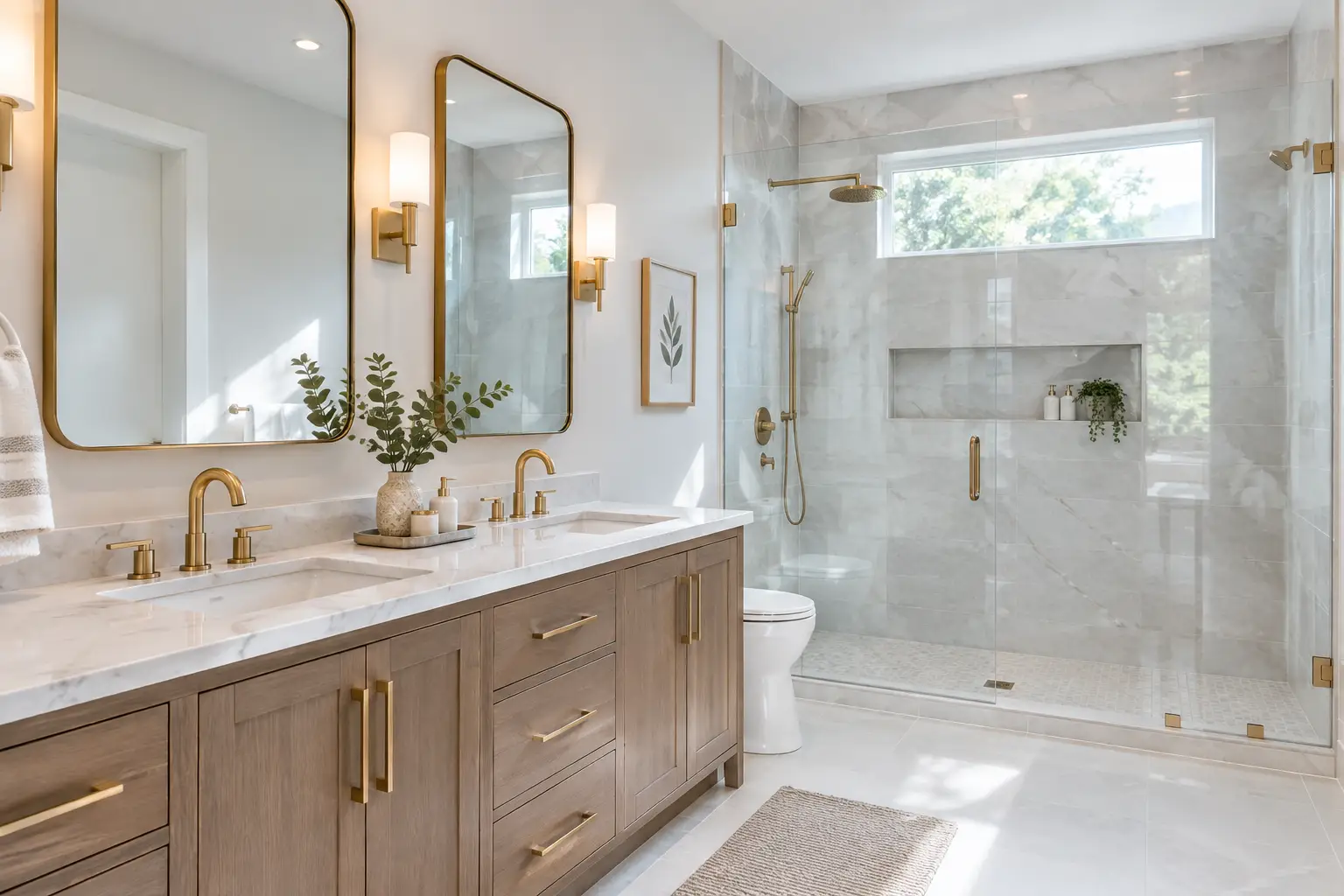
Finished project photos add another layer of context. Look closely at the tile layout around niches, shower valves, corners, and ceiling lines. In a bathroom with large-format porcelain, a clean layout requires planning before installation, not just careful cutting at the end. A primary bath we finished in Stewartsville, for example, required the details of a full tile shower and vanity area to work together as one room rather than a collection of separate products.
Questions Reviews Cannot Answer on Their Own
Reviews can show patterns. They cannot replace a conversation about your home.
A review rarely tells you what waterproofing is behind the tile. That matters because tile and grout are not the waterproof layer. Ask every bathroom contractor how the shower is waterproofed, how the pan is sloped to the drain, and how wall penetrations are sealed. At GUS SKYY Co, Schluter waterproofing goes behind every shower we build. That is a construction decision homeowners should be able to discuss plainly, not a detail hidden behind a finished wall.
Reviews also cannot tell you whether your home has conditions that need special attention. Homes built before 1978 may have lead-based paint in older layers, which changes how demolition and containment should be handled. A basement bathroom may involve moisture concerns, drain elevation, or access issues. Behind an older tiled shower, the crew may find deteriorated framing, mold-related damage, or a subfloor softened by a long-term leak.
None of those findings automatically means a project is headed in the wrong direction. They do mean the contractor needs a written process for documenting the condition, explaining the options, and pricing the added work before proceeding.
How to Compare New Jersey Bathroom Contractor Reviews
When you have narrowed your search to two or three contractors, read a representative mix of recent reviews rather than only the most enthusiastic ones. Then compare what each company says it will do in writing.
Use reviews to investigate these five areas:
- Scope clarity: Do homeowners mention knowing what was included before work began?
- Communication: Is there a consistent point of contact from demolition through final walkthrough?
- Problem handling: When an issue appeared behind a wall or under a floor, was it explained and resolved professionally?
- Jobsite care: Do reviews mention dust control, daily cleanup, and respect for occupied homes?
- Finish work: Do people comment on tile alignment, grout, trim, fixtures, and the final punch list?
A pattern is more useful than one isolated comment. A contractor can have a good project and a difficult project. What matters is whether the reviews show reliable communication and accountability when the work becomes complicated.
It also helps to read the contractor’s responses to concerns. A professional response should be specific without exposing a homeowner’s private details. Defensive language, vague excuses, or a refusal to acknowledge a problem can tell you as much as a positive review.
Verify the Practical Details Before You Sign
Once reviews point you toward a contractor, verify the items that protect your project. In New Jersey, bathroom remodeling may require township permits depending on the work. Plumbing changes, electrical changes, ventilation improvements, and structural alterations can all affect what is needed. Permit practices vary by town, so ask how your contractor will handle the requirements for your scope.
Ask for proof that the company is registered and insured. GUS SKYY Co is registered and insured under NJ Home Improvement Contractor reg. #13VH10766600. The company is also a NARI Certified Kitchen & Bath Remodeler (CKBR), NTCA member, EPA Lead-Safe Certified Firm (NAT-F269467-1), woman-owned, and a Floor & Decor Independent Installer since 2019. These credentials do not eliminate the need for a detailed scope, but they give homeowners useful information to verify as they compare companies.
Then ask to see completed bathrooms that resemble your plan. A photo gallery is helpful, but walkthrough videos can show proportions, storage, tile transitions, and how a shower fits within the room. Look for a project that shares your priorities, whether that is a tub-to-shower conversion, a double vanity, a curbless entry, or full-height wall tile.
Reviews Should Lead to Better Questions
The right contractor is not simply the one with the most praise online. It is the one who can connect the promises in those reviews to a clear plan for your house.
Ask what happens from the first in-home visit through final walkthrough. You should receive a written scope, a price by phase before work starts, and direct answers about materials, waterproofing, permits, and the likely sequence of work. A typical bathroom remodel timeline depends on the scope, inspections, material availability, and what is found after demolition. Be cautious of anyone who treats every bathroom as the same project.
If you are still shaping the budget and scope, a bathroom cost calculator can help organize the choices that tend to move the project up or down: layout changes, tile coverage, shower size, custom cabinetry, plumbing fixtures, and accessibility features. Use it as a planning tool, then confirm the real scope during an in-home visit.
Good reviews should leave you more prepared, not just more impressed. When you are ready to discuss your bathroom and see how the work would be planned in your home, request a free in-home estimate from GUS SKYY Co.