
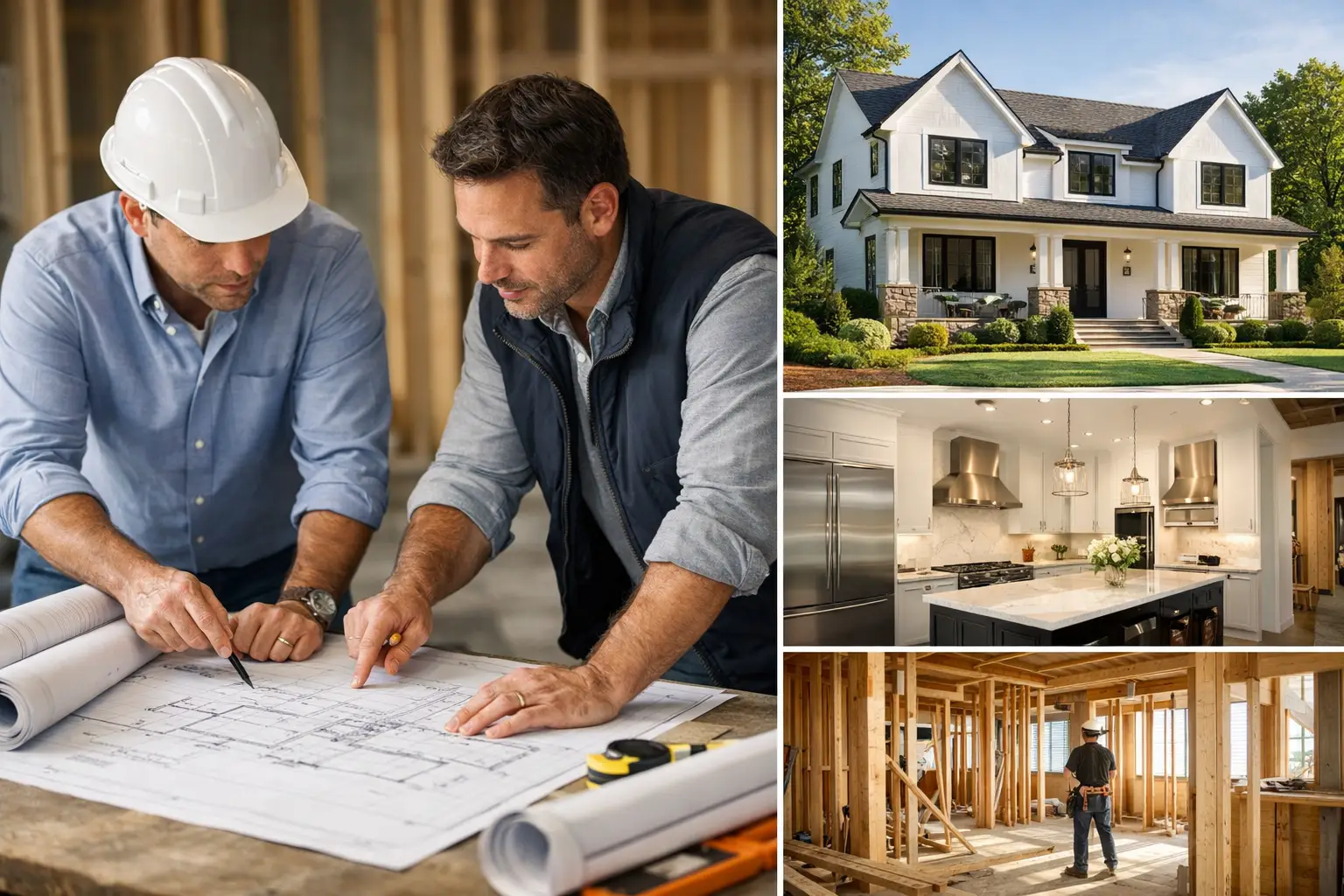
If you have ever managed an architect, a structural engineer, and a general contractor as three separate tracks, you already know where projects go sideways. One set of drawings says one thing, field conditions say another, and by the time everyone aligns, the schedule has moved and the budget has taken a hit. That is exactly why homeowners ask how design build contractors work – especially in New Jersey, where permit review, older housing stock, and township-specific inspections can add friction fast.
Design-build means one firm manages both the design process and the construction process under a unified scope. That does not mean every person is sitting under one payroll line. It means the homeowner deals with one accountable lead team that coordinates design, estimating, engineering input, permit documentation, material selections, scheduling, and field execution as one system instead of separate silos.
For a kitchen remodel in a 1950s Maplewood home, that matters because wall conditions, plumbing locations, and possible lead-safe containment are not theoretical issues. For a custom addition in Short Hills, it matters because zoning review, structural loading, HVAC sizing, and finish decisions all affect cost and buildability at the same time. Design-build works best when those decisions are made together, not in sequence.
How design build contractors work from first meeting to final walk-through
A good design-build process starts with constraints, not inspiration boards. The contractor needs to know the existing house, the target scope, the must-haves, and the non-negotiables. That usually includes square footage goals, number of rooms, appliance preferences, structural limitations, and whether the family plans to live in the house during construction.
The first phase is discovery and feasibility. In practical terms, that means site measurements, photo documentation, review of existing conditions, and early discussion around zoning or code issues. In many NJ towns, setback limits, lot coverage rules, stormwater requirements, and historic review can shape the project before anyone chooses tile or cabinet colors.
After that comes concept development paired with preliminary budgeting. This is where design-build is different from the old handoff model. Instead of producing a full design in isolation and pricing it later, the builder and design team test options while the plan is still flexible. If a rear addition needs a steel beam to open a load-bearing wall, that cost impact gets discussed early. If the desired bathroom layout pushes plumbing into a difficult joist bay, that gets flagged before construction documents are finalized.
That early cost alignment is not a small advantage. It is usually the difference between a project that moves cleanly into permits and one that goes through two or three redesign cycles because the first version was never grounded in construction reality.
One team, one budget track, fewer gaps
The main reason homeowners choose design-build is not convenience alone. It is gap reduction. On a separated project team, each party may be competent, but responsibility can get blurry. If a detail was not coordinated, the architect may say it is a field execution issue while the contractor says the drawings did not account for actual conditions.
In a design-build setup, that excuse chain gets shorter. The same lead team is responsible for making the design work on paper and in the field. That does not eliminate change orders or surprises. Old houses in Essex, Union, and Morris counties still open up with hidden framing changes, outdated wiring, or previous unpermitted work. But it does mean there is one place to solve the issue.
That single-source structure also changes how estimating is handled. A serious design-build contractor does not just throw out a rough number and hope the details work later. The estimate should be line-itemized enough to show where major costs live – demolition, framing, insulation, drywall, tile prep, finish plumbing, electrical devices, flooring, cabinetry, countertops, painting, and permit-related items. Not every allowance can be exact on day one, but the logic should be visible.
For premium homeowners, that transparency matters more than a low top-line number. A lower quote that ignores waterproofing prep, electrical service capacity, or township resubmission time is not a savings. It is deferred cost.
What happens during design in a design-build model
Design is not just aesthetics. It is layout, function, structural logic, and sequencing.
In a kitchen renovation, the design phase should account for workflow, appliance clearances, venting paths, lighting layers, floor transitions, and whether the existing subfloor can support the chosen finish. Large-format porcelain and XL slabs, for example, may require flatter substrate tolerances than a homeowner expects. In a bathroom, the design should address waterproofing assemblies, niche placement, exhaust performance, and whether the framing allows the plumbing wall depth you want.
For additions and custom homes, design gets even more technical. Window schedules affect lead times. Roofline choices affect drainage and framing complexity. Span requirements affect beam sizing and foundation loads. If the design-build contractor has engineering discipline built into the preconstruction process, these items are discussed as interconnected decisions rather than late-stage corrections.
That does not mean every project needs an overbuilt process. A powder room update and a 2,500-square-foot addition should not carry the same preconstruction burden. Good design-build firms scale the process to scope.
How permits and township review fit in
In New Jersey, permit coordination is one of the least glamorous and most important parts of the job. Review timelines vary by township. Inspector expectations also vary. Bergen County municipalities may flag certain field details differently than towns in Essex or Morris. None of that is dramatic, but it affects scheduling.
A design-build contractor should prepare permit plans, coordinate revisions, and sequence the work around approval realities. If the project includes structural changes, electrical upgrades, plumbing relocation, or exterior additions, permit planning is part of the core workflow, not an administrative afterthought.
For older homes, especially pre-1978 properties, lead-safe protocols may also need to be built into the plan. That affects containment, cleanup, and how demolition is staged in occupied homes.
How construction is managed after design is approved
Once plans, scope, and selections are sufficiently defined, the project moves into procurement and build scheduling. This is where many homeowners assume the hard part is over. It is not. The execution phase is where management quality becomes visible.
A disciplined design-build contractor sequences trades based on dependencies, not hope. Demo comes before framing corrections. Rough mechanicals follow framing. Inspections gate insulation and close-up. Tile cannot be scheduled as if substrate prep is optional. Finish flooring should be protected from overlapping work. Cabinet install should not start before wall flatness and floor elevation are verified.
That sounds obvious, but many delays happen because someone schedules backward from a desired finish date instead of forward from actual field conditions.
Communication also changes in a well-run design-build job. Instead of the homeowner relaying decisions between separate designers and builders, the project team handles internal coordination. The homeowner still approves selections, layout changes, and scope decisions, but they are not acting as the project manager.
Change orders are not failure – but they should be controlled
Every homeowner wants to avoid change orders. Fair enough. But not every change order is a red flag.
Some are owner-driven. You may decide to upgrade flooring, expand a shower, or add built-ins once the space takes shape. Some are condition-driven. A wall is opened and the framing is not what the drawings assumed. A subfloor has water damage. Existing plumbing is improperly vented. In NJ renovations, especially in older homes, that is common enough that pretending otherwise is not honest.
What matters is how the contractor handles the change. The scope impact should be documented. The schedule impact should be explained. The reason should be clear. A vague verbal “we found some extra stuff” is not management.
Where design-build is strongest – and where it depends
Design-build is strongest on projects where design decisions and construction decisions heavily affect each other. Kitchens, baths, additions, whole-home renovations, and custom homes all fit that pattern. It is also effective for investors who need scope discipline and fewer handoff delays.
It is less critical on extremely simple work with minimal design input. If the project is a straightforward finish replacement with no layout changes, no permits, and no hidden-condition risk, a full design-build structure may be more process than necessary.
It also depends on the firm. Some contractors use the term loosely. The label itself is not the value. The value is whether the company can actually coordinate design, budgeting, engineering logic, permitting, selections, and field execution without pushing responsibility downstream.
That is where credentials and operating model matter. A NARI Certified Kitchen & Bath Remodeler working with a direct-employ crew and a disciplined project management structure will usually run a different process than a company built on layered handoffs and rotating labor. Homeowners may not see that difference on day one, but they feel it by week six.
If you are evaluating firms, ask practical questions. Who handles field measurements? Who owns permit coordination? How are selections tracked against scope? What happens when existing conditions differ from assumptions? Who is accountable for schedule updates? Those answers will tell you more than a polished portfolio.
The simplest way to understand design-build is this: it brings design intent, construction reality, and budget control into the same conversation early. On paper, that sounds obvious. In actual residential construction, especially in New Jersey, it is rarer than it should be. And when it is done correctly, the project does not feel easy – it feels controlled, which is better.