
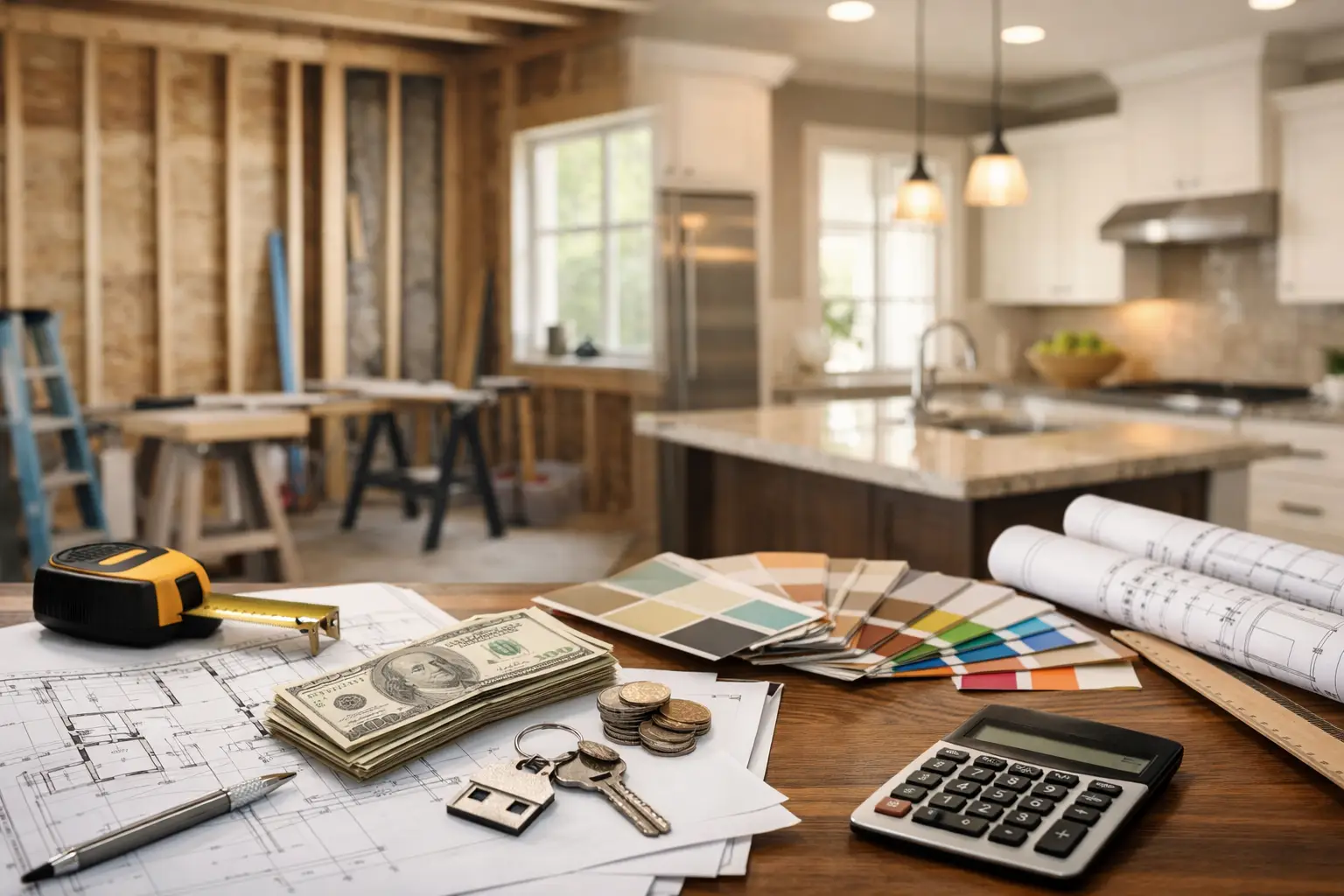
The budget usually breaks long before the walls do. Not because homeowners are careless, but because most renovation budgets start as a wish list with one big number at the top. If you want to know how to budget home renovation work without getting blindsided halfway through, start by treating it like a scope-and-risk exercise, not a shopping trip.
That matters even more in New Jersey, where project cost is shaped by older housing stock, township permitting, lead-safe rules in pre-1978 homes, basement moisture conditions, and material delivery realities that change from one county to the next. A kitchen in Short Hills, a full first-floor renovation in Maplewood, and a bathroom upgrade in Summit may all look similar on paper. They do not behave the same once demolition starts.
How to budget home renovation starts with scope, not finishes
Most overruns begin with a simple mistake: budgeting by room name instead of by actual work. “Kitchen remodel” is not a budget. It is a category. The real budget comes from the scope underneath it.
A serious renovation budget separates labor, material, and conditions by line item. That means framing, electrical, plumbing, insulation, drywall, flooring, tile prep, waterproofing, millwork installation, painting, permits, waste removal, and finish materials all need their own place. If you skip that step, you end up moving money around blindly once the project is underway.
This is where engineering discipline helps. Before choosing appliances or tile, define what is staying, what is moving, and what must be brought up to code. If a kitchen layout stays intact, your budget behaves one way. If you move the sink, relocate a gas line, add recessed lighting, and open a load-bearing wall, it behaves very differently.
The same logic applies to bathrooms. A cosmetic bathroom refresh with same-location plumbing is one budget structure. A full gut with mud-set tile removal, new waterproofing, niche framing, shower valve relocation, and upgraded electrical is another.
Build the budget in layers
The cleanest way to budget a renovation is to split it into three buckets: fixed scope construction, finish selections, and contingency.
Fixed scope construction covers the work that has to happen whether you choose oak or porcelain. This includes demolition, framing changes, rough MEP work, substrate preparation, waterproofing, insulation, drywall, permit-related work, and installation labor. These items should be driven by drawings, site conditions, and code requirements.
Finish selections cover the variables homeowners tend to focus on first: flooring, cabinets, tile, plumbing fixtures, vanities, countertops, appliances, trim profiles, and decorative lighting. These matter, but they should sit on top of a stable base budget.
Contingency is not extra money for upgrades. It is protection against real field conditions. In North Jersey homes, especially older properties in Essex, Union, and Bergen counties, once walls are open you may find out-of-level framing, hidden water damage, old wiring, improper venting, or plaster transitions that need more labor than expected. If the home was built before 1978, lead-safe practices can also affect how demolition and containment are handled.
A contingency should be deliberate. If your budget has no room for hidden conditions, then your project does not really have a budget. It has a target number.
The fastest way to lose control is mixing wants and needs
Homeowners often combine structural work, layout changes, finish upgrades, and future wish-list items into one early budget. That creates confusion. Some items are essential to the project. Others are optional if numbers tighten.
A better approach is to label every part of the scope in one of three groups: required, preferred, and deferrable. Required items include code, safety, structural corrections, leak remediation, and anything tied to core functionality. Preferred items improve the result now and are worth pricing honestly. Deferrable items are upgrades that can happen later without redoing completed work.
For example, if you are renovating a first floor in Livingston and already opening the subfloor for layout work, now may be the right time to correct floor flatness. That is a smart required item. On the other hand, replacing a perfectly serviceable stair railing in an untouched part of the house may be deferrable if the budget is tight.
This classification keeps the project from being redesigned under financial stress midway through construction, which is where expensive decision-making usually happens.
Know the NJ cost drivers before you set the number
If you are budgeting in New Jersey, local conditions matter more than online national averages. Those averages flatten out the exact things that move real project costs.
Township permitting is one factor. Review timelines and required inspections vary. Some municipalities are straightforward. Others are slower and more documentation-heavy. That does not make one town better or worse, but it does affect schedule exposure and how tightly the work can be sequenced.
Housing age is another. In towns like Maplewood, South Orange, Montclair, and parts of Summit and Chatham, older homes often come with surprises behind finished surfaces. Joists may be undersized by current standards. Walls may not be plumb. Existing tile assemblies can be thicker and harder to demo than expected. Basement moisture can also affect flooring decisions, especially for lower-level renovations.
Material lead times still matter, even when the market is more stable than it was a few years ago. Custom cabinetry, specialty tile, XL porcelain slabs, and certain plumbing fixtures can hold up sequencing if they are selected too late. A good budget is tied to procurement timing, not just cost.
How to budget home renovation without underestimating labor
Material pricing gets attention because it is visible. Labor is where many homeowners underestimate the real cost of execution.
Two bathrooms can have the same tile square footage and very different labor requirements. Large-format tile needs a flatter substrate. Patterned layouts increase cutting and dry-fit time. Curbless showers require more planning at the framing and waterproofing stages. Hardwood installation costs vary with floor prep, transitions, stair work, furniture protection, and site access.
Labor also changes when the home is occupied. Protecting adjacent finished areas, maintaining safe pathways, controlling dust, and sequencing around family life all add time. That is normal. It should be reflected in the budget from day one.
This is one reason line-itemized quotes matter. They force the budget to reflect the actual build sequence rather than a single allowance that hides complexity.
Your finish schedule should match your financial discipline
One of the most practical budgeting tools is a finish schedule created early. That means deciding, in writing, the target material level for each category before construction starts.
If you leave every finish open-ended, the budget stays unstable. Flooring decisions affect underlayment, transitions, and trim. Cabinet decisions affect appliance fit, electrical placement, and countertop templating. Tile decisions affect substrate prep, edge detailing, and waterproofing accessories.
You do not need every SKU selected on day one. But you do need a realistic standard for each category. If you say “white oak flooring,” “porcelain bath tile,” or “semi-custom painted cabinetry,” those categories should align with what your budget can actually support.
This avoids the common problem where the construction scope is priced correctly, but the owner later shops finishes at a level the original budget never contemplated.
Don’t use the lowest estimate as your budget model
A low estimate can be useful as a data point. It is a poor budgeting method.
If one proposal is materially lower than others, the first question is not whether you found a deal. The first question is what scope is missing, what assumptions differ, or what allowances are unrealistically thin. Demolition, disposal, floor prep, waterproofing details, permit handling, and finish installation accessories are common places where numbers look fine until the job begins.
Budgeting off the lowest number often creates a false sense of control. Then change orders become the real budget. A better approach is to compare scope definitions line by line and reconcile differences before the project starts.
For larger additions or whole-home renovations, this matters even more. Structural steel, excavation variables, temporary supports, utility upgrades, and insulation or HVAC rework can change the cost profile quickly if they were not clearly defined at estimating stage.
A smart renovation budget includes decision timing
Budget discipline is not just about total spend. It is also about when decisions are made.
Late decisions are expensive because they interrupt sequencing. If a flooring product changes after substrate prep is planned, or if vanity dimensions shift after plumbing rough-ins are set, the budget takes a hit through rework and delay. Not every change is a problem, but repeated late changes usually are.
The homeowners who manage renovation budgets best tend to do one thing consistently: they make major planning decisions before demolition and finish decisions before rough-ins are complete. That does not eliminate surprises. It reduces self-inflicted ones.
For clients in higher-scope NJ projects, especially additions and full-floor renovations, the budget is strongest when design, selections, and construction planning are integrated early. That is the advantage of a disciplined design-build process. The number is built from actual execution logic, not from hopeful placeholders.
A renovation budget should not feel exciting. It should feel clear. If the scope is defined, the priorities are ranked, the contingency is real, and the decision schedule is tight, you are not guessing anymore. You are managing risk like the project deserves.