
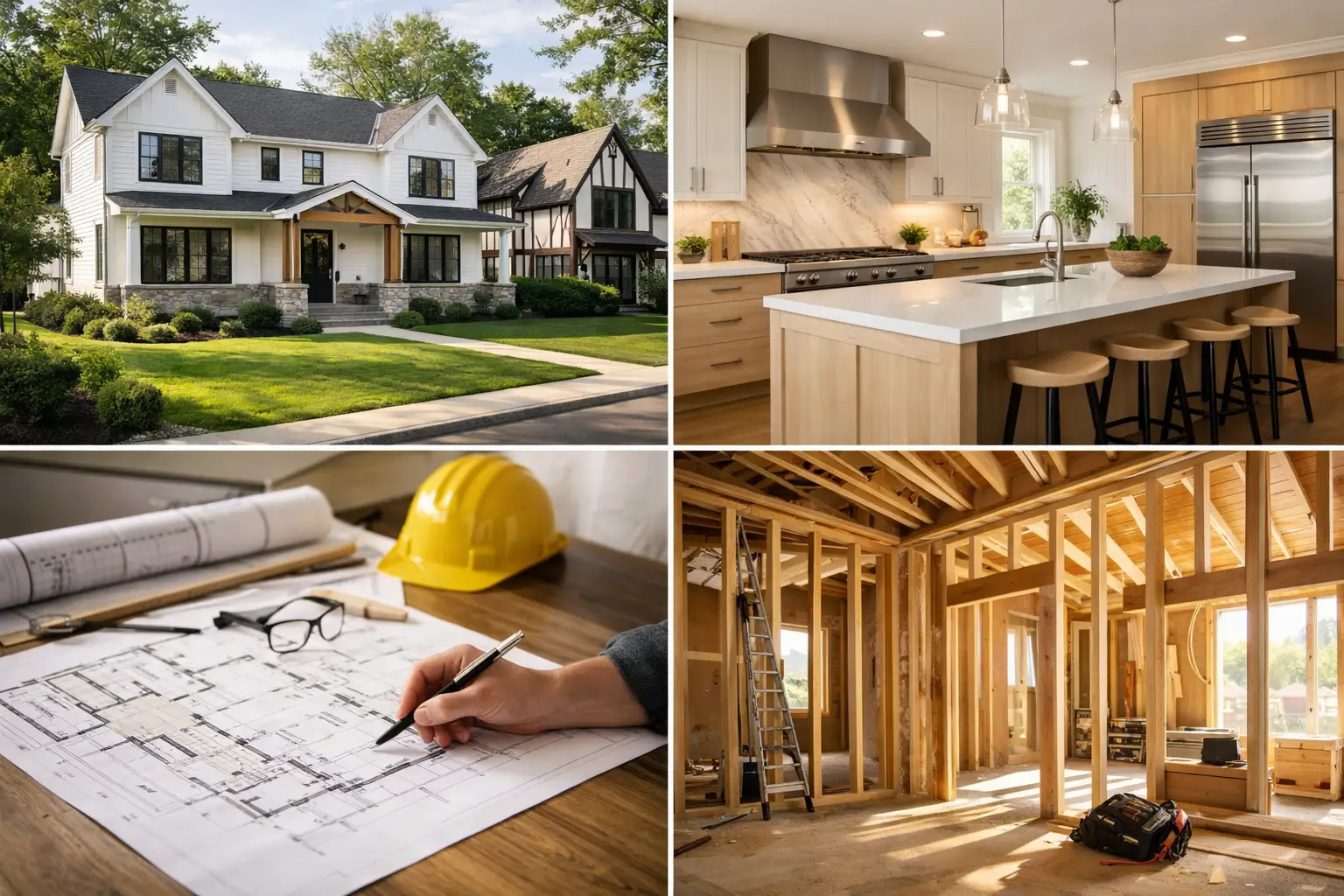
If you are planning a major remodel in New Jersey, home renovation trends 2026 are less about novelty and more about friction reduction. Homeowners in towns like Short Hills, Summit, Chatham, and Livingston are asking sharper questions now: Will this layout still work in five years? Will this material survive wet boots, kids, dogs, and radiant heat? Will the permit path slow the schedule? That shift matters. The best projects in 2026 will not be the ones with the most features. They will be the ones that solve real use, maintenance, and resale problems without creating new ones.
What home renovation trends 2026 actually mean
A lot of trend coverage treats renovation like fashion. That is not how serious homeowners should read it. In construction, a trend is only worth following if it improves one of three things: daily function, building performance, or long-term value. If it looks good for 18 months but creates cleaning issues, movement cracks, water risk, or awkward transitions between old and new spaces, it is not a trend worth buying.
That is especially true in New Jersey, where house stock varies widely. A 1920s Maplewood colonial, a split-level in Westfield, and a newer home in Franklin Lakes do not respond to the same renovation strategy. Older homes may hide plaster movement, undersized framing, lead-safe work requirements, or out-of-level subfloors. Newer homes often need layout correction more than structural intervention. So when we talk about 2026 trends, the useful lens is not style first. It is decision quality first.
1. Kitchens are getting quieter and more architectural
The glossy, over-decorated kitchen is losing ground. In its place, homeowners are choosing cleaner cabinet lines, integrated storage, fewer upper cabinet interruptions, and appliance planning that reduces visual noise. That does not mean sterile. It means intentional.
In practical terms, that often looks like wider drawers instead of more doors, full-height backsplashes, under-cabinet lighting planned early, and islands sized for circulation instead of bragging rights. In NJ homes where additions are expensive and zoning can limit expansion, better kitchen function often comes from reworking adjacencies, not simply adding square footage.
There is also more discipline around material pairing. Large-format porcelain and slab surfaces remain popular because they cut grout lines and simplify maintenance, but they need proper substrate prep and layout planning. Vein matching and edge detailing are only the visible part. The real work is making sure spans, seam placement, and cabinet tolerances are handled correctly.
Why this trend is sticking
People are spending more on kitchens, but they are less interested in gimmicks. Charging drawers and pot fillers still have their place. They just are not the center of the conversation anymore. Workflow is.
2. Bathrooms are moving toward low-maintenance luxury
The bathroom trend for 2026 is not spa language. It is performance dressed well. Homeowners want larger-format tile, fewer grout joints, curbless or low-threshold showers where feasible, niche placement that actually fits products, and lighting that works at 6:30 a.m. in February.
In Essex, Union, and Morris County remodels, one of the biggest shifts is what clients no longer want. They do not want fussy mosaics in every wet zone. They do not want trendy black fixtures if their water quality will show mineral buildup immediately. They do not want floating vanities if the wall conditions and storage needs do not support the choice.
The smarter bathroom projects are balancing visual weight, cleaning effort, and water management. That means proper slope, waterproofing discipline, movement joints, and realistic fan sizing. A beautiful shower with poor moisture control is not luxury. It is deferred damage.
3. Natural-looking materials are winning over delicate ones
One of the clearest home renovation trends 2026 is the move toward materials that read warm but perform hard. Homeowners still want a natural look. They are just less willing to babysit it.
That is why you will see continued demand for white oak tones, textured porcelain, matte finishes, and better-quality LVP in the right parts of the house. In many NJ households, especially with active families, the question is not whether a material is attractive. It is whether it can handle sand, pet traffic, winter salt, and normal wear without becoming a maintenance project.
Hardwood still has a strong place, especially in premium homes where continuity matters. But species choice, board width, site conditions, and humidity control matter more than trend boards suggest. Wide planks look good. They also react more visibly when moisture conditions swing. Basements are another example. A material that works well on a first floor in Madison may be the wrong call below grade in Montclair if moisture management is not fully addressed first.
4. Renovations are being designed around real household patterns
Open concept is not dead. Blindly open concept is. In 2026, more homeowners want partial separation, acoustic control, and rooms that can do more than one job.
That shift shows up in a few ways. Mudrooms are working harder. First-floor studies are replacing decorative sitting rooms. Secondary prep space is gaining value in larger homes. Laundry rooms are getting better placement, not just better finishes. In whole-home renovations, circulation is under more scrutiny than ever. People notice pinch points now. They notice when a powder room opens directly into entertaining space. They notice when an addition improves square footage but makes the core of the home darker.
For custom homes and large additions, this is where engineering-led planning matters. Every wall removal is not automatically a win. Load paths, beam depth, duct rerouting, and headroom all affect whether the final room actually feels right.
5. Hidden infrastructure is becoming part of the design conversation
This is one of the least glamorous trends and one of the most important. Homeowners are asking more about what sits behind the finish layer: insulation, subfloor prep, waterproofing, electrical capacity, recessed lighting layout, ventilation, and future serviceability.
That is a healthy change. In a pre-1978 home in towns like South Orange or Maplewood, lead-safe containment is not optional. In older colonials across Essex County, opening walls often reveals uneven framing and prior patchwork that must be corrected before tile, cabinetry, or trim can be installed properly. In additions, mechanical coordination can make or break comfort.
The homeowners making the best decisions in 2026 are not treating these items as hidden extras. They understand that finish quality depends on substrate quality.
Where this shows up most clearly
Flooring is a good example. The visible product gets attention, but flatness, underlayment choice, transition planning, and moisture conditions determine how that floor performs. The same is true in bathrooms and kitchens. If prep is rushed, the finish tells on you later.
6. Exterior upgrades are becoming more strategic
Not every renovation trend sits inside the home. In 2026, exterior work is increasingly tied to envelope performance and lower maintenance. Homeowners are evaluating siding, windows, entry systems, drainage, and outdoor transitions together rather than as isolated upgrades.
That does not mean everyone needs a full exterior overhaul. It means more people are asking the right sequencing questions. If you are building an addition, does it make sense to revisit drainage at the same time? If you are replacing doors, are threshold details and flashing being addressed properly? If your lower level has seasonal moisture, is the solution cosmetic or site-related?
In New Jersey, freeze-thaw cycles, wind-driven rain, and older grading conditions create very practical constraints. The trend is not flash. It is tighter building logic.
7. Permit and schedule realism are finally part of the plan
This may be the most mature shift in the market. Serious homeowners are asking earlier about township review, lead times, inspection cadence, and decision deadlines. They are less interested in vague optimism and more interested in how the project will actually move.
That is a good trend. Permit timelines can vary meaningfully between municipalities. Inspector expectations can also differ from one county or township to another. A renovation in Bergen County may not move exactly like one in Essex or Morris, even with similar scope. Material availability is better than it was a few years ago, but custom windows, specialty tile, and cabinet modifications still need disciplined planning.
The projects that stay healthier are the ones where allowances are clarified early, finish selections are not dragged into framing phase, and existing-condition risk is acknowledged from day one.
8. The best trend is restraint
There is a growing split in the market between homes renovated for social media and homes renovated for actual ownership. The second category is aging better.
Restraint does not mean boring. It means using strong materials, proportion, and planning instead of stacking trendy details into every room. It means choosing one or two moments to emphasize and keeping the rest coherent. It means knowing when not to move a wall, not to over-light a ceiling, and not to force a material into a condition where it will fail.
For premium NJ homes, that restraint often creates the most expensive-looking result anyway. Not because it is louder, but because it reads resolved.
Gus Skyy Construction sees this pattern across both custom work and full-scope renovations: the homeowners happiest two years later are rarely the ones who chased every new finish. They are the ones who made fewer, better decisions and tied design to construction reality from the start.
If you are planning a remodel in 2026, pay less attention to what is circulating online and more attention to what your house, block, and township are telling you. The right renovation should look current, yes. More importantly, it should make sense when the drawings meet the framing, the materials meet New Jersey weather, and daily life starts using the space for real.