
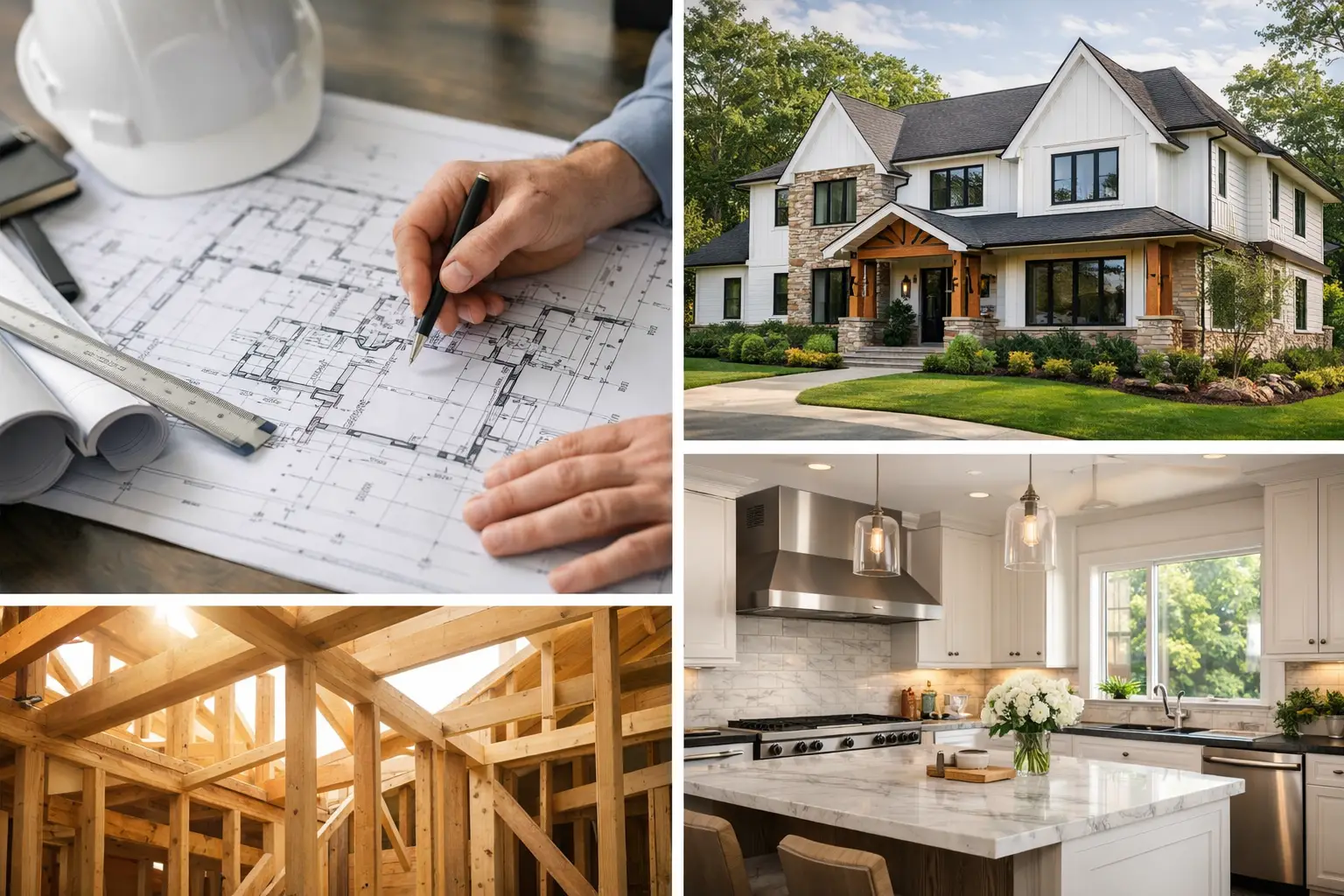
If you are planning a ground-up home in New Jersey, a custom home building guide should start with one fact most brochures skip: the lot controls more than the floor plan. Before anyone talks about vaulted ceilings, slab porcelain, or a prep kitchen, the site has already started shaping cost, schedule, structure, drainage, and even whether the design you want is realistic.
That is especially true in North and Central New Jersey. A build in Short Hills does not move like a build in Bernardsville. A teardown in Maplewood carries different permit and utility realities than a vacant lot in Franklin Lakes. Inspector preferences vary. Soil conditions vary. Septic and well requirements can change the entire planning sequence in some towns. If you want fewer surprises, start with constraints, not finishes.
A custom home building guide starts with the lot
Many homeowners assume the home design comes first. In practice, the lot should be reviewed before the design is finalized. Setbacks, impervious coverage limits, grading restrictions, easements, tree removal rules, drainage requirements, and utility access all affect what can be built.
In many NJ municipalities, zoning review is not a formality. Corner lots often have larger setback limitations. Steep sites may trigger retaining wall engineering and more complicated drainage design. Older neighborhoods can have mature trees subject to removal permits or replacement requirements. In preexisting developed areas, you may also find undocumented field conditions once excavation starts – abandoned pipes, old foundations, buried debris, or unmarked utility conflicts.
This is why site due diligence matters early. A survey, zoning review, and preliminary engineering input usually save more time than they cost. If the property has an older house slated for demolition, it is also smart to evaluate lead-safe handling requirements and utility disconnect sequencing before demo day is on the calendar.
Design first, but not in a vacuum
Custom homes go sideways when architecture, engineering, and construction are developed in separate lanes. The drawing may look clean on paper and still be expensive or inefficient to build. That usually shows up in long-span framing, overcomplicated roof lines, steel requirements that were not anticipated, and mechanical layouts with poor service access.
A better process is design-build coordination from the beginning. That means the builder is reviewing structural logic, constructability, and scope exposure while the design is still flexible. A 4,500-square-foot home can be designed in ways that are straightforward to frame and sequence, or in ways that create avoidable complexity at every trade stage.
The same applies to interior planning. Kitchen and bath layouts should not be treated as decorative exercises. Venting runs, wet wall stacking, slab sizes, shower waterproofing details, floor elevation transitions, and appliance lead times all affect both budget and schedule. This is where an engineering-led process tends to show its value. It forces the hard questions earlier, when changes are cheaper.
Permits and township review are part of the build
Homeowners often ask how long permits take. The honest answer is that it depends on the municipality, the completeness of the submission, and whether outside approvals are involved. In NJ, permit timing is not one number.
If your home needs only standard building department review, the path is simpler. If it also needs zoning board approval, county soil conservation review, septic approval, flood-zone compliance, or utility coordination, the timeline can expand quickly. Some towns move clean submissions through in a reasonable window. Others issue rounds of comments that require multiple revisions.
That does not mean the process is broken. It means your team needs to plan for it. Good preconstruction work includes permit strategy, not just permit filing. That means checking what the town has historically flagged, confirming required documents up front, and sequencing structural, architectural, and civil submissions so the package is coherent.
Budgeting should be line-item based, not hope based
The fastest way to lose control of a custom home budget is to work from allowances that are too vague to mean anything. If selections are not defined, costs remain theoretical. That creates tension later when owners expect one level of finish and the budget was built around another.
A real budgeting process breaks the project into categories that can be tested against the design. Sitework, foundation, framing, roofing, windows, insulation, HVAC, plumbing, electrical, finish carpentry, tile, flooring, cabinetry, countertops, painting, and exterior work all need to be reviewed in relation to actual scope. Window packages alone can shift significantly depending on size, performance specs, and manufacturer. The same is true for wide-plank hardwood, large-format tile, custom millwork, and high-output HVAC systems.
There is also a difference between a budget that looks competitive and a budget that is complete. If drainage, temporary protection, utility upgrades, or finish installation complexity are glossed over, the number may feel attractive early and become unstable later. Builder-honest estimating is less comfortable on day one and much healthier by month eight.
Scheduling a custom home means sequencing risk
A custom home schedule is not just a list of trades. It is a sequence of dependencies. Excavation depends on permit release and site readiness. Foundation work depends on survey layout and inspection timing. Framing depends on material delivery and weather windows. Mechanical rough-ins depend on framing completion and coordinated layouts.
Then there is procurement. Custom entry doors, window packages, plumbing trims, specialty tile, engineered flooring, and appliances can all carry lead times that affect the critical path. Owners sometimes make selections based only on aesthetics, then learn the item will not arrive when needed. That can push finished flooring, cabinet installation, painting, or final inspections.
This is why serious builders push selection deadlines early. It is not about paperwork for its own sake. It is about preventing the project from sitting idle while crews wait on decisions or materials.
New Jersey-specific conditions matter more than people think
A custom home in NJ has regional realities that should be addressed directly. Basement moisture management is one of them. Waterproofing is not a box to check. It involves exterior drainage strategy, foundation detailing, grading, sump planning, and understanding how water moves on the site during real storms, not just ideal conditions.
Energy code compliance is another. Air sealing, insulation values, HVAC sizing, and ventilation design need to work together. Oversized systems are not a sign of strength. They can create comfort and humidity issues if the envelope and load calculations are not handled correctly.
If the project involves an older structure before demolition, environmental conditions matter too. Pre-1978 components may trigger lead-safe protocols. Existing utility service may need upgrading. In some established neighborhoods, street access, staging, and neighbor protection also become part of the build plan.
Choosing the right builder is mostly about process
Most homeowners know to ask for insurance, references, and photos. Those matter, but they do not tell you how the builder actually runs work. For a custom home, process discipline matters more.
Ask how estimates are organized. Ask who is preparing the schedule and updating it. Ask whether the field team is direct or layered through multiple tiers of subs. Ask how structural questions are resolved when drawings and field conditions do not perfectly match. Ask what happens when township comments require revisions. Ask how allowances are tracked and how owner selections are documented.
The answers will tell you whether the builder manages complexity or reacts to it. In higher-expectation markets like Summit, Chatham, Saddle River, or Tenafly, that difference is usually visible by the framing stage.
A design-build firm can be a strong fit when you want one accountable team carrying design coordination, estimating, and construction under one roof. That does not automatically make every design-build company equal. The value is in whether they actually coordinate like one team.
Where homeowners lose time
The common delays are rarely dramatic. They are usually ordinary decisions made too late. Floor plans approved before furniture layout is tested. Window sizes changed after structural review. Appliance specs provided after cabinet drawings are complete. Tile selected without checking lead time or slab yield. Exterior drainage discussed after foundation backfill. These are not unusual mistakes. They are just expensive ones.
A good project team keeps pushing decisions to the moment when they can still be made efficiently. That requires structure. It also requires owners to stay engaged. The best custom homes are not passive projects.
For homeowners who want a premium result, the smartest move is not chasing the most optimistic number or the shortest verbal timeline. It is choosing a process that can handle site realities, municipal review, structural coordination, and finish-level detail without improvising every month. That is how a custom home starts feeling less like a gamble and more like a controlled build.