
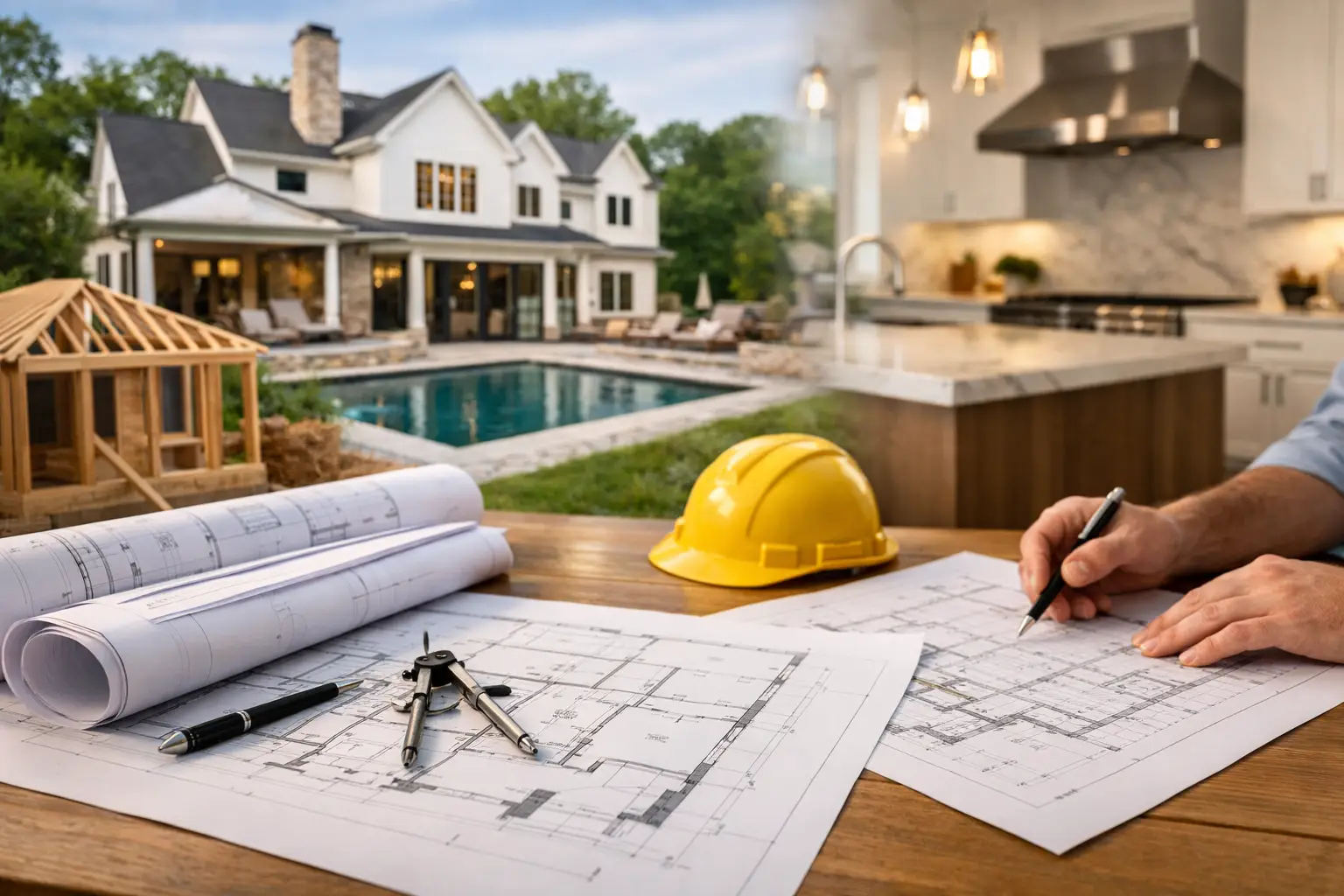
A luxury home addition planning guide should start before anyone sketches a roofline. In New Jersey, the first real question is not what you want to add. It is what your property, township, and existing structure can realistically support without forcing expensive redesign halfway through the job.
That matters more in premium markets than homeowners expect. In Short Hills, Summit, Chatham, and Bernardsville, many additions are being tied into older homes with layers of prior work behind the walls. Some are solidly built. Some have undersized beams, field-framed modifications, aging mechanicals, or undocumented changes from past renovations. If you are planning a major family room expansion, new primary suite, garage addition, or second-story build-out, early engineering discipline saves time better than inspirational images ever will.
What a luxury home addition planning guide should cover first
Luxury additions fail in planning long before they fail in construction. The usual problem is not taste. It is scope drift. Homeowners start with one objective – more living space, better circulation, a first-floor guest suite, a larger kitchen footprint – then fold in five more objectives after drawings begin. That is how a clean addition turns into a partial whole-home renovation without anyone pricing it that way at the start.
The better approach is to define the project in three layers. First, the functional goal. Second, the structural impact. Third, the finish level. If you skip that order, you can end up selecting windows, slab tile, or custom cabinetry before confirming whether the foundation, framing, HVAC capacity, and setback limits actually support the design.
A 900 to 1,500 square foot addition in NJ often touches more than the new footprint. It may trigger panel upgrades, sprinkler review, drainage adjustments, insulation upgrades at tie-in areas, or rework of existing roof framing. In pre-1978 homes, lead-safe practices can also become part of the job. In older Essex and Union County housing stock, that is not a side note.
Start with the site, not the finishes
A luxury addition is still constrained by math. Lot coverage, impervious coverage, required setbacks, drainage paths, septic limitations in certain towns, easements, and grade changes all shape what can be built.
This is where NJ-specific planning becomes real. One township may move quickly on zoning review but require strict stormwater documentation. Another may be slower on permit issuance but more flexible on certain interpretations if the plans are complete and coordinated. Bergen County towns can review details differently than Essex County towns. Older neighborhoods may also present survey discrepancies, mature tree issues, or retaining wall implications that affect both design and sequencing.
Before design gets too far, confirm the survey is current and usable. If the home has been improved over the years, an outdated survey can create avoidable redesign. Then review zoning limits against the actual scope you want, not the minimum concept. A rear addition that looks straightforward on paper can hit lot coverage caps once patios, walkways, drive aprons, and accessory structures are counted correctly.
The existing house determines more than most owners expect
The house itself sets the terms of the addition. Foundation type matters. Floor framing span matters. Roof geometry matters. So does where the existing plumbing stack runs, where the electrical service enters, and whether the current HVAC system has any real reserve capacity.
For example, adding over a garage may seem efficient, but the existing garage walls and foundation may not be sized for the new loads. Opening the rear wall of an older home to create a large kitchen-family room connection can require substantial beam design and temporary shoring. If the basement already shows moisture migration, adding square footage without correcting drainage and waterproofing logic is just extending the problem.
Design-build strategy matters on large additions
The cleanest luxury addition projects usually have design, estimating, engineering coordination, and construction planning aligned early. Not because one method is always superior, but because additions punish gaps between disciplines.
When architecture is developed without real construction input, details that look minor on paper can create major field revisions. Window header depths conflict with HVAC runs. Stair geometry works in plan but not with actual floor framing. A steel beam package arrives after demolition instead of before. These are not exotic problems. They are common coordination failures.
A disciplined design-build process typically reviews structural assumptions, code triggers, finish selections, and construction sequencing before permit submission. That gives homeowners a more reliable understanding of what is actually being built, what is still an allowance or pending selection, and where risk still exists.
For premium homeowners, that clarity is often more valuable than chasing a low preliminary number. A line-itemized scope with defined exclusions is easier to manage than an attractive lump sum that leaves too much open to interpretation.
Budget planning without guessing
A good luxury home addition planning guide does not pretend there is one universal cost per square foot that applies to every NJ addition. There is not. A simple footprint addition with conventional finishes is one category. A complex addition tied into a high-end kitchen, custom millwork package, radiant heat zones, specialty glazing, and extensive site work is another.
What you can control early is scope discipline. Separate wants from must-haves. Decide whether the addition also includes renovation of adjacent rooms. Clarify whether you are matching existing finishes or intentionally upgrading the old and new spaces together. That single decision changes the budget conversation fast.
Homeowners should also ask how allowances are being used. Too many unresolved selections in cabinetry, tile, plumbing trim, appliances, flooring, lighting, and exterior cladding make early budgets look cleaner than the final build will feel. The issue is not that allowances are wrong. The issue is whether they are realistic for your level of house.
Schedule planning is really sequencing planning
Most clients ask how long the addition will take. The better question is what has to happen before physical work starts, and what work can run in parallel once construction begins.
Survey updates, zoning review, architectural development, structural engineering, permit submission, long-lead material selection, and utility coordination all sit in front of meaningful field progress. During construction, demolition, excavation, foundation work, framing, rough mechanicals, insulation, drywall, millwork, tile, and finish carpentry have dependencies that cannot be compressed by optimism.
Weather also matters more in additions than in interior-only renovations. Excavation, concrete curing, site access, and roof tie-ins all behave differently in a wet NJ spring than in a dry fall. A realistic schedule accounts for township inspections, long-lead windows and doors, and owner decision timing. It should not be built around best-case assumptions.
The finish level should match the house
Luxury does not always mean adding the most expensive material in every room. It usually means the addition feels structurally correct, visually integrated, and technically resolved.
In a high-value home, the addition should respect scale, rooflines, fenestration rhythm, floor elevations, and circulation patterns. If the rear family room is oversized relative to the rest of the first floor, the house can start to feel patched together. If the primary suite addition is beautifully finished but connected by an awkward hallway with mismatched ceiling transitions, owners feel that disconnect every day.
Material selection should also be tied to performance. Wide-plank engineered flooring may be the better fit over radiant zones or over conditions where site movement is a concern. Large-format porcelain in mudrooms or spa baths may outperform natural stone in maintenance-sensitive households. Exterior assemblies should be detailed for water management first, appearance second.
Questions worth resolving before you sign
Before moving forward, homeowners should have direct answers on who is producing the drawings, who is coordinating engineering, how permit comments are handled, what assumptions are built into the scope, and what parts of the existing house are likely to need opening for investigation.
You should also understand who is actually managing the field work. On a large addition, layered subcontractor chains often create communication lag and accountability gaps. The more complex the project, the more important it is to know who owns schedule updates, inspection readiness, material coordination, and daily quality control.
In New Jersey, especially in older homes across towns like Maplewood, Montclair, Westfield, and Ridgewood, hidden conditions are not rare events. They are planning realities. The right team does not promise that no surprises will appear. They build a process that handles them without losing control of the project.
One final thought: the best addition projects do not start with a perfect rendering. They start with a clear brief, a real survey, disciplined engineering, and the willingness to make a few expensive decisions on paper instead of in the field.