
BY GUS SKYY Co
Hardwood floors add value to a home, but in New Jersey, they are constantly exposed to temperature swings, humidity changes, and everyday wear. Many homeowners assume that visible damage automatically means a full replacement. In reality, catching problems early often allows for targeted repairs that cost significantly less and extend the life of the floor for years.
If you notice any of the signs below, acting quickly can save thousands of dollars and prevent more serious structural damage.
Small gaps between boards
Small gaps forming between hardwood boards are one of the earliest warning signs. In New Jersey, seasonal temperature changes cause wood to expand and contract. When floors are not properly installed or maintained, these movements create visible gaps.
At this stage, repair is usually straightforward. Boards can often be refastened or adjusted before the gaps widen. Ignoring the issue allows moisture and debris to enter, increasing the risk of warping and long-term damage that leads to full replacement.
Creaking or loose boards when walking
If your floor makes noise or feels loose underfoot, it is a sign that the boards or the subfloor are no longer securely attached. This problem often starts small but gets worse with time.
Loose boards rub against fasteners and each other, causing further wear. Professional hardwood floor repair can stabilize the affected areas and prevent damage from spreading across the room. Waiting too long often turns a simple repair into a much larger and more expensive project.
Visible scratches and surface wear
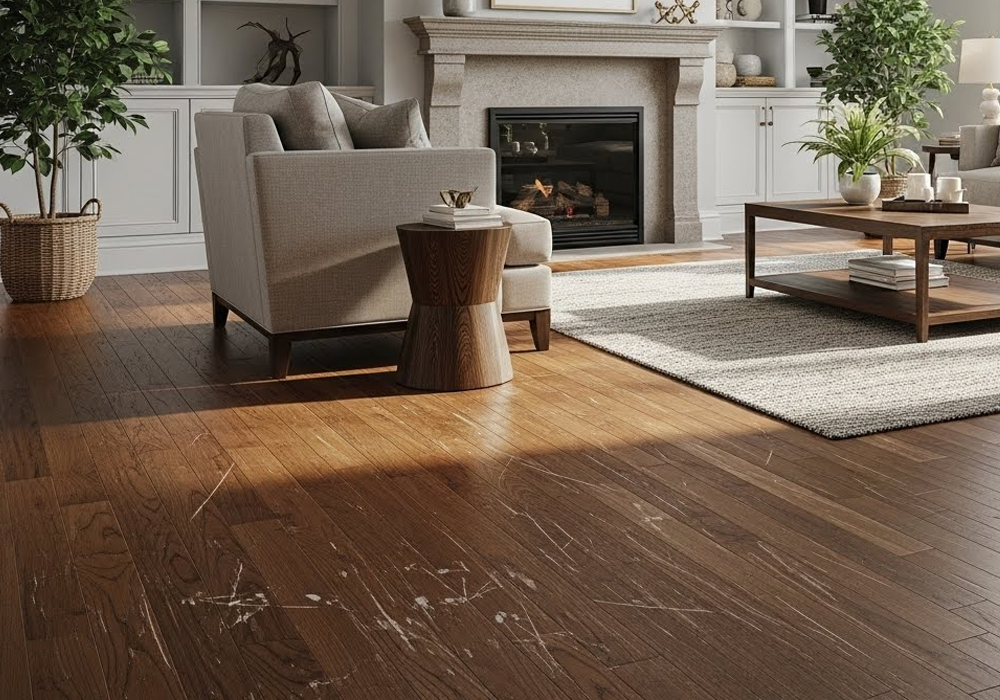
Surface scratches, dull spots, and worn finishes are common in high-traffic areas. While they may look cosmetic, they can expose the wood to moisture and stains.
In many cases, sanding and refinishing restore the floor without replacing a single board. Addressing surface wear early protects the hardwood underneath and avoids more serious damage that requires board removal.
Warping or slight cupping
Warping or cupping occurs when moisture affects the wood unevenly. Boards may curve upward at the edges or feel uneven when walking.
When caught early, the source of moisture can be addressed and the damaged boards repaired or replaced individually. If moisture continues to affect the floor, the damage becomes permanent, and replacement becomes the only option. Early inspection is critical in these situations.
Discoloration or dark spots
Dark spots or discoloration often indicate moisture penetration from spills, leaks, or humidity. These areas may still be structurally sound if the issue is recent.
Localized hardwood floor repair can remove affected sections and restore the appearance without tearing out the entire floor. Delaying repair allows moisture to spread below the surface, increasing repair costs significantly.
When repair is cheaper than replacement
In New Jersey, the cost of hardwood floor repair is usually a fraction of full replacement. Repairs focus only on damaged areas, while replacement requires removal, disposal, materials, and full installation.
Homeowners who address issues early often spend less while preserving the original flooring. Repair also minimizes disruption and reduces project timelines compared to full replacement.
How New Jersey weather accelerates hardwood damage
New Jersey experiences hot summers, cold winters, and fluctuating humidity levels. These conditions place constant stress on hardwood floors.
Improper installation or lack of acclimation worsens the impact of seasonal changes. Over time, this leads to gaps, movement, and moisture-related damage. Regular inspections and timely repairs are especially important in this region to prevent avoidable floor failure.
Why professional repair extends the life of your hardwood floors
Professional hardwood floor repair goes beyond surface fixes. Experienced contractors evaluate subfloor conditions, moisture levels, and installation quality before performing repairs.
Using the correct techniques and materials ensures that repairs last and do not need to be repeated. Professional work also helps maintain a consistent appearance and structural integrity across the entire floor.
When replacement becomes the only option
There are situations where replacement is unavoidable. Extensive water damage, widespread rot, or severe structural failure usually requires removing the entire floor.
A reputable contractor will explain this honestly and help you understand when repair is no longer cost-effective. The goal is always to preserve your floor when possible and recommend replacement only when necessary.
Schedule a professional hardwood floor inspection
If you notice any of these signs, a professional inspection can determine whether repair is still an option. Acting early protects your investment, reduces long-term costs, and keeps your home safe and visually appealing.
GUS SKYY Co provides professional hardwood floor repair and installation services across Livingston and the surrounding New Jersey areas. For an honest evaluation and clear recommendations, call us and schedule your inspection today.