
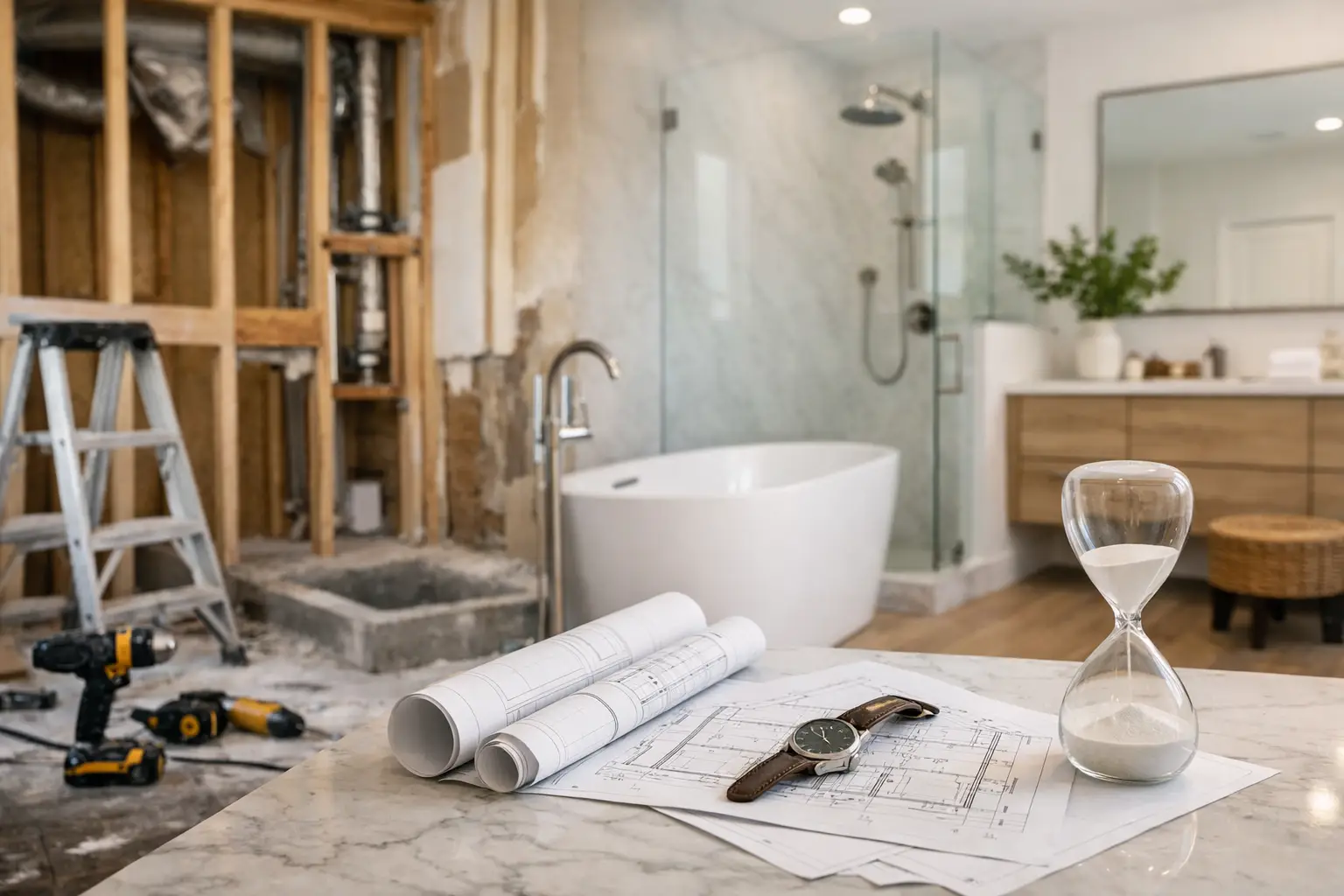
A bathroom rarely looks complicated until demolition starts. Then you find the second layer of tile, a mud-set floor that is 2 inches thick, an out-of-plumb wall, or old galvanized lines hiding behind the vanity. That is why homeowners asking how long does bathroom remodeling take are usually asking two different questions at once: how long should the work take, and what actually causes a job to run long.
For a standard full bathroom remodel in New Jersey, a realistic construction window is often 3 to 6 weeks once work begins. A simple cosmetic update may land closer to 2 to 3 weeks. A primary bath with layout changes, custom glass, waterproofing details, long-lead tile, or permit-driven plumbing and electrical work can run 6 to 10 weeks or more. The answer depends less on bathroom size alone and more on scope, product selection, inspection timing, and how disciplined the builder is before the first tile comes off the wall.
How long does bathroom remodeling take in real conditions?
If you strip the question down to field operations, most bathroom remodels follow the same sequence: planning, demolition, rough work, inspections where required, substrate prep, waterproofing, tile, finish carpentry, plumbing and electrical trim, then punch list. What changes the schedule is friction. In New Jersey, that friction often comes from township permits, older housing stock, and product availability.
A hall bath in a 1990s home in Livingston with no layout changes is very different from a primary bath in a pre-war home in Montclair or Maplewood. In the newer bath, framing is usually predictable, the subfloor is flatter, and the plumbing may only need minor updates. In the older bath, it is common to uncover out-of-level floors, patched framing, cast iron, nonstandard stud spacing, or lead-related compliance concerns in pre-1978 homes. Those conditions do not make the project impossible. They do add time if they were not accounted for upfront.
The bathroom remodel timeline, phase by phase
Pre-construction: 2 to 6 weeks
Homeowners often think the remodel starts on demo day. It starts earlier. Field measurements, scope definition, finish selections, shop drawings for glass or millwork, and permit preparation all happen before a crew touches the room.
If selections are made quickly and the project is straightforward, pre-construction can move fast. If the homeowner is still deciding between slab shower walls and large-format porcelain, or between a freestanding tub and an alcove setup that changes plumbing locations, this stage expands. Custom vanities, specialty plumbing trims, and certain imported tiles can add lead time before the physical schedule even starts.
In towns across Essex, Morris, and Bergen counties, permit review time also matters. Some municipalities move efficiently. Others do not. That timing is outside the tile installer’s control, which is why disciplined contractors do not promise field start dates before permit and material status are clear.
Demolition: 1 to 3 days
Most bathroom demolition is fast. What slows it down is protection, debris path logistics, and what the crew finds after removal. In an occupied home, proper floor protection, dust containment, and controlled haul-out take time, but they save the rest of the house.
Discovery conditions matter here. A shower pan failure with rotted subfloor is different from a dry, sound assembly that just needs updating. If framing or subfloor repair is required, demolition can flow directly into carpentry rather than ending cleanly in one day.
Framing, plumbing, and electrical rough-in: 2 to 5 days
This is where layout changes earn their time cost. Keeping fixtures in place is faster. Moving a toilet, shifting a shower drain, recessing a medicine cabinet, adding a heated floor, or reworking lighting zones adds labor and coordination.
In older NJ homes, plumbing upgrades can expand quickly. Replacing a small section of outdated supply line is one thing. Reworking venting or tying new fixtures into aging drain lines is another. Good project management shows up here because the rough trades need to be sequenced tightly, not stacked on top of one another.
Inspections: 1 to 5 days of schedule impact
The inspection itself may take 20 minutes. The wait for it is what affects the calendar. Some townships can inspect the next day. Some cannot. If plumbing and electrical roughs need sign-off before insulation or wall closure, the project pauses.
This is one reason homeowners hear different timeline answers from different contractors. One company may quote labor duration only. Another includes real-world wait time. The second answer is usually more useful.
Backer board, mud work, leveling, and waterproofing: 2 to 4 days
This phase gets underestimated all the time. Tile only looks clean when the surfaces under it are flat, square, and dry. If walls need shimming, floors need leveling, or a shower requires a properly sloped pan and full waterproofing system, those are not optional steps.
A builder-honest timeline includes cure times. Thinset, self-leveling compounds, waterproof membranes, and patch materials all have manufacturer requirements. Trying to compress those windows may save a day on paper and cost weeks if failure shows up later.
Tile installation: 3 to 8 days
Tile schedule depends on material size, layout, and edge conditions. A basic 3×6 subway tile surround goes faster than a floor-to-ceiling large-format porcelain installation with niches, miters, a linear drain, and tight pattern alignment.
Grout and setting times matter too. If the bathroom includes XL porcelain slabs or highly visible bookmatched features, production slows because precision goes up. That is normal. Speed should not be the main metric in this phase. Accuracy is.
Trim-out and finishing: 2 to 5 days
Once tile is complete, the room still needs vanity installation, faucet trim, toilet set, mirror, lighting, accessories, paint touch-up, and often shower glass. Custom glass is a common schedule hinge because final measurement usually happens after tile is done. Fabrication can add days or more depending on the glass package.
The last few days also tend to reveal small corrections – a door swing adjustment, a trim plate alignment issue, a paint repair near a casing. That is not delay. That is punch work, and it should be part of the schedule.
What adds time to a bathroom remodel?
The biggest schedule drivers are not mysterious. They are usually visible in the scope.
Layout changes add time because plumbing, electrical, framing, and inspections all expand. Custom materials add time because they must be ordered, delivered, checked, and sometimes re-ordered. Older homes add time because concealed conditions are less predictable. Municipal approvals add time because they operate on township calendars, not homeowner calendars.
There is also a coordination factor. A bathroom remodel with direct-employed crews or a tightly managed trade roster tends to move more predictably than one handed off through multiple subcontracting layers. Fewer handoffs usually means fewer gaps between phases.
What keeps a bathroom remodel on schedule?
The shortest bathroom jobs are usually the best prepared ones, not the simplest looking ones. Clear drawings, final selections before demo, realistic lead-time checks, and permit filings done early all reduce friction.
Homeowners also help the schedule by making finish decisions before the room is open. Waiting until rough plumbing is complete to decide on a wall-mounted faucet or switching vanity sizes after tile starts almost always costs time. So does ordering beautiful materials without confirming stock, dye lot consistency, or accessory compatibility.
An engineering-led builder will usually spend more time before the start date and less time improvising midstream. That trade-off is worth it. Bathrooms are compact spaces with dense coordination. One missed dimension affects tile cuts, vanity fit, plumbing centerlines, and glass tolerances at the same time.
A realistic answer for NJ homeowners
So how long does bathroom remodeling take if you want the answer you can actually plan around? For a straightforward hall bath, think roughly 3 to 4 weeks of on-site work. For a full primary bath with layout changes, permit activity, custom finishes, and glass, think more in the 5 to 8 week range. If the home is older or the scope includes structural correction, hidden water damage, or specialty materials, the timeline can move beyond that.
That range is not vagueness. It is the honest version of scheduling. A contractor who tells you every bathroom takes the same number of days is usually pricing with assumptions or speaking in ideal conditions that may not exist in your home.
The better question is not just how fast can this bathroom be done. It is whether the timeline reflects the real scope, the township, the house age, the material lead times, and the cure times required to build it correctly. When those variables are accounted for early, the schedule usually gets shorter where it counts – fewer surprises, fewer stoppages, and fewer avoidable revisions after work begins.
A good bathroom remodel should feel organized before it feels finished. That is usually the first sign the timeline you were given is real.