
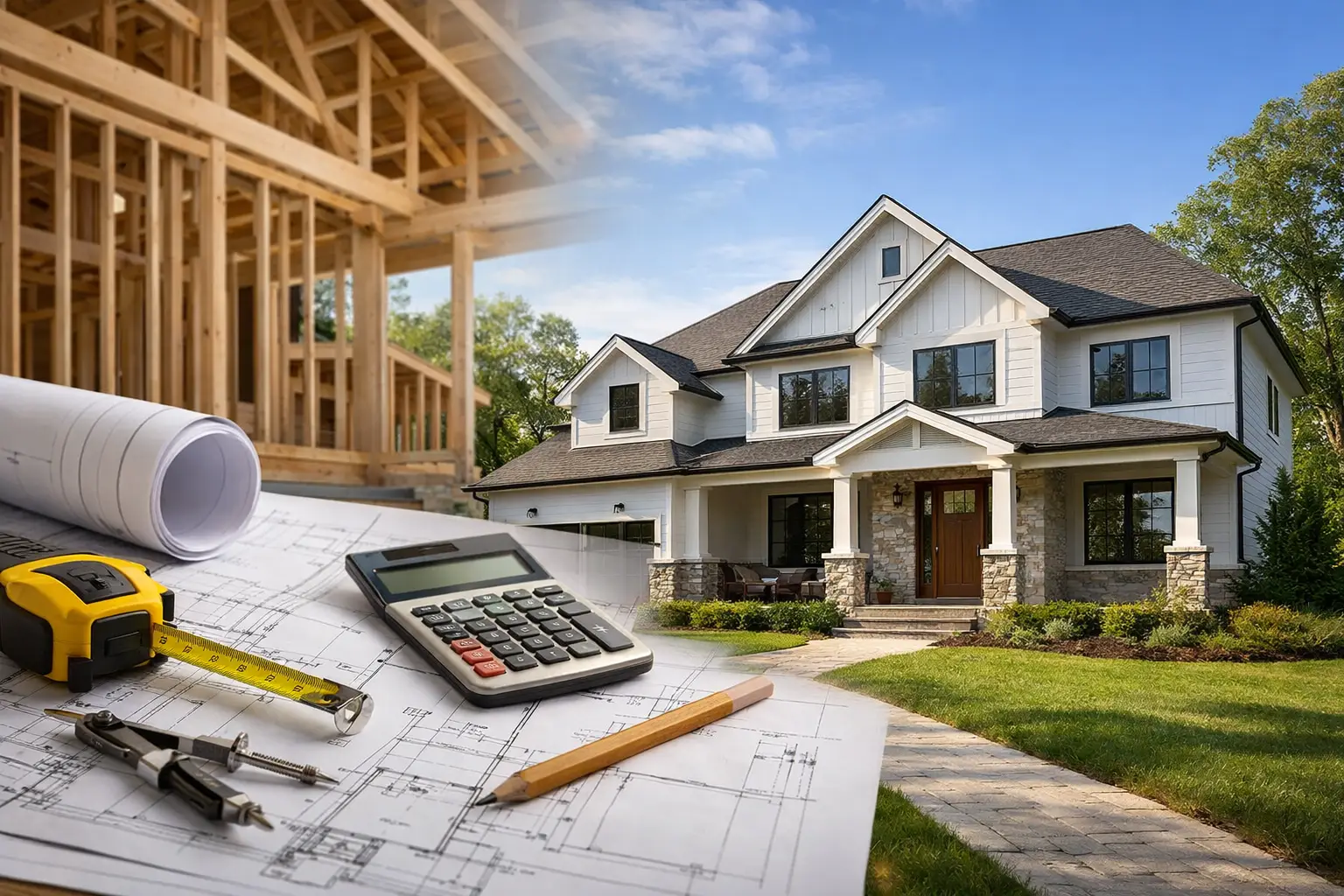
Sticker shock usually starts the moment a homeowner realizes that custom home building cost is not a single number. It is a moving target shaped by land conditions, design choices, permitting, materials, labor, and the level of finish expected at the end. In New Jersey, where regulations, lot conditions, and buyer expectations can vary significantly from one town to the next, that number deserves a more precise conversation.
For homeowners building a primary residence and for investors evaluating a ground-up project, the real question is not just what it costs to build. The better question is what drives the cost, where the budget is worth protecting, and how to avoid expensive surprises once construction begins.
What affects custom home building cost most?
The biggest cost drivers are usually size, complexity, location, and finish level. A straightforward home with a clean footprint, standard rooflines, and practical material selections will cost far less per square foot than a fully customized property with expansive glass, luxury stone, custom millwork, and advanced structural requirements.
In New Jersey, location can change the equation quickly. Municipal permit fees, zoning requirements, utility access, drainage conditions, and local building expectations all influence the budget. A buildable lot in one area may be far less expensive to develop than a sloped or constrained lot in another, even before the foundation is poured.
The design itself also matters more than many clients expect. Two homes with the same square footage can have very different construction costs. A home with open spans, oversized kitchen features, spa-style bathrooms, high ceilings, large-format tile, premium flooring, and custom exterior details demands more labor, coordination, and specialty materials.
Typical custom home building cost ranges
There is no responsible way to quote a true custom build with one statewide average, but realistic planning starts with ranges. In the New Jersey market, custom home building cost often lands higher than many online calculators suggest because those calculators rarely account for premium finishes, local labor rates, permitting, engineering, site development, and the level of project management required for a polished result.
A moderately customized home may start in a lower premium range, while a fully custom home with high-end finishes, structural upgrades, and tailored architectural details can move well beyond that. If the project includes extensive site work, difficult access, retaining walls, drainage solutions, upgraded mechanical systems, or luxury interior packages, the number rises again.
That is why square-foot pricing should be treated as a planning tool, not a promise. It can help frame the conversation, but it should never replace a detailed scope and a builder-led review of the lot, design intent, and finish expectations.
Site conditions can reshape the budget fast
Before construction begins, the property itself has to be evaluated. Soil quality, grading, excavation demands, drainage, tree removal, and utility connections can all add substantial cost. A flat, clean lot with existing access is a different project than a property that needs major clearing, engineered drainage, or foundation adaptation.
This is one of the most common reasons early estimates fall apart. Many owners focus on the house they want and underestimate what it takes to prepare the site for that house. In custom construction, site work is not background cost. It is a major line item.
If the home requires a walkout basement, deep foundation work, upgraded waterproofing, or engineered support because of the land, those are not cosmetic upgrades. They are necessary construction costs, and they should be addressed early rather than discovered mid-project.
Design choices that raise or reduce cost
Good design creates value, but not every design choice delivers value at the same rate. Complex rooflines, extensive structural steel, oversized window systems, custom staircases, premium cabinetry, imported tile, and specialty lighting plans all elevate a home. They also increase cost through added materials, added labor, and longer timelines.
Some upgrades, however, offer a stronger return in daily livability and long-term value. Kitchens, primary bathrooms, flooring, exterior materials, and energy-efficient systems tend to justify investment better than scattered decorative spending. The key is alignment. A high-end home should feel consistently high-end, not overbuilt in one room and underfinished in another.
This is where experienced builder guidance matters. Cutting costs in the wrong places can compromise durability, appearance, or resale strength. At the same time, not every premium option is necessary to achieve a sophisticated final result.
Labor, permits, and project management are part of the real cost
Clients often think of cost in terms of lumber, concrete, and finishes, but custom home building cost also includes the systems behind the build. Architectural planning, engineering, permitting, inspections, scheduling, subcontractor coordination, and quality control all contribute to a successful project.
High-end custom construction requires more than trades on site. It requires disciplined oversight. When a builder is managing sequencing properly, protecting timelines, and maintaining quality from framing through final finishes, that management has value. It reduces mistakes, limits rework, and keeps the project moving with more control.
Permitting costs also vary by town, and code compliance in New Jersey is not something to underestimate. Mechanical, plumbing, electrical, structural, and energy requirements all need to be factored into the job from the beginning.
Why cheap estimates usually become expensive projects
A low estimate can feel attractive at the start, especially when the total investment is significant. But in custom building, a number that seems unusually low usually means one of two things: the scope is incomplete, or the finish level being assumed is much lower than the client expects.
That gap shows up later as change orders, delays, downgraded materials, or visible quality compromises. For homeowners building a dream residence, that creates frustration. For investors, it creates financial instability.
A serious builder should be able to explain what is included, what is excluded, and where allowances may shift based on selections. Transparent budgeting is not about producing the lowest number. It is about producing a number that can withstand the actual demands of the project.
How to budget for custom home building cost with more control
The strongest budgets begin with clear priorities. Start with the must-haves: square footage, bedroom and bathroom count, exterior style, kitchen expectations, flooring level, bathroom finish quality, and any special-use spaces such as a home office, gym, or guest suite. Once those priorities are clear, decisions become easier.
It also helps to carry a contingency. Even well-planned custom projects can encounter changes related to site conditions, municipal requirements, product lead times, or owner selections. A disciplined contingency helps protect the project without forcing rushed decisions.
Builder involvement early in design is another major advantage. When the construction team weighs in before plans are finalized, opportunities for smarter budgeting appear sooner. That may mean simplifying framing, adjusting room layouts, refining materials, or selecting systems that preserve the design while improving cost efficiency.
For many clients, this is the difference between a home that looks impressive on paper and a home that is actually practical to build at the intended quality level.
Custom home building cost and long-term value
The right build strategy should balance immediate budget with long-term return. For homeowners, that return shows up in comfort, durability, layout efficiency, and a finish level that still feels refined years later. For investors, it shows up in appraisal strength, marketability, rent potential, and lower maintenance issues after completion.
Premium construction is not simply about spending more. It is about spending with purpose. Durable flooring, quality cabinetry, strong waterproofing, efficient HVAC systems, well-planned lighting, and professionally executed finishes tend to outperform cheaper alternatives over time.
That is particularly true in competitive New Jersey markets where buyers and tenants notice workmanship. Poor alignment, rushed finishing, and low-grade materials are visible. So is quality.
Choosing the right builder matters as much as the budget
A custom home is not a commodity purchase. The builder’s standards, communication style, scheduling discipline, and finish quality will shape the experience as much as the blueprint does. That is why clients should look beyond surface-level pricing and evaluate how a contractor approaches planning, scope clarity, and project control.
A company like Gus Skyy Co is positioned for clients who want premium craftsmanship and one team managing the process from concept through completion. That level of oversight is especially valuable when the project includes custom details, elevated finishes, and expectations that go beyond basic construction.
The goal is not simply to build a house. It is to complete a residence that feels intentional, performs well, and holds its value.
If you are planning a custom build, the smartest next move is to approach cost with clarity instead of guesswork. A well-built home starts long before construction begins, with the right scope, the right team, and a budget designed to support the standard you actually want.