
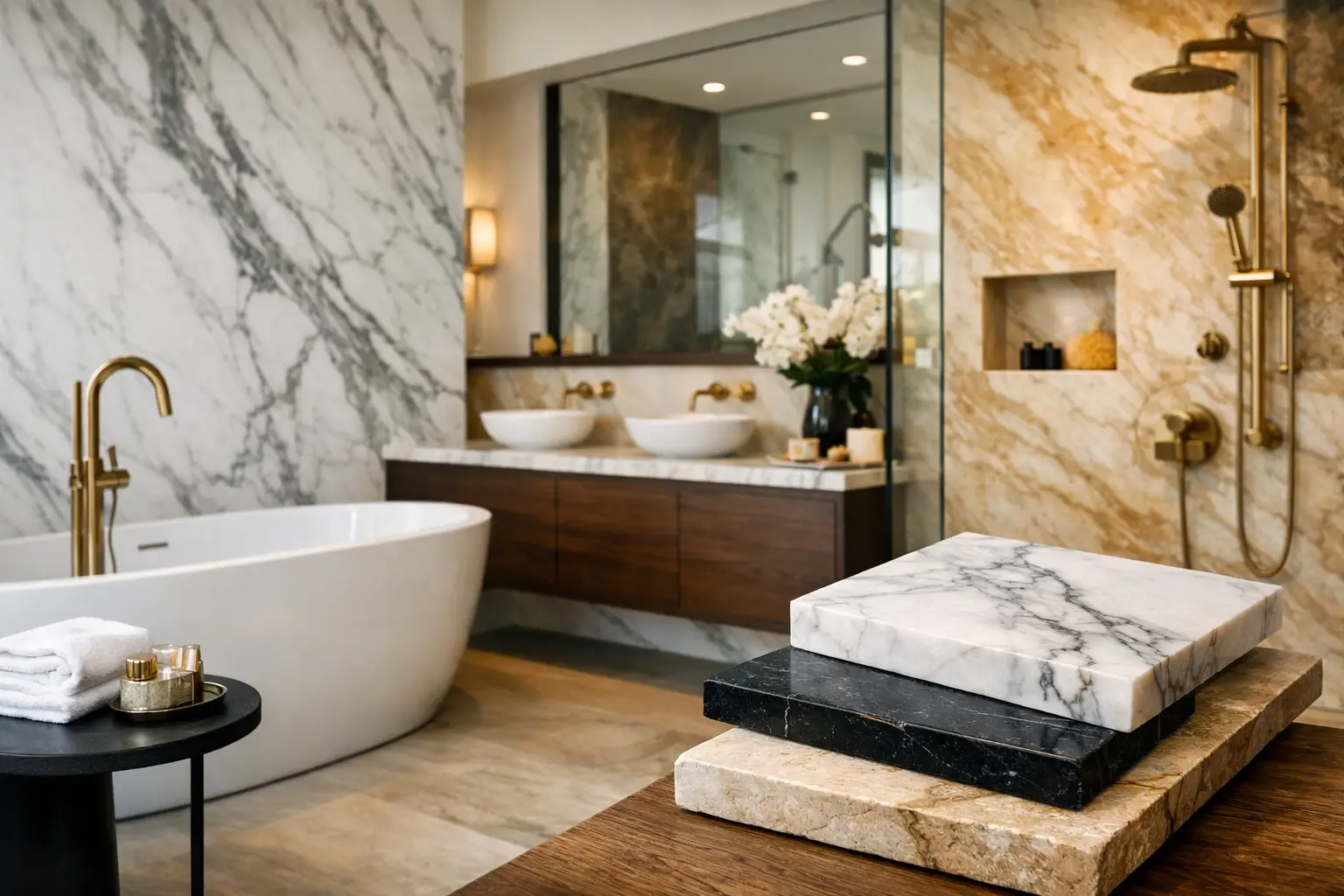
A luxury bathroom usually looks expensive long before it performs like one. That is where many remodels go sideways. The best materials for luxury bathrooms are not just the ones that photograph well. They are the ones that can handle daily moisture, heat swings, aggressive cleaners, and years of use without staining, warping, or looking dated in three seasons.
In New Jersey, that matters more than people think. Homes in Short Hills, Summit, and Franklin Lakes often pair high-end finish expectations with older framing, uneven substrates, or legacy plumbing layouts. In pre-1978 homes in Essex County, you may also be dealing with lead-safe work practices before the pretty part even starts. Material selection has to respect the structure, the schedule, and the maintenance reality of the household.
What makes the best materials for luxury bathrooms
Luxury is usually a combination of visual depth, clean detailing, and long-term stability. Material quality matters, but assembly matters just as much. A marble wall installed over a bad substrate is still a bad wall. A premium vanity top with poor seam planning still looks amateur.
We evaluate bathroom materials on five factors: water resistance, dimensional stability, maintenance burden, repairability, and how they read in natural and artificial light. That last point gets ignored often. A polished surface under bright LED vanity lighting can either feel crisp or feel harsh depending on tone, veining, and reflectivity.
There is also a difference between luxury material and luxury application. Porcelain can be more practical than natural stone and still look more refined when slab layout, grout joints, and edge conditions are handled correctly. The expensive choice is not always the better choice.
Stone vs porcelain in luxury bathrooms
This is usually the first real decision because it influences floors, walls, shower surrounds, niche detailing, and vanity tops.
Natural stone
Marble, quartzite, limestone, and travertine still carry a depth that manufactured materials often try to imitate. Marble gives a bathroom unmistakable movement and softness, especially in larger formats with minimal grout interruption. Quartzite is harder and generally more resistant to etching than marble, which makes it attractive for vanity applications and some wet areas.
The trade-off is maintenance. Marble can etch from common bathroom products. Some limestones darken or stain if sealing and daily care are inconsistent. Travertine can work well in the right design, but the fill and porosity need to be understood up front. If a homeowner wants stone because it is natural, that is valid. If they want it because they assume it will be more durable, that assumption needs testing.
Porcelain
Large-format porcelain and XL porcelain slabs have changed the market. They are stable, low-absorption, and available in convincing stone visuals without the same sealing requirements. For primary bathrooms with steam showers, multiple users, or lower tolerance for upkeep, porcelain is often the smarter specification.
It also gives tighter control over consistency. In a luxury bathroom, that matters when you are trying to align veining across walls or keep a calm tonal palette. Good porcelain is not a compromise material anymore. It is often the engineering answer.
If the question is which material is safer to specify broadly, porcelain wins. If the question is which material offers the most unique natural character, stone still has an edge.
The best materials for luxury bathroom floors
Bathroom floors need more than beauty. They need slip resistance, stable installation, and compatibility with radiant heat if that is part of the scope.
Porcelain tile remains the strongest all-around flooring choice for luxury bathrooms. It performs well with heat, handles moisture, and comes in formats from mosaic to large panel. Matte or satin finishes usually make more sense than highly polished surfaces on the floor. You want traction without making cleaning difficult.
Natural stone floors can be excellent, especially honed marble or textured limestone, but they require better client-fit screening. If the homeowner has children, uses strong cleaning products, or wants minimal maintenance, stone may create friction after move-in. The issue is rarely day one. It is year three.
For heated floors, material thickness and thermal transfer both matter. Dense tile and stone perform well, but substrate prep is where many systems succeed or fail. Older homes in towns like Maplewood or Montclair often need floor flattening or framing review before premium finishes go in. The material may be luxurious, but the performance starts below it.
Wall and shower materials that hold up
The shower is where luxury is easiest to fake and hardest to execute well.
Large-format porcelain on shower walls offers the cleanest balance of design and practicality. Fewer grout joints mean less visual interruption and less maintenance. It also helps in smaller bathrooms where busy wall patterns can make the room feel tighter.
Natural stone walls can be stunning, especially bookmatched marble or vein-cut slabs, but they demand disciplined waterproofing and realistic owner expectations. Stone is not waterproof. The assembly behind it must be. That means proper membranes, drain detailing, niche planning, and movement joints where required.
Glass can work as an accent material, particularly in shower enclosures or partition walls, but too much reflective material can make a bathroom feel cold. We usually prefer glass as a supporting material, not the main event.
For shower pans, the material choice should match both aesthetics and maintenance tolerance. Porcelain tile pans with small-format slip-resistant tile work well. Solid-surface and stone pan systems can also perform, but slope accuracy and drain integration are more important than the brochure image.
Vanity tops, cabinetry, and metal finishes
Vanity areas take a different kind of abuse. Toothpaste, skincare acids, curling irons, and standing water create a separate wear pattern from the shower.
Quartz is often the most practical vanity top for a luxury bathroom. It is consistent, low-maintenance, and resistant to many common bathroom products. Natural stone vanity tops look excellent, especially marble and quartzite, but they require more discipline from the user.
For cabinetry, solid wood and high-quality veneered construction both have a place. In bathrooms, movement from humidity matters. A well-built engineered cabinet box can outperform poorly selected solid wood if the room experiences repeated moisture swings. Painted finishes look refined, but darker stains and wood veneers can age better in high-use spaces because they hide small wear more gracefully.
Metal finishes should be selected as a system, not one fixture at a time. Brushed nickel, polished nickel, unlacquered brass, and warm metallic tones all work in luxury bathrooms, but they age differently. Unlacquered brass develops patina. That is not damage. It is the material doing what it does. If the homeowner wants every fixture to look exactly the same for years, that finish may not be the right fit.
Where luxury bathrooms usually go wrong
Most failures are not about taste. They are about mismatch.
A client chooses marble but wants zero maintenance. Or they choose oversized tile without checking whether the room geometry supports clean layout lines. Or they fall in love with thin floating vanities without accounting for wall reinforcement, plumbing rough-ins, and storage needs.
The other common problem is over-materialing a room. If every surface has heavy veining, polished reflection, and high contrast, the bathroom can start to feel busy rather than expensive. Luxury usually reads better through restraint. One dominant material, one supporting material, and a disciplined metal finish package is often enough.
This is where engineering-led planning helps. Material decisions should be coordinated with substrate tolerance, waterproofing method, lighting plan, and ventilation strategy. In New Jersey, that also means paying attention to the age of the house, the likely condition behind the walls, and township inspection sequencing. A premium finish package installed over rushed prep work is still a risk.
How to choose the right material mix
If you want the safest high-end specification, start with porcelain for floors and shower walls, quartz or quartzite for vanity tops, quality painted or veneered cabinetry, and a consistent metal finish throughout. That package gives strong visual results with lower maintenance exposure.
If you want more natural character and are comfortable with upkeep, use marble or quartzite selectively. A marble vanity wall or feature surface can carry the room without forcing stone into every wet and horizontal application.
If resale matters, avoid highly niche materials unless the rest of the home supports that level of expression. In most premium NJ markets, buyers respond well to calm stone looks, strong lighting, warm metals, and bathrooms that feel easy to live with.
At Gus Skyy Co, this is usually the conversation behind the drawings before material orders are ever placed. The right finish schedule is not about chasing the most expensive option. It is about building a bathroom that still reads clean, intentional, and technically sound years after the reveal photos are gone.
A luxury bathroom should earn its keep every morning. Choose materials that can do the job, not just pose for it.