
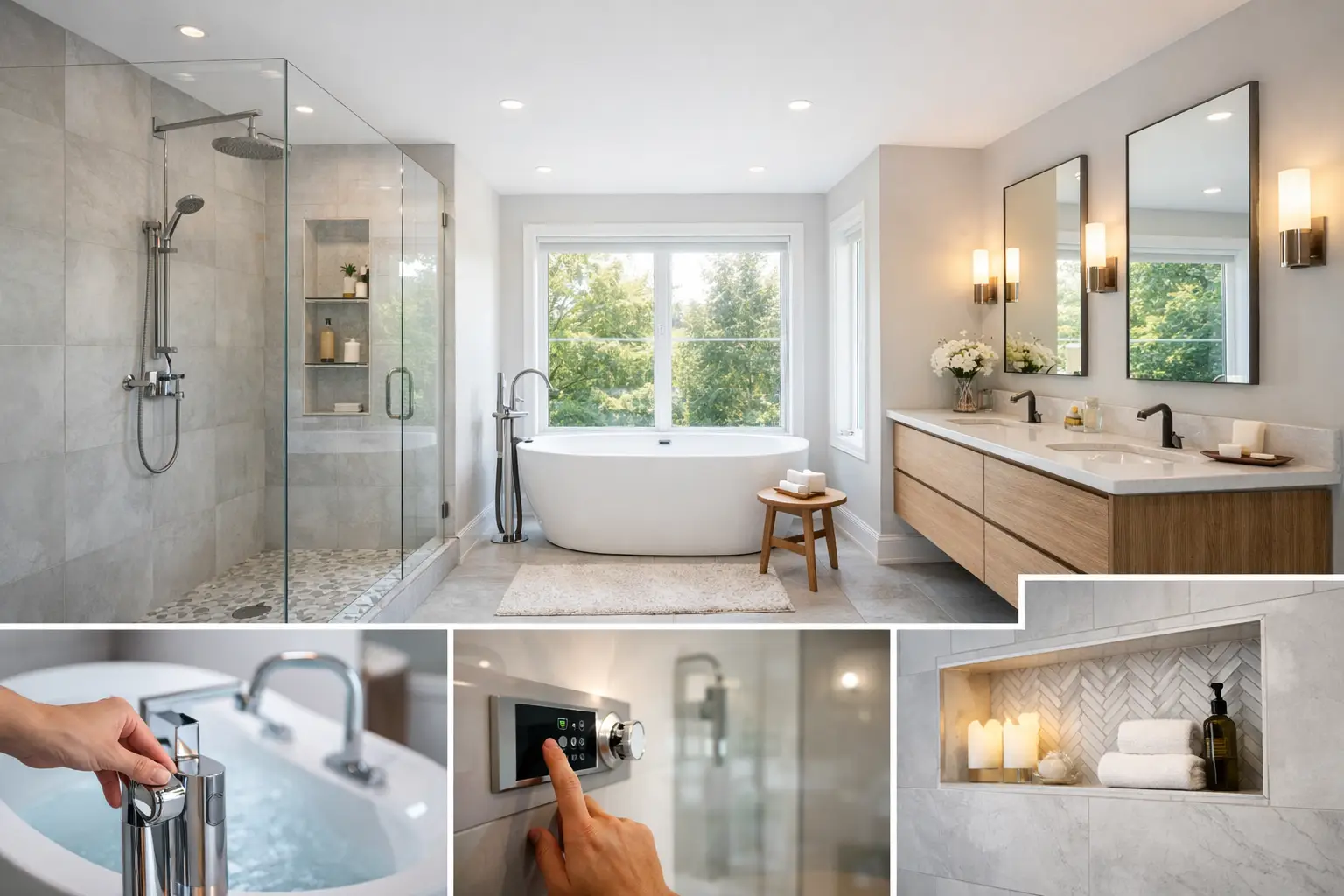
You feel a bathroom renovation in the first 30 seconds. Not in the paint color. In the way the door clears the vanity, the mirror lighting works on an early winter morning, and the shower stays warm without flooding the rest of the room. The best bathroom renovation features are the ones that improve daily use, reduce maintenance, and hold up under real construction conditions – especially in New Jersey homes where older framing, uneven floors, and permit realities can change the plan fast.
A good bathroom is not a showroom set. It is a small, wet, heavily used space that needs to perform. That means layout comes first, then waterproofing, then lighting, ventilation, storage, and finish durability. Homeowners in places like Short Hills, Summit, Livingston, and Ridgewood often start with surface ideas. The better result usually comes from fixing what is behind the tile and inside the walls before choosing what goes on top.
Best bathroom renovation features that earn their keep
Some upgrades photograph well but do very little for comfort or resale. Others look simple on paper and make the room work far better. The strongest bathroom renovations usually combine both – visible finish quality and hidden performance.
1. A larger, better-planned shower
If there is one feature that consistently improves a primary bath, it is a properly sized walk-in shower. Not just bigger for the sake of bigger, but proportioned around real body movement, spray placement, bench depth, and glass swing.
In many NJ homes built before 1990, the original shower footprint is tight, the framing is not perfectly square, and the drain is not centered for the new layout. That matters. A 36-inch by 36-inch shower may meet minimum logic on paper, but a 42-inch by 60-inch layout usually feels like an actual upgrade. Add a recessed niche that aligns with tile coursing, and the shower stops looking improvised.
The trade-off is space pressure. Expanding the shower may mean reducing tub deck area, borrowing from a linen closet, or reworking plumbing locations. In a hall bath, that may not be worth it. In a primary suite, it often is.
2. Waterproofing that goes beyond code minimum
This is less visible, but it is one of the best bathroom renovation features because it protects everything else. Tile and grout are not waterproof. The assembly behind them is what keeps water out of framing, insulation, and adjacent rooms.
A proper system includes sloped shower pans, sealed seams, waterproof wall treatment in wet zones, and careful transitions at curbs, niches, benches, and mixing valve penetrations. In older Essex and Union County homes, you also see out-of-level subfloors and previous patchwork repairs. Those conditions need correction before finish work starts.
There is no design payoff in replacing tile two years later because the substrate was rushed. This is one of those areas where engineering discipline matters more than product marketing.
3. Layered lighting, not one ceiling fixture
A bathroom with one overhead light is functional in the narrowest sense. It is not comfortable, and it is not flattering. Good bathroom lighting needs layers: ambient light for the room, task light at the vanity, and often a dedicated shower-rated fixture if the enclosure is deep or enclosed.
Vanity lighting matters most. Side-mounted sconces or a mirror with well-distributed front light reduces shadows better than a single can light above your head. In homes where family members get ready on different schedules, dimmers are worth including. They are a small specification decision that changes the room every day.
The constraint is electrical capacity and wall space. In some remodels, particularly in older plaster-wall homes, adding new fixture locations takes more opening and patching than homeowners expect. Still, lighting is usually one of the highest-return changes in the room.
4. A vanity designed around storage, not just symmetry
Double vanities are popular because they look balanced. But two sinks do not automatically make a bathroom better. In many layouts, a single larger sink with more drawer storage performs better than two cramped bowls with dead space between them.
The real question is what has to live there. Hair tools, backup toiletries, towels, cleaning supplies, makeup, electric toothbrushes – all of that needs planned storage. Deep drawers with internal organizers generally outperform lower cabinet doors because they use the full depth more efficiently.
In tighter bathrooms, floating vanities can make the room feel larger. They also expose more finished floor, which helps with cleaning. The trade-off is reduced storage volume unless the unit is carefully sized.
The features that make a bathroom easier to live with
The most successful bathroom remodels are not built around one statement item. They are built around friction reduction. Fewer awkward reaches. Better air movement. Less visual clutter. Less cleaning.
5. Heated floors in the right applications
Heated tile floors are not mandatory, but in a primary bath they are often one of the most appreciated upgrades. New Jersey winters are cold enough that stepping onto porcelain at 6:00 a.m. feels different with radiant heat below it.
This feature works best when the room is being renovated fully, because height buildup, electrical planning, and floor assembly all need coordination. It is especially useful in bathrooms over unconditioned spaces or over older subfloors that tend to feel cold. In small hall baths, the value can still be there, but it depends on budget priorities and who uses the room.
6. Real ventilation sized for the room
A better exhaust fan is rarely on a homeowner wish list at the start, but it should be. Steam control protects paint, trim, mirrors, and indoor air quality. In bathrooms with poor exterior vent runs or long duct paths, the fan choice and duct design matter just as much as the grille you see on the ceiling.
This is especially relevant in older homes where bathrooms were added or expanded after the original build. We often see undersized fans, flexible ducting that reduces performance, or terminations that are less than ideal. Quiet fans with humidity sensing are worth considering, but only if the underlying vent path is correct.
7. Better niches, ledges, and built-in storage
Storage in a shower should be designed, not improvised after tile starts. That means deciding early whether the right move is a recessed niche, a full-width ledge, a corner shelf, or a half wall with a cap.
A niche looks simple. It is not always simple in the field. Stud layout, plumbing lines, waterproofing continuity, and tile module all affect placement. A niche centered on the wall but cutting awkwardly through grout lines can make an otherwise clean shower look off. This is exactly the kind of small decision that separates a planned bathroom from a pieced-together one.
8. Curbless or low-threshold entries where the structure allows
Curbless showers have become more common because they look clean and improve accessibility. They also make a bathroom feel larger by carrying the floor plane through without interruption.
But this is not a universal recommendation. A true curbless entry requires enough floor depth to recess the shower assembly while maintaining proper slope to drain. In some second-floor renovations, existing joist direction and structural limits make that more complicated. Sometimes a low-threshold shower is the smarter answer. You still improve access and appearance without forcing a structural workaround that adds disproportionate cost and complexity.
Finish choices matter, but performance matters more
A bathroom remodel should look sharp on day one and still work on day 1,000. That usually comes down to choosing materials with realistic maintenance expectations.
9. Large-format tile and slab surfaces, used carefully
Large-format porcelain and porcelain slab installations can reduce grout joints and create a cleaner visual field. In the right bathroom, that gives a more architectural look and cuts down on grout maintenance.
But bigger tile is not automatically easier. Wall flatness matters more. Layout planning matters more. Cuts around valves, niches, and corners become more obvious if the installer is forcing the material to hide substrate issues. In older NJ homes with wavy walls, prep is the difference between a premium result and a finish that never quite sits right.
10. Hardware and fixtures selected for serviceability
This sounds unglamorous, but it is one of the smartest decisions in the room. Choose plumbing fixtures with available replacement parts, standard rough-in logic, and finishes that will age predictably. Choose valves that another qualified plumber can service five years from now without opening tile.
The same goes for drawer hardware, shower glass hardware, and even toilet placement. Bathrooms are mechanical spaces. Service access is not a luxury. It is good planning.
How to choose the best bathroom renovation features for your house
The right feature list depends on who uses the bathroom, how long you plan to stay, and what the house will support without unnecessary reconstruction. A primary bath in Chatham used by two working adults should not be designed the same way as a hall bath in Maplewood serving three kids. A resale-focused investor renovation has a different scope logic than a long-term custom home.
Start with the room’s failures. Is storage the problem? Is it moisture? Poor lighting? A shower that feels cramped? Then look at structure, plumbing locations, electrical capacity, and ventilation paths. That order matters. It keeps the budget attached to performance instead of impulse upgrades.
At Gus Skyy Co, that is usually where the conversation gets more useful – when selections move out of the mood-board phase and into actual build conditions, permit constraints, and sequencing. The best bathrooms are not the ones with the most features. They are the ones where every feature has a reason.
If you are planning a bathroom renovation, think less about checking boxes and more about daily use under real conditions. The room will tell you what it needs if you measure honestly, build cleanly, and prioritize what improves the way the space works.