
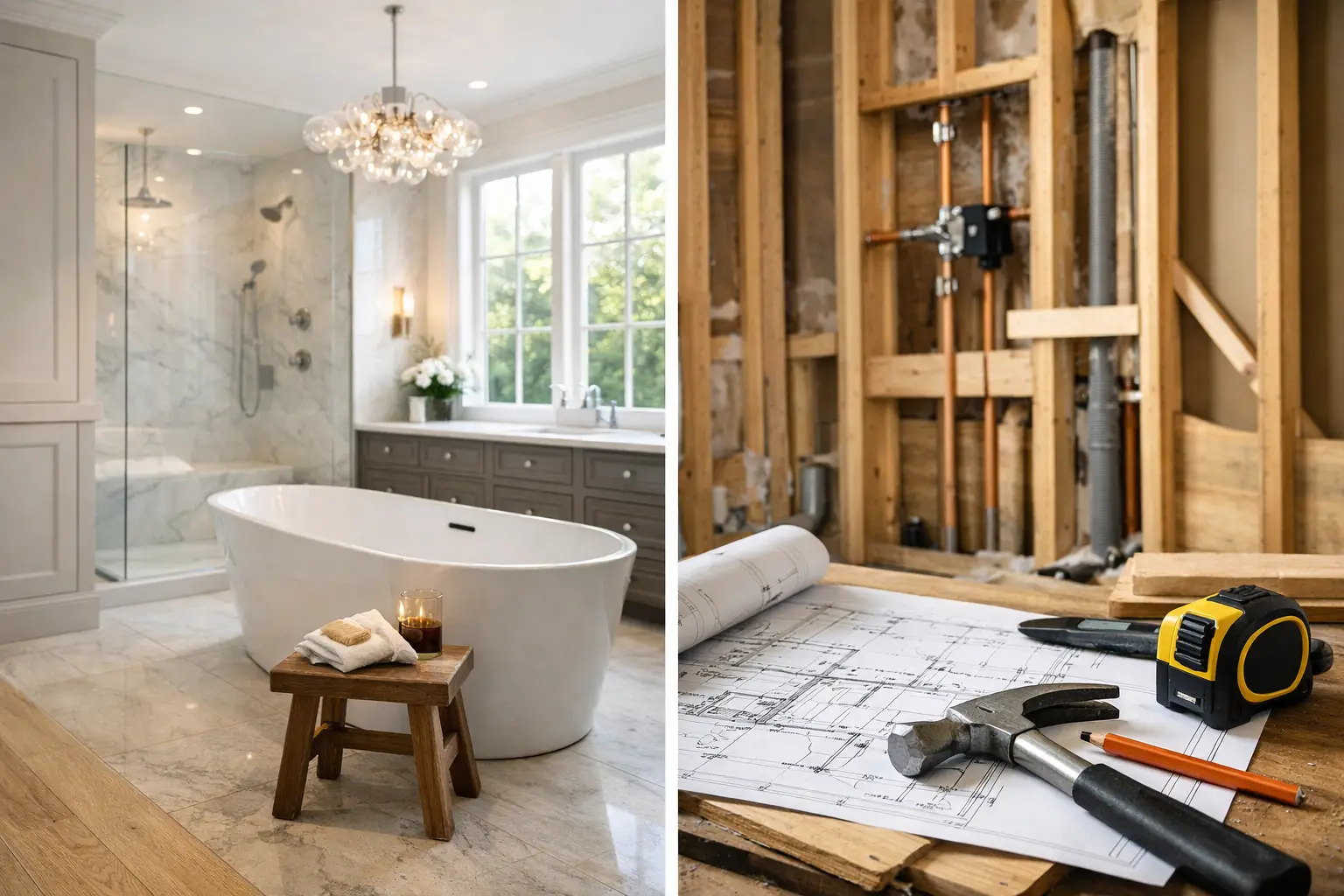
A luxury bathroom usually goes sideways before tile is even ordered. The problem is not taste. It is scope control, layout logic, and underestimating what premium finishes demand from the rough work behind the walls.
If you are researching how to remodel a luxury bathroom, start there. The polished slab wall, the curbless shower, the steam system, the heated floor, the quiet ventilation, and the integrated lighting all depend on structural, plumbing, electrical, and waterproofing decisions made early. In New Jersey homes, especially older housing stock in Essex, Morris, Union, and Bergen counties, those decisions get complicated fast.
How to remodel a luxury bathroom without designing yourself into a corner
A luxury bath remodel is not about adding more materials. It is about building a room that performs correctly at a high finish level. That means the layout has to work first.
The most common planning mistake is forcing expensive fixtures into a bad footprint. A freestanding tub may look right on paper, but if it blocks circulation, crowds the toilet room, or turns window trim and cleaning access into a problem, it is the wrong move. The same goes for oversized vanities that reduce door clearances or showers that look generous in elevation but fail in daily use.
In many NJ primary bath remodels, the best upgrade is not adding square footage. It is reallocating the square footage you already have. We often see underperforming plans with an oversized deck tub, a cramped shower, and too little vanity storage. A better plan might remove the platform tub, open the shower to full width, add a double vanity with usable drawer banks, and improve natural light lines. The room feels more expensive because it works better.
That planning stage should also test your must-haves against the house itself. Can the framing support a large-format porcelain slab installation with tight tolerances? Does the existing plumbing location fight the new layout? Will the joist direction allow a true curbless entry without excessive structural modification? These are not design details. They are scope drivers.
Start with infrastructure, not finishes
Homeowners usually begin with stone, fixtures, and inspiration images. Builders start with the substrate, rough-ins, and mechanical capacity. The builder approach is the safer one.
Luxury bathrooms ask more from the house than standard baths do. Heated floors need a coordinated electrical plan. Steam showers require proper enclosure design, vapor management, insulation strategy, and equipment placement. Body sprays increase water demand and drainage considerations. Large vanities often need dedicated lighting zones, outlet planning, and mirror coordination before drywall closes.
If the home is older, infrastructure review matters even more. In pre-1978 homes in towns like South Orange, Maplewood, Montclair, or Westfield, lead-safe work practices may apply depending on the scope. In older homes throughout Essex and Union counties, you may also run into out-of-plumb framing, undersized exhaust paths, and previous renovation work that does not meet current standards. Premium finishes do not hide those issues. They expose them.
This is also where engineering discipline matters. A luxury bath with slab walls and minimal reveals has little tolerance for uneven framing or sloppy prep. If a wall is out by even a small amount, you will see it in reflection lines, fixture alignment, and trim transitions. Expensive materials make mistakes easier to notice, not harder.
Material choices that change the job
When homeowners ask how to remodel a luxury bathroom, they usually mean how to choose the right visible finishes. The better question is how finish selections affect installation sequence, labor, and risk.
Take tile format. A 2×2 mosaic shower floor behaves very differently from a full slab shower wall package. Mosaics handle slope transitions well. Slabs reduce grout lines and create a cleaner visual field, but they demand flatter walls, tighter handling logistics, and more deliberate sequencing around niches, valves, and glass tolerances. Neither is automatically better. It depends on the look you want and how much precision the install requires.
Natural stone has a different maintenance profile than porcelain. Marble can be beautiful in a primary bath, but it is also more sensitive to etching, sealing schedules, and installer error. Porcelain gives you more consistency, especially across large wall surfaces, and it is often the better technical choice for a busy household that wants low-maintenance performance.
Metal finishes matter too. Mixed metals can work, but only if they are coordinated intentionally. Luxury does not come from using more finish types. It comes from restraint, consistency, and proper scaling. The same logic applies to lighting. Decorative sconces alone rarely solve a bathroom. You need task lighting at the vanity, ambient lighting for the room, shower-rated fixtures where required, and controls that make sense at 6:00 a.m. and 11:00 p.m.
The hidden systems that make a bathroom feel expensive
A luxury bathroom should be quiet, dry, warm, and easy to use. Those qualities come from hidden systems more than visible materials.
Ventilation is a good example. In New Jersey, where humidity swings are real and winter condensation can be a problem, undersized exhaust is one of the fastest ways to shorten the life of a beautiful bathroom. A steam shower raises the stakes. So does a room with minimal operable window area. Fan sizing, duct routing, and control strategy should be addressed during design, not after finishes are selected.
Water management is another. Curbless showers look clean, but they require exact floor prep, reliable waterproofing, and drainage planning that starts below the tile. The shower head location, glass line, slope direction, and bathroom entry path all affect whether that clean look performs well or creates nuisance water migration.
Comfort systems matter as well. Radiant floor heat is often worth it in a primary bath, especially over tile or porcelain in colder months. But the thermostat location, sensor placement, and floor buildup need to be coordinated before the substrate package is finalized. If you decide late, you may force changes to transitions, elevations, or door clearances.
Permits, inspections, and NJ realities
A true luxury bath remodel is rarely just a cosmetic job. If you are moving plumbing, modifying electrical, changing ventilation, altering framing, or adding systems like steam or radiant heat, permits are typically part of the process.
That matters because township review and field inspection culture vary. One municipality may move permit reviews faster than another. One inspector may focus closely on venting and electrical spacing, while another pays particular attention to framing modifications or shower waterproofing details. You do not build the schedule around best-case assumptions.
Older North Jersey homes also bring practical constraints that are easy to miss during design. Cast iron stacks, plaster walls, irregular framing, old patchwork subfloors, and limited mechanical chase space can all affect what looks straightforward on a plan. If the bathroom is above finished living space, access and protection planning matter. If it is over an older joist system, floor stiffness may become part of the tile discussion.
This is one reason design-build execution tends to reduce friction on premium bathroom projects. The layout, selections, permit set, and field conditions are reviewed as one package instead of being handed off in fragments.
Budgeting the right way for a luxury bathroom
There is no honest way to discuss exact pricing without a defined scope, but there is a right way to think about budget.
The biggest drivers are layout changes, plumbing relocation, electrical scope, waterproofing complexity, tile format, glass package, cabinetry level, and whether the work triggers structural modification. A primary bath that keeps the same footprint and fixture locations is one category. A remodel that reworks the shower, moves the tub, adds floor heat, upgrades service capacity for new electrical loads, and installs slab walls is another.
Allowance planning matters. If your fixture and finish allowances are unrealistic, the budget will look stable until selections begin. Then it will not. The cleanest process is itemized scope with realistic selection ranges tied to actual installation requirements. That keeps decisions grounded before demolition starts.
How to choose the right team for a luxury bathroom remodel
If you are comparing firms, ask how they handle preconstruction, not just how their finished photos look. A luxury bath is won in documentation and sequencing.
Ask who is responsible for field measurements, who coordinates tile layout before install, who verifies rough locations against final fixture specs, and how change orders are handled when hidden conditions appear. Ask whether the crew installing the waterproofing is the same accountable team responsible for the tile package. Ask how they manage lead-safe requirements in older homes and how they communicate schedule impacts tied to permit approvals or inspection holds.
A polished rendering is easy to produce. A bathroom with aligned stone veining, correct slopes, quiet exhaust, balanced lighting, and no awkward clearances takes discipline.
For homeowners in towns like Short Hills, Summit, Chatham, Madison, or Franklin Lakes, that discipline usually matters more than shaving a few points off the initial number. Luxury bathrooms are dense projects. A lot happens in a small room. The room only feels refined when the project was managed with that level of seriousness from day one.
The smartest move is to treat the bathroom less like a décor project and more like a compact systems build with premium finishes layered on top. That is how you get a room that still feels right five years later, not just on installation day.