
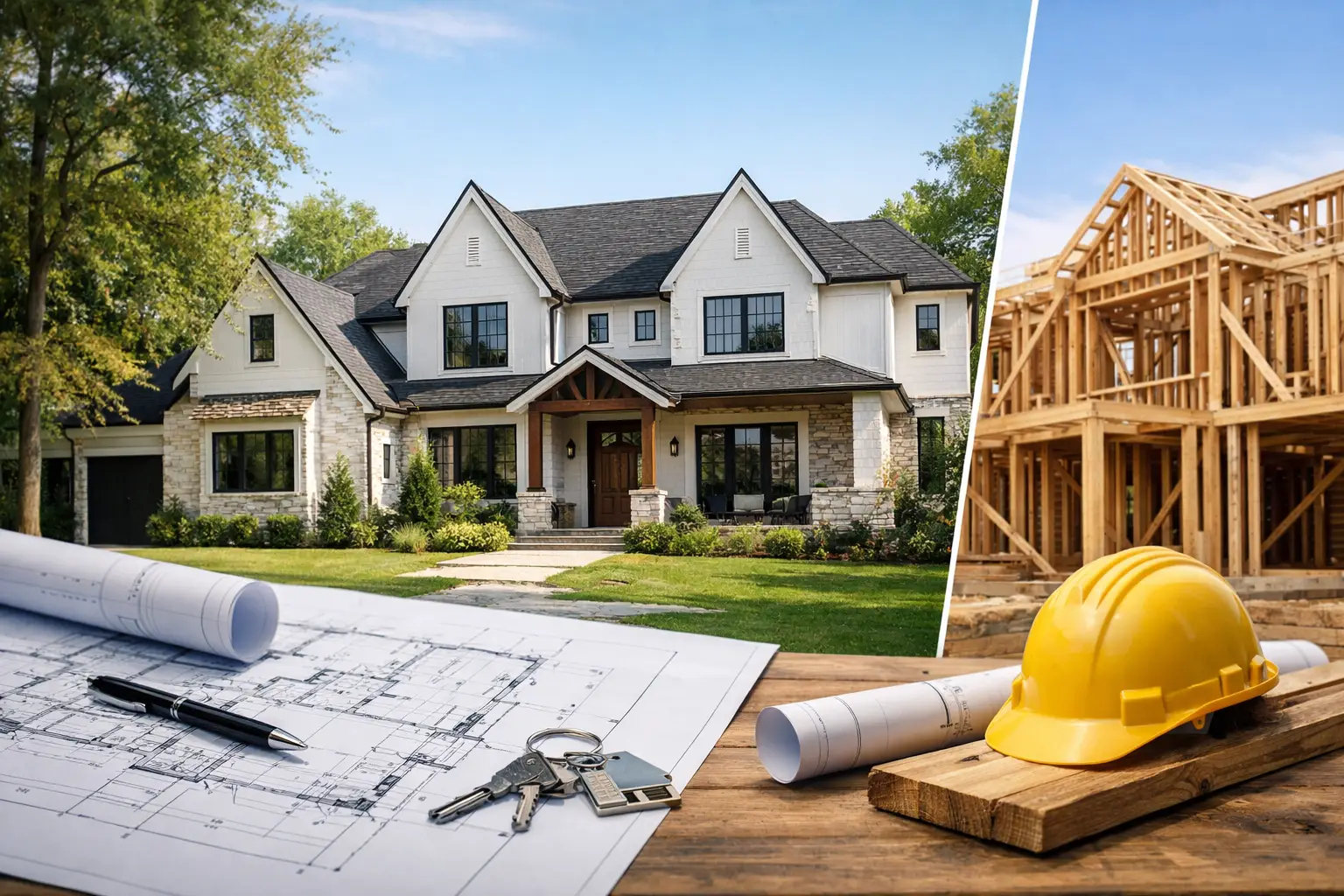
Short Hills is not a market where a custom home can be treated like a generic build on a generic lot. The houses are larger, the expectations are higher, and the margin for field mistakes is smaller. If you are hiring a Short Hills custom home builder, you are not just buying construction labor. You are buying preconstruction judgment, permit discipline, schedule control, and a team that can make sound decisions when the plans meet real site conditions.
That matters more in Short Hills than many homeowners realize. A build can look straightforward on paper, then run into grading constraints, utility coordination, drainage revisions, mature tree considerations, or neighbor-facing logistics that slow progress if the builder does not manage the job with precision. The right builder is not the one who sounds the most polished in a meeting. It is the one who can explain, in plain language, how the project will move from survey to certificate of occupancy without turning every decision into a surprise.
What a Short Hills custom home builder should actually manage
Custom home clients often focus first on architecture, kitchen layouts, window packages, and exterior style. Those matter. But the builder’s real value shows up in the invisible parts of the job.
That starts with preconstruction. Before demolition or excavation, a serious design-build team should be studying the survey, topography, stormwater implications, zoning limits, structural approach, and utility conditions. In Essex County, those early decisions affect everything that follows. If lot coverage, setbacks, drainage, and grading are not addressed up front, you can lose weeks revising drawings and reworking submissions.
A capable builder also has to manage sequencing. Foundation work, framing, mechanical roughs, insulation, inspections, interior finish trades, millwork templating, tile lead times, and flooring acclimation are connected. If one step is rushed or missed, the downstream effect is real. That is how custom homes drift off schedule even when the budget looked controlled at the start.
Why process matters more than promises
Homeowners in Short Hills are usually not choosing between a builder and no builder. They are choosing between several firms that all present well. The difference is often in how they answer practical questions.
Ask how estimates are organized. If the proposal is vague, with broad categories and thin scope language, expect change order friction later. A line-itemized estimate does not eliminate changes, because custom homes always evolve, but it does show whether the builder understands the work well enough to define it clearly.
Ask who is actually running the site. Many residential clients assume the company owner, salesperson, estimator, and field lead are tightly connected. In reality, some firms pass a project through multiple layers before it reaches the crew. That structure can create communication lag and accountability gaps. A direct-employ model with a named field team is usually easier to manage because responsibility is visible.
Ask how schedule updates are handled. Not with marketing language, but in real terms. Weekly progress tracking, procurement timing, inspection coordination, and written scope decisions keep custom projects moving. Without that structure, the job depends too much on memory and informal conversations.
Design-build is useful when it is real
The term gets used loosely. In practice, design-build only helps the client if the design side and construction side are aligned early enough to prevent avoidable redesign.
On a Short Hills custom home, that means architectural intent, structural requirements, and construction logistics should be discussed together before the plans are fully baked. For example, large-span open spaces, oversized glazing, floating stair details, slab-format tile installations, or flush-floor transitions can all be built well, but only if the framing, substrate tolerances, mechanical routing, and sequencing are considered early. If those issues get pushed to the field, the homeowner ends up paying in time, revisions, or compromised details.
This is where an engineering-led builder has an advantage. Not because every house needs overcomplication, but because custom work benefits from disciplined decision-making. Structural loads, deflection, moisture control, and material compatibility are not abstract concerns. They affect tile performance, flooring stability, trim alignment, and long-term durability.
Short Hills site conditions are not theoretical
A lot in Short Hills can look ideal from the street and still present technical issues once the work begins. Older homes may involve demolition around active utilities, aging sewer lines, undocumented field conditions, or grading that never caused a visible problem until a new footprint changes runoff patterns.
For teardown-rebuilds and major additions, drainage planning deserves more attention than it usually gets. Parts of Essex County deal with heavy storm events, and moving rooflines, patios, driveways, and finished floor elevations changes how water behaves on site. A custom home builder should be discussing roof drainage, foundation waterproofing, grading strategy, sump conditions, and discharge routing early, not after excavation starts.
If an existing home is part of the project, age matters too. Pre-1978 structures may trigger lead-safe work practices. Basement moisture can influence whether lower-level living space is viable as designed. Framing tie-ins between old and new construction require more than cosmetic thinking. These are standard field realities in New Jersey, but not every builder treats them with the same level of discipline.
What to look for in the builder’s team
A custom home is not won in the showroom. It is won in coordination meetings, on site walks, and in the small technical decisions made every week.
Look at credentials, but do not stop there. Certifications in remodeling and tile standards are useful because they show formal training, especially in kitchens, baths, and finish-critical spaces where tolerance errors are expensive. Licensing, insurance, and lead-safe certification are table stakes. More telling is whether the team can speak clearly about substrate prep, waterproofing assemblies, floor flatness, movement joints, and finish sequencing without sounding rehearsed.
Crew structure matters as much as credentials. Homeowners should know whether the people doing the work are known to the company, supervised directly, and accountable by name. Communication also matters in a live project. A team that can coordinate in English, Spanish, and Portuguese may sound like a small operational detail, but on active jobs it reduces friction, confusion, and preventable mistakes.
The budget conversation should be specific, not inflated with allowances
Custom home budgeting in Short Hills should be honest about scope and honest about unknowns. That means separating fixed scope from client-selection variables and identifying where design development is still in progress.
Allowance-heavy estimates can make an early proposal look competitive while pushing real costs into later selections. That does not mean allowances are always wrong. Some are necessary when final materials have not been chosen. But if major components are lightly defined, the homeowner is not comparing builders on equal terms.
A better approach is transparent scope writing. Which assemblies are included. Which finish levels are assumed. Which site conditions are confirmed and which are still pending investigation. That is the difference between a useful estimate and a placeholder.
Red flags clients in Short Hills should catch early
The first red flag is speed without detail. If a builder gives a fast answer to complex site or structural questions without reviewing plans, survey data, or municipal requirements, that confidence may be cosmetic.
The second is overpromising on timeline before scope is fully resolved. Permit review, engineering revisions, material procurement, and inspection scheduling all vary by job. A disciplined builder will explain ranges, dependencies, and risk points rather than give a neat answer just to keep the conversation moving.
The third is weak documentation. If revisions are not tracked, inclusions are loosely written, and site decisions stay verbal, the project becomes harder to manage the moment something changes.
Why the finish work still depends on the structure underneath
Clients often judge a custom home by cabinetry lines, tile layout, stair details, flooring transitions, and paint finish. Fair enough. Those are the parts you live with every day.
But premium finish work depends on substrate accuracy and sequencing. Large-format tile needs proper flatness. Hardwood needs moisture control and acclimation planning. Cabinet and millwork alignment depends on framing discipline. Bathroom durability depends on waterproofing that nobody sees after closeout. The builder who understands this treats finish quality as a systems issue, not just a decorator’s issue.
That approach is one reason many sophisticated homeowners prefer an integrated team over a fragmented one. When the same company is responsible for build strategy, schedule control, and finish execution, there is less room for finger-pointing when tolerances matter.
One example of that mindset is Gus Skyy Construction, which operates with engineering-led project management, design-build coordination, and direct crew accountability across custom homes, additions, and finish-critical renovations in North and Central New Jersey.
Choosing the right fit for your project
Not every good builder is the right builder for every Short Hills home. A teardown on a tight lot, a major addition to a legacy property, and a custom interior rework each require different strengths. The goal is not to find the firm with the most polished pitch. It is to find the one whose process matches the complexity of your job.
The right builder should make the project feel clearer, not more theatrical. You should understand how decisions get made, how scope gets documented, how field conditions are handled, and who is accountable when plans meet reality. In a market like Short Hills, that clarity is not extra service. It is part of the build itself.
A custom home lasts a long time. The memory of the process does too. Choose the team that can explain the work before they start it.