
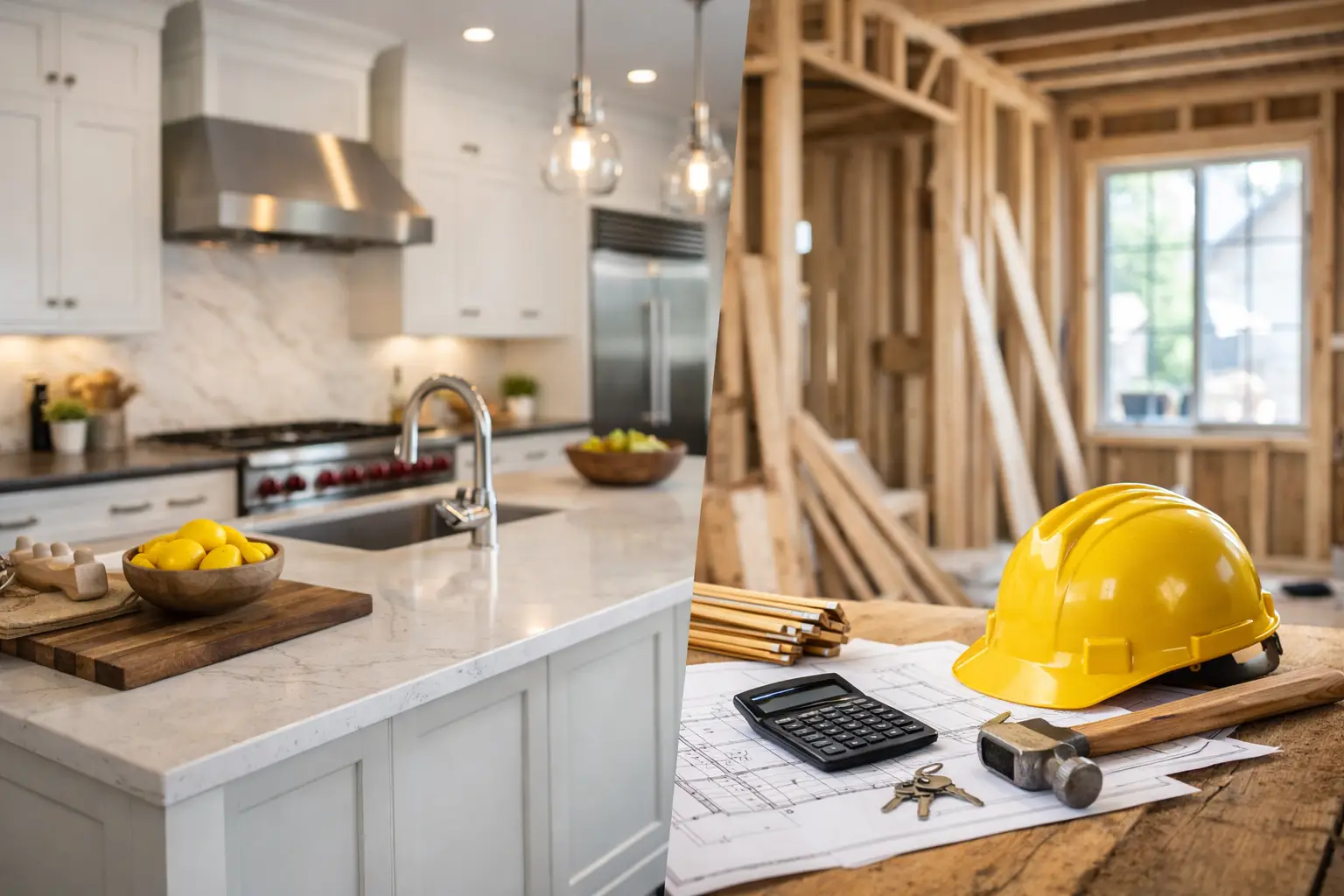
A kitchen can swing a buyer’s opinion in under two minutes. In New Jersey’s higher-value towns, that reaction affects more than aesthetics – it affects offers, inspection negotiations, and how long a home sits before serious buyers move. That is why kitchen remodel return on investment is not a simple national average. In practice, it depends on what you change, what you leave alone, and whether the finished kitchen matches the house, the neighborhood, and the resale window.
If you own in places like Short Hills, Summit, Chatham, Montclair, or Ridgewood, the standard is not the same as it is in a purely price-driven market. Buyers in these towns notice workflow, appliance integration, cabinet construction, lighting, and whether the renovation looks recent or already dated. They also notice when a kitchen was overbuilt for the home or under-scoped for the asking price. ROI comes from alignment, not from spending blindly.
What kitchen remodel return on investment really means
Most homeowners hear ROI and think one question: If I spend X, how much do I get back? That is understandable, but residential remodeling does not work like a fixed-yield investment. A kitchen remodel can return value in three ways.
First, it can increase resale price. Second, it can shorten time on market, which matters when carrying costs, rate volatility, or seasonal timing are in play. Third, it can protect your asking price during inspection and buyer negotiation because the major visual and functional concerns have already been addressed.
That is why two kitchens with similar budgets can produce very different outcomes. One improves cabinet layout, lighting, ventilation, and storage in a way buyers can feel immediately. The other spends heavily on statement finishes while leaving poor circulation, weak task lighting, and undersized prep space untouched. The second kitchen may photograph well and still underperform.
The biggest factors that drive ROI
The first variable is scope. A cosmetic kitchen update usually has a different return profile than a full gut renovation. If your existing layout works, plumbing and gas locations are logical, and the cabinetry footprint is efficient, a controlled update often protects more value than a full rebuild. That can include new cabinet fronts or cabinetry, counters, backsplash, flooring, lighting, and appliances without moving every rough-in behind the walls.
A full renovation makes more sense when the kitchen has structural or functional problems. Common examples in older Essex and Union County homes include chopped-up layouts, undersized openings, poor natural light, ungrounded or outdated electrical, and finishes installed over multiple generations of patchwork work. In those cases, buyers are not just reacting to dated style. They are reacting to a kitchen that does not function like the rest of the house should.
The second variable is price point. In premium NJ markets, buyer expectations are stricter. A dated kitchen in a higher-end home is more visible than a dated kitchen in an entry-level property because it breaks the consistency of the home’s value tier. At the same time, there is still a ceiling. Installing every luxury feature available does not automatically create equal resale lift. If the rest of the house is not at that level, buyers may simply view the kitchen as one isolated high-cost room.
The third variable is age of the home. In pre-1978 houses, lead-safe work practices may be required. In older kitchens, once demolition starts, hidden conditions often show up – plaster damage, out-of-level floors, old branch circuits, or venting that was never routed correctly. These issues may not be glamorous, but they matter to return because buyers and inspectors respond to systems as much as surfaces.
Midrange usually beats over-customized
The best kitchen remodel return on investment usually comes from disciplined choices, not maximum choices. Midrange does not mean cheap. It means the renovation solves real use problems and presents as durable, current, and proportional to the home.
That often looks like quality cabinets with practical storage accessories, quartz or natural stone selected for longevity rather than novelty, integrated lighting, durable flooring, and appliances that fit the buyer profile of the neighborhood. In many NJ suburbs, a clean 36-inch range, panel-ready or well-integrated refrigeration, under-cabinet lighting, and a properly sized island add more practical value than a long list of trendy upgrades.
Where homeowners lose return is customization that narrows the buyer pool. Very specific colors, unusual cabinet profiles, highly personal tile choices, or oversized specialty appliances can make sense if this is your long-term home. They are less reliable if resale is within a few years. ROI drops when the next buyer mentally starts a replacement list before they even reach the pantry.
Layout matters more than many finish decisions
Homeowners often focus on visible finish selections because they are easier to compare. But layout usually has more impact on value.
A kitchen that removes pinch points, improves circulation between sink, cooking, and refrigeration zones, and adds useful landing areas will outperform a prettier kitchen with bad movement. Buyers may not use technical language for it, but they feel it right away. If two people cannot move comfortably around the island, if the dishwasher blocks the main path, or if there is nowhere to unload groceries near the refrigerator, the kitchen reads as expensive but poorly planned.
In split-levels, colonials, and older center-hall homes across North Jersey, we often see kitchens where modest structural changes make a bigger ROI difference than premium finish upgrades. Widening an opening, correcting an awkward peninsula, or reworking pantry storage can change how the entire first floor lives. That is a value move because it affects daily use and resale perception at the same time.
The NJ factors that change the equation
New Jersey remodeling has local friction points that influence return. Permit timelines vary by township. Inspector expectations can differ between counties and even between neighboring towns. In older housing stock, walls are rarely perfectly straight, and floors are often out of level enough that cabinet and tile planning needs to start before materials are ordered.
Moisture management also matters more than many homeowners expect. If a kitchen sits over a basement with humidity issues, flooring choice and subfloor condition are part of the ROI discussion. If exterior walls are being opened, insulation and air sealing matter. If ventilation has been handled poorly for years, correcting it protects cabinets, paint, and indoor air quality.
These are not flashy line items, but they are where engineering-led planning helps. A kitchen that looks finished but ignores substrate, load path, ventilation, or electrical capacity is not a stronger asset. It is just a prettier one.
When a kitchen remodel is worth it before selling
If you are planning to sell within 12 to 24 months, the right answer depends on how far behind the current kitchen is.
If the kitchen is functionally sound and simply dated, a measured update is often the smarter move. Buyers can accept a kitchen that is not brand new if it feels clean, coherent, and well maintained. If the kitchen has obvious wear, poor lighting, damaged cabinetry, mismatched appliances, or outdated surfaces that make the whole home feel neglected, then renovation becomes more defensible.
If the kitchen has a bad layout in a strong-value neighborhood, waiting can cost more than renovating. Buyers in towns with higher price expectations often discount heavily for inconvenience. They are not only pricing the future renovation. They are pricing the stress, permit uncertainty, and temporary disruption of living through it.
When remodeling for your own use still pays
Not every return is immediate resale. If you plan to stay five to ten years, the kitchen should first solve the way your household actually lives. That means storage where it is used, enough electrical capacity for modern appliances, durable surfaces, and lighting designed for task work rather than just appearance.
The trick is to separate permanent value from personal preference. Better space planning, sound cabinet construction, quality installation, proper ventilation, and sensible material choices tend to hold value. Highly specific decorative decisions are more personal and less transferable. There is nothing wrong with making personal choices. Just be honest about which decisions are for your life and which are for future marketability.
A practical way to think about ROI before you start
Start with three questions. Is the current layout helping or hurting daily use? Is the kitchen below the expectation level of your neighborhood? And are you solving underlying construction issues or just covering them up?
If the answer to the first two is yes and the third is no, the project is usually moving in the right direction. If the plan is finish-heavy but leaves awkward circulation, dated infrastructure, or unresolved wall and floor conditions, the return gets weaker fast.
A strong kitchen remodel is rarely the one with the longest allowance sheet. It is the one scoped with discipline. The best projects read clearly: the layout makes sense, the materials fit the house, the workmanship is tight, and there are no strange compromises hidden behind pretty surfaces.
That is the useful lens for kitchen decisions in New Jersey. Not whether every dollar comes back on paper, but whether the work makes the home easier to live in, easier to sell, and harder for a buyer to discount.