
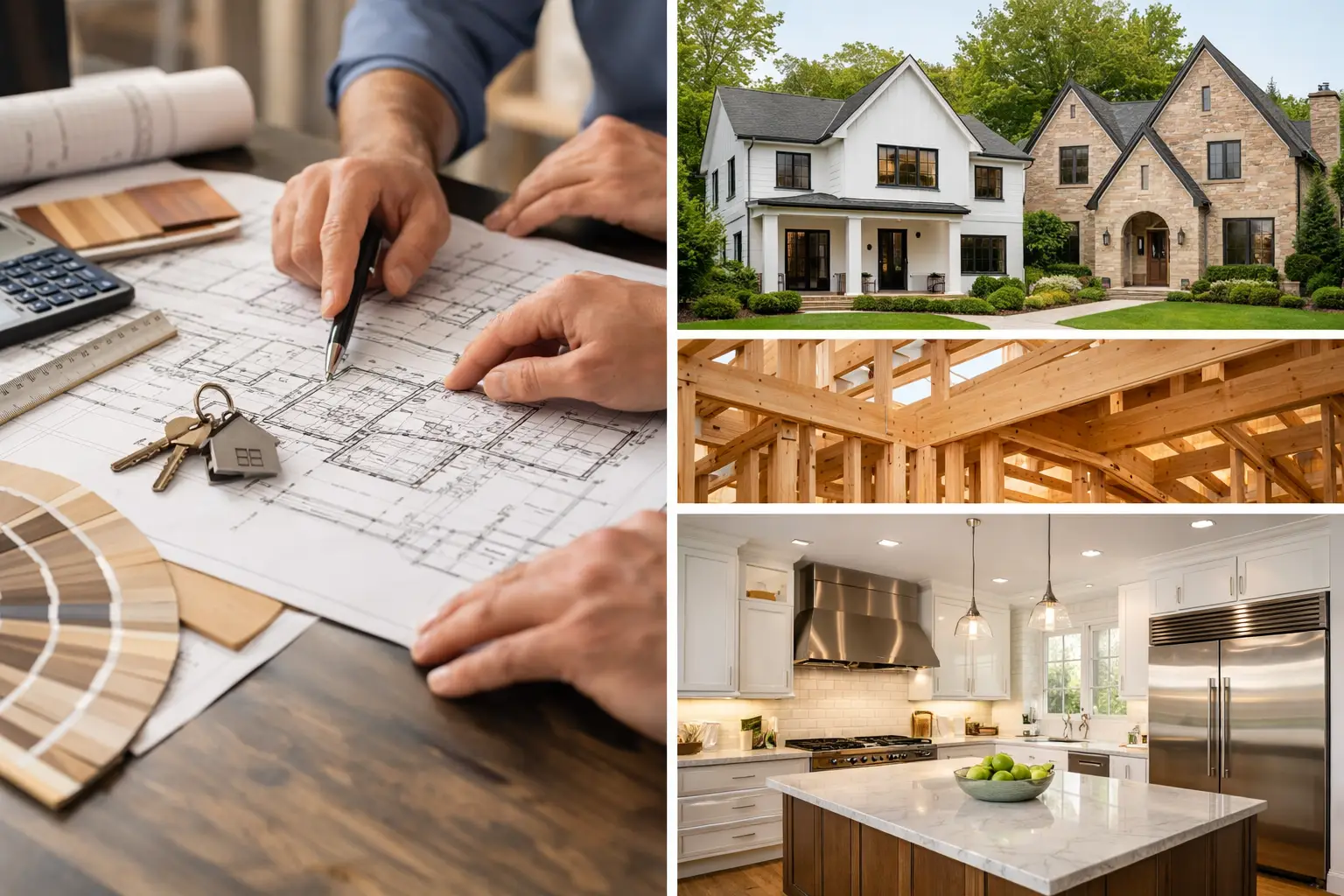
A custom home in New Jersey usually goes off track long before framing starts. The real problems begin in pre-construction – unclear scope, optimistic schedules, incomplete plans, and allowances that look clean on paper but do not survive real selections. That is why choosing among custom home builders New Jersey homeowners consider should start with process, not renderings.
If you are building in Short Hills, Summit, Chatham, Bernardsville, or Franklin Lakes, you are not just hiring someone to construct a house. You are hiring a team to manage soil conditions, zoning constraints, engineering coordination, permit sequencing, inspections, material lead times, and hundreds of field decisions that affect cost and schedule. A polished portfolio matters. It just should not be the first filter.
What separates custom home builders in New Jersey
In New Jersey, the builder matters because the state is not simple. Every township has its own approval rhythm. One building department may turn plan comments in two weeks. Another may take longer and ask for multiple resubmissions. Bergen County and Essex County projects can feel completely different, even when the square footage is similar.
The technical side changes by house and by lot. Older neighborhoods in towns like Maplewood, Montclair, and Westfield often bring pre-1978 conditions, including potential lead-safe work practices during demolition or tie-ins. Lots in parts of Morris and Somerset counties can raise drainage, slope, or rock-excavation questions. Finished basements in North Jersey need moisture planning that goes beyond paint and hope. If your builder treats all custom homes as the same product, you will feel that mistake later.
A capable design-build firm should be able to explain the chain of decisions clearly. How is the structural package coordinated with architectural intent? When does HVAC layout affect beam depth or ceiling height? What gets finalized before permit submission, and what is still being carried as an allowance? Those answers tell you more than a showroom presentation ever will.
Start with pre-construction, not price
Most homeowners ask for numbers too early. That is understandable, but custom homes do not price cleanly off a sketch and a Pinterest board. If one builder gives you a single-page estimate and another gives you a line-item scope with identified assumptions, those are not equal proposals.
The better question is this: what exactly has been priced, and what has not? A serious builder should distinguish between fixed scope, allowances, owner-supplied items, permit-related variables, and site conditions that may change once excavation begins. That is not hedging. That is competent estimating.
For custom home builders New Jersey clients can actually rely on, pre-construction should include plan review, constructability review, scope alignment, and scheduling logic. If the drawings show a large-format porcelain bath with tight transitions, someone should already be discussing substrate flatness, waterproofing method, niche layout, and where the plumbing rough lands. If the kitchen design includes long lead cabinetry and appliance packages, procurement timing should be part of the build conversation before the foundation is poured.
The crew model matters more than most clients realize
Homeowners often focus on the company name and overlook who will actually be in the house. That is a mistake.
Some builders operate through multiple layers of subcontracting. That can work on certain projects, but it often introduces communication lag, accountability gaps, and uneven field quality. A cleaner model is a direct, accountable crew structure where supervision is not diluted and trades are coordinated tightly. When the same team handles demolition sequencing, framing adjustments, tile prep, flooring transitions, and finish punch with real oversight, problems get solved faster.
This matters even more on additions and custom homes built around occupied neighborhoods. Tight sites in Millburn or older streets in South Orange do not leave much room for disorganization. Material staging, debris handling, inspection readiness, and neighbor impact all need active management. A builder who runs a disciplined field operation will usually sound different in meetings – less vague, more specific.
Design-build is useful when it is real
A lot of firms use the term design-build loosely. The real version means design, estimating, engineering coordination, and construction management are tied together early enough to reduce revisions and scope drift.
That does not mean every decision is made upfront. It means the major decisions are made in the right order. Structure before finishes. Mechanical routing before drywall. Exterior envelope strategy before interior trim discussions. In practice, this saves homeowners from expensive redesign loops and prevents site crews from waiting on unresolved details.
For example, if you are planning a large addition in Livingston or a full custom home in Saddle River, there should be early coordination around setback constraints, drainage planning, utility connections, framing spans, and the energy code path. Those are not back-office details. They affect layout, timeline, and budget stability.
Questions worth asking custom home builders New Jersey homeowners interview
You do not need to ask twenty questions. You need to ask the right five.
Ask who is managing your job day to day. Ask how change orders are documented. Ask what is included in pre-construction versus what stays open until permit or field verification. Ask how the builder handles township comments, inspection scheduling, and material procurement. Then ask for an example of a project where scope changed and how the team controlled the impact.
The quality of the answers matters more than the charm of the person giving them. Clear answers usually come from real operating discipline. Evasive answers usually mean the process depends too much on improvisation.
It also helps to ask about technical judgment. On a bathroom, what waterproofing system do they typically use and why? On flooring over slab, how do they evaluate moisture risk before installation? On older homes, how do they account for out-of-level framing and irregular substrates before pricing finishes? A builder with field depth will answer these questions directly.
New Jersey custom homes are full of trade-offs
There is no perfect build. There are only informed decisions.
If you want larger glass openings, you may need more structural steel and more coordination on energy performance. If you want wide-plank hardwood throughout, your humidity control strategy matters more. If you want an aggressive timeline, you may need earlier finish selections and faster owner decisions. If you are building in a town with slower permit turnaround, no builder can wish that away.
This is where engineering-led project management becomes valuable. Good builders do not pretend trade-offs do not exist. They show you where they are, quantify the impact when possible, and help you choose deliberately.
That approach is especially important in high-expectation markets. In towns like Alpine, Tenafly, and Rumson, the standard is not just visual finish. It is control. Owners want to know what is happening, what is pending, what changed, and what decision is needed next. That is not micromanagement. That is how well-run custom projects stay healthy.
Credentials are useful, but only if they show up in the work
Licensing and insurance are baseline requirements. Beyond that, credentials should support how the builder actually executes.
A NARI Certified Kitchen & Bath Remodeler credential, for example, matters on custom homes because kitchens and baths carry a disproportionate share of layout complexity, finish coordination, and inspection sensitivity. EPA Lead-Safe certification matters in older New Jersey housing stock where demolition or tie-in work can disturb existing painted surfaces. Memberships and certifications are not the point by themselves. The point is whether the builder brings that discipline into site protection, sequencing, documentation, and finish execution.
That is one reason some homeowners in Essex, Union, and Morris counties prefer firms that handle both premium custom builds and technically demanding renovations. Renovation work forces teams to solve hidden-condition problems in real time. That experience carries over well into additions and custom homes, where field conditions rarely match the clean assumptions of early drawings.
What a strong builder-client relationship looks like
The best projects are not built on constant optimism. They are built on fast clarity.
You should know who to contact. You should receive direct answers when there is a field issue. You should see line-item documentation that matches the actual scope. You should understand whether a delay is caused by owner selections, permit review, utility coordination, or procurement. None of that is glamorous, but it is what keeps a custom build from becoming a year of confusion.
One advantage of working with a firm like Gus Skyy Construction is that the technical conversation does not get filtered through layers of sales language. When a schedule shifts, there should be a reason. When a detail costs more, there should be a scope explanation. When an assembly changes, there should be a construction basis for that change.
If you are sorting through custom home builders in New Jersey, look past the mood boards and ask who can actually hold a line on process when the build gets complicated. That is usually the difference between a house that merely looks custom and one that was managed like it mattered from day one.