
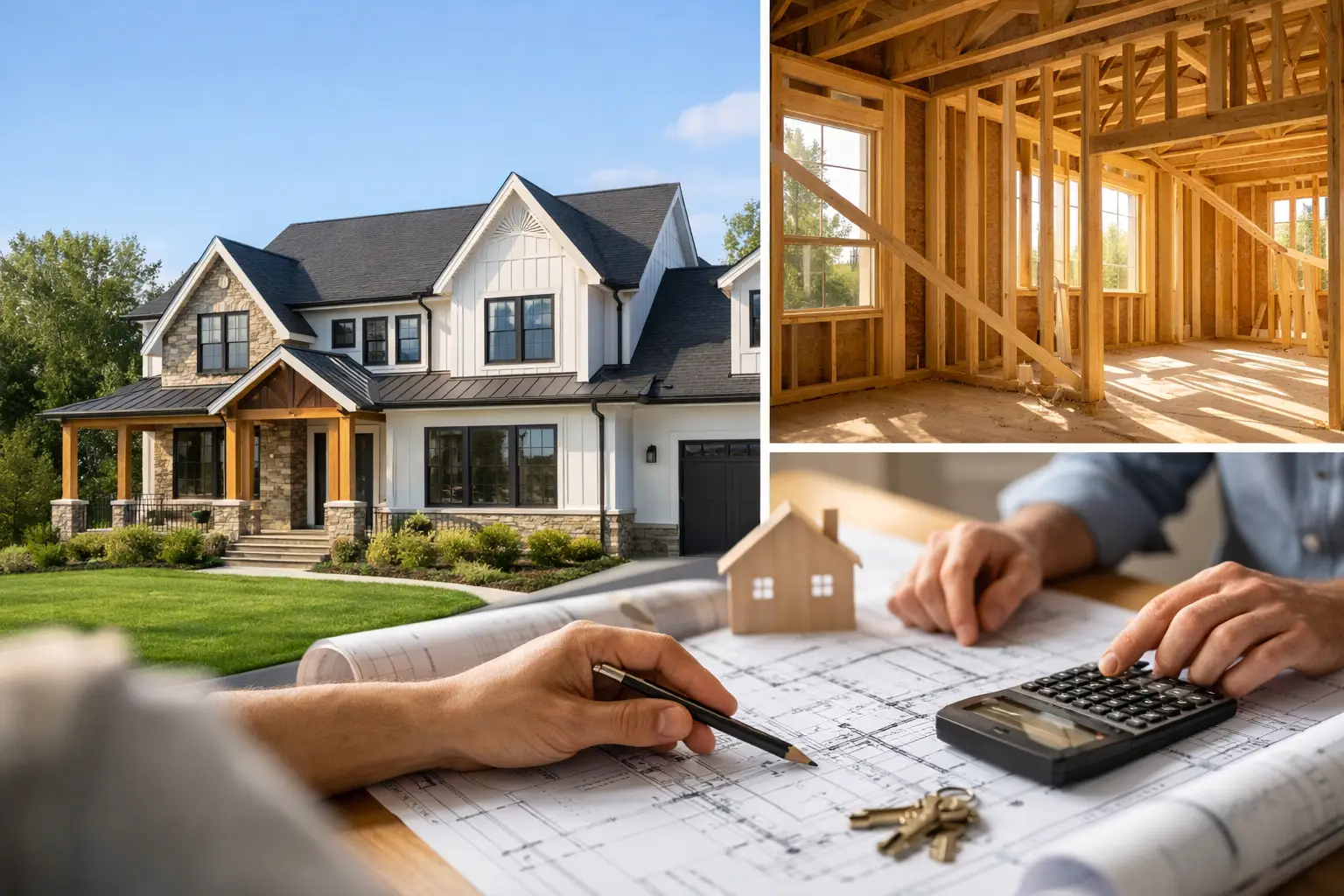
If you are asking how much does it cost to build a custom house, the honest answer is not a single number. In New Jersey, two homes with the same square footage can land far apart on total cost based on the lot, the township, the structural design, and the finish level. A flat price per square foot is useful for a quick conversation. It is not enough to budget a real project.
That is especially true in North and Central Jersey. A clean, level lot in one town is one thing. A sloped property in Alpine, a tear-down in Short Hills, or an older site in Maplewood with drainage, utility, or soil issues is something else entirely. Before you talk about cabinets, tile, or windows, the land and the structure are already moving the number.
How much does it cost to build a custom house in NJ?
For planning purposes, custom home costs usually break into two buckets: hard construction and everything around it. Hard construction covers excavation, foundation, framing, roofing, windows, siding, mechanicals, insulation, drywall, millwork, flooring, tile, cabinetry, and finish work. The second bucket includes design, engineering, permits, utility connections, site prep, surveys, testing, and conditions unique to the property.
That is why the range can widen fast. A straightforward 3,500-square-foot home on a buildable lot with conventional finishes is one pricing conversation. A 5,500-square-foot house with steel beams, large-span openings, premium glazing, a finished basement, radiant heat, a three-car garage, and high-end stone is a different one.
In premium towns like Summit, Chatham, Bernardsville, Franklin Lakes, or Tenafly, buyers often assume the lot is the expensive part and the house is the predictable part. In practice, the house becomes unpredictable when the plans are not fully coordinated. Structural loads, HVAC zoning, drainage design, and finish selections can all change the budget more than most owners expect.
The biggest cost drivers in a custom home build
Square footage matters, but it is not the whole story. Shape matters too. A simple rectangular footprint with stacked plumbing, standard ceiling heights, and conventional rooflines is more efficient to build than a house with multiple bump-outs, long steel spans, complex dormers, and custom glazing packages.
Foundation complexity is a major variable in New Jersey. If the site needs retaining walls, deeper excavation, rock removal, dewatering, or extensive drainage, your cost moves before the framing crew arrives. Basements also need to be thought through carefully here. In parts of Essex, Union, and Morris counties, groundwater and seasonal moisture can turn a simple basement plan into a more involved waterproofing and drainage package.
Mechanical systems also separate average builds from true custom builds. A basic forced-air setup is one cost structure. Multi-zone systems, higher-capacity dehumidification, ERV integration, radiant floors, upgraded service panels, smart controls, EV charging prep, generators, and more elaborate lighting plans all add cost, but they also change how the house lives day to day.
Then there are finishes. The jump from builder-grade allowances to fully customized selections is where many budgets lose discipline. Wide-plank hardwood, XL porcelain slabs, custom inset cabinetry, imported plumbing fixtures, flush base details, built-in appliance packages, and oversized lift-and-slide doors all have real cost impact. None of that is wrong. It just needs to be priced honestly from the start.
Land, tear-downs, and site work are often underestimated
When owners ask how much does it cost to build a custom house, they often focus on the house and underestimate the site. In New Jersey, that is a mistake.
If you are buying a lot with an existing house, demolition is not just demolition. You may have asbestos to test for, older utility conditions to document, trees to protect or remove, and neighboring properties close enough that access becomes a real planning issue. In pre-1978 homes, lead-safe procedures may also come into play during certain phases of work.
Site work can include clearing, grading, stormwater management, temporary power, utility trenching, new water and sewer connections or well and septic coordination, driveway work, and exterior drainage. On a tight suburban lot in Millburn or South Orange, staging and access can affect labor efficiency. On a larger lot in Mendham or Bedminster, long utility runs and grading can do the same.
None of this is glamorous, but it is where realistic budgeting starts.
Design choices that change cost more than people think
Owners usually expect kitchens and baths to move the number. That part is obvious. What catches people off guard are the decisions that look small on paper but multiply across the project.
Raising ceiling heights changes framing, stair geometry, window sizing, HVAC layout, and sometimes exterior proportions. Large open-concept spaces may require engineered lumber or structural steel. Window walls and oversized doors affect not just material pricing, but flashing details, structural support, and energy performance planning.
Even staircase design matters. A standard stair is one thing. A floating stair with custom railing, integrated lighting, and finish-grade steel is another. The same goes for fireplaces, exterior cladding transitions, trim profiles, and built-ins. Custom homes are rarely made expensive by one dramatic choice. They get expensive through accumulation.
Why township and code conditions matter
Two comparable homes can price differently because they sit in different towns. Permit timelines, inspection sequencing, energy code enforcement, stormwater review, and zoning interpretation are not uniform across New Jersey.
Some towns are relatively straightforward. Others require more back-and-forth on grading, drainage, or architectural review. If a property needs variance relief, tree removal approvals, or additional engineering submissions, the pre-construction path gets longer and more expensive.
Older neighborhoods also bring hidden conditions. Utility services may need upgrading. Existing sewer laterals may not be reusable. Driveway aprons and curbs may need township-specific restoration. In older housing stock, lot lines, surveys, and as-built conditions do not always align as neatly as owners expect.
This is one reason engineer-led pre-construction matters. The cost is not just in the material. It is in identifying conflicts before they become field changes.
Cost per square foot is useful, but only to a point
People want a per-square-foot number because it feels clean. Builders know it is only clean when the scope is clean.
A 4,000-square-foot house with moderate glazing, standard tile layouts, and conventional mechanical systems can have a very different cost profile than a 4,000-square-foot house with premium windows, heavy stonework, custom millwork, and a finished lower level built for entertaining. Garage square footage, covered porches, unfinished attic areas, and basement fit-outs also distort simple comparisons.
The better question is not just price per square foot. It is price for this plan, on this lot, in this township, with this finish level.
That is also why line-item estimating matters. If your estimate lumps too many categories together, you cannot see where the money is really going. If the framing number, window package, HVAC scope, tile labor, and site drainage are each broken out clearly, you can make decisions intelligently instead of guessing.
Where budgets usually go off track
The most common problem is starting design before setting a real construction target. Once plans are developed around an untested wish list, owners are forced into late-stage value engineering. That usually means redesign fees, delays, and compromises that feel worse than if the house had been scoped correctly at the beginning.
The second problem is underestimating selections. Owners approve plans assuming mid-range finishes, then shop at a premium level. Flooring, tile, appliances, plumbing fixtures, cabinets, and specialty lighting can move quickly when the allowance baseline was never aligned with actual taste.
The third problem is incomplete site investigation. If grading, drainage, utility conditions, and structural requirements are not addressed early, the estimate looks better on paper than it performs in the field.
How to budget for a custom house without fooling yourself
Start with the lot and the program. How many finished square feet do you actually need? Do you want a full basement, a first-floor guest suite, a home gym, a scullery, a three-car garage, or a covered outdoor living area? Those are not minor options. They shape the structure and systems from day one.
Next, align the design team and builder early enough that estimating can happen while plans are still adjustable. That is where design-build has a real advantage. You can test structural ideas, finish standards, and mechanical choices before they become expensive to revise.
Then be honest about finish level. If your reference points are custom kitchens, large-format tile, wide-plank white oak, and detailed trim carpentry, budget for that from the start. Do not price one house and plan to build another.
For homeowners in towns like Livingston, Short Hills, Summit, or Franklin Lakes, this disciplined approach usually saves more money than chasing a vague low number. At Gus Skyy Construction, that is why estimates are built around scope clarity and line items, not vague square-foot shortcuts.
A custom house is not expensive because it is custom. It gets expensive when decisions are made late, site conditions are guessed at, or the estimate hides the moving parts. The right starting point is not a dream board. It is a real set of numbers tied to a real property and a buildable plan.