
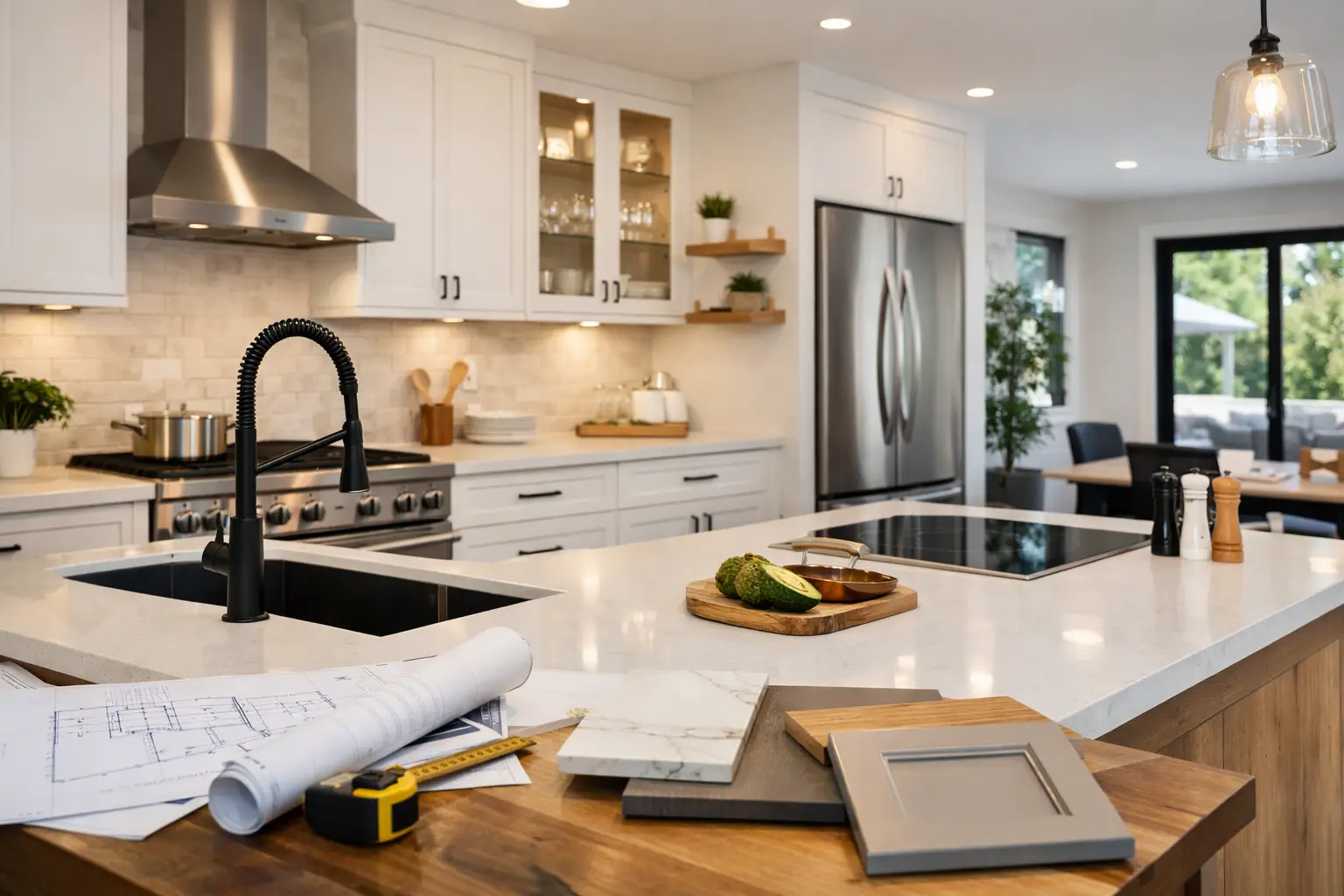
The best kitchen remodeling upgrades are not always the flashiest ones. In New Jersey homes, the upgrades that matter most usually fix workflow, add usable storage, improve lighting, and reduce the small daily annoyances that make a kitchen feel dated even after new finishes go in. If the layout is wrong, a premium countertop will not save the room.
That is where many remodels go off track. Homeowners focus on surface selections first, then try to force better function into an old footprint. A better approach is to rank upgrades by long-term use, service access, and how the kitchen ties into the rest of the first floor. In older homes in towns like Maplewood, South Orange, Montclair, and Westfield, that often means solving for tight clearances, uneven floors, old plumbing locations, and walls that may or may not be carrying load.
What makes the best kitchen remodeling upgrades worth it
A useful upgrade does one of three things. It improves circulation, it increases storage without crowding the room, or it upgrades the infrastructure behind the finish materials. The strongest remodels usually do all three.
This matters because kitchens fail in predictable ways. Islands get oversized. Appliance doors crash into each other. Recessed lights are added without enough task lighting at counters. Beautiful tile goes in over walls that were never flattened properly. None of that shows on a mood board, but all of it shows up in daily use.
If you are remodeling in a pre-1978 house, there is also a compliance layer. Lead-safe work practices are not optional. In many New Jersey townships, permit review can also affect sequencing if electrical, plumbing, framing, and mechanical changes are all involved. So the right upgrade is not just the one that looks good. It is the one that fits the structure, the code path, and the way your household actually uses the space.
Best kitchen remodeling upgrades for function first
1. Layout correction
If your sink, range, refrigerator, and main prep zone compete for the same few feet, start there. Layout correction is often the highest-value move in the room.
Sometimes that means widening an opening to a dining room, shifting a range off a traffic path, or reducing an oversized peninsula that blocks circulation. Sometimes it means adding an island only if the room can support proper clearance around all sides. A tight kitchen with a bad island is usually worse than a clean galley with strong storage.
In engineering terms, this is where planning beats decorating. Before choosing finishes, measure aisle widths, appliance swing clearances, and the distance between prep, cooking, and cleanup zones. Good kitchens feel easy because someone did the math.
2. Better storage inside the cabinet plan
More cabinets do not always mean more storage. Better cabinet planning does.
Deep drawers for pots, integrated trash and recycling pull-outs, tray dividers, and vertical storage near the range usually outperform a wall of generic doors and shelves. Corner storage depends on the cabinet geometry. In some kitchens, a blind corner unit is worth it. In others, it adds hardware cost without improving access.
Tall pantry cabinetry can be one of the strongest upgrades if it is sized correctly and placed away from the main prep lane. In open layouts, it also helps consolidate small appliances and reduce counter clutter.
3. Island design that earns its footprint
An island is one of the most requested upgrades, but it needs discipline. We see too many plans where the island becomes a catch-all for seating, storage, sink, dishwasher, microwave, and decorative pendant lighting, then the room loses usable clearance.
A good island has a defined job. It can be a prep station, a social seating zone, or a cleanup extension. Trying to make it do everything usually creates compromises. If seating is the goal, knee space, stool spacing, and circulation behind occupied seats all need to be resolved early.
4. Lighting that works at counter level
Lighting is one of the most underrated kitchen remodeling upgrades because homeowners often judge it from the center of the room, not from the work surface.
A practical lighting plan layers recessed general lighting with under-cabinet task lighting and decorative fixtures only where they make sense. Pendant spacing over an island matters, but so does glare, shadowing, and switch zoning. A bright kitchen can still be a poorly lit kitchen if the counters fall into shadow.
Older NJ homes also need electrical reality checked early. Panel capacity, existing branch circuits, and wall conditions may shape what is possible without opening more area than expected.
Material upgrades that hold up under real use
5. Countertop and backsplash choices with low maintenance in mind
Countertops should match how the kitchen gets used, not just how it photographs. Quartz remains popular because it is consistent and easy to maintain. Natural stone can be the right choice too, but it depends on your tolerance for variation and care.
Backsplashes are similar. Full-height slab or large-format tile can reduce grout lines and create a cleaner look, but substrate prep becomes more important. If walls are out of plane, premium finish materials will highlight the problem. Flatness before installation is not an extra. It is the job.
6. Flooring that matches the whole first floor
Kitchen flooring should not be selected in isolation. It has to work with adjacent rooms, finished floor heights, transitions, and moisture exposure.
In many renovations, especially in open first-floor plans, the smarter move is to think beyond the kitchen footprint and create continuity across the level. Hardwood can be the right answer in many homes. So can tile or luxury vinyl plank in the right context. The point is not trend. The point is movement, maintenance, and how the material performs around dishwashers, exterior doors, and daily wear.
Subfloor condition matters here more than homeowners expect. Squeaks, dips, old patching, and previous finish layers can all affect the final result.
7. Cabinet construction and door style that fit the house
Cabinets carry a large share of both cost and visual weight, so this is not the place to choose by photo alone. Door style should fit the architecture of the home and the finish schedule of the adjoining spaces.
In a transitional kitchen in Short Hills or Chatham, a simple painted shaker may still make sense. In a more modern home, a slab or thin-profile door may be cleaner. What matters is proportion, finish consistency, and practical details like hinge quality, drawer construction, and how fillers and panels are handled at walls and appliances.
Infrastructure upgrades homeowners often overlook
8. Ventilation that actually vents
A powerful range without proper ventilation is not an upgrade. It is a grease and odor problem waiting to spread across the first floor.
Real ventilation means confirming duct route, duct size, termination point, and makeup air considerations where required. In some homes, especially where kitchens are relocated or expanded, vent routing can become a major design constraint. Better to solve it on paper than after cabinetry is ordered.
9. Electrical and outlet planning
This is one of the least glamorous and most important parts of the project. Kitchens today carry more load than they did twenty years ago. Steam ovens, beverage units, induction ranges, drawer microwaves, charging stations, and under-cabinet lighting all add up.
Outlet locations should support actual appliance use. Switches should be placed where a person entering the room expects them. If you are opening walls, this is also the time to think about dedicated circuits, panel capacity, and future flexibility.
10. Plumbing moves that simplify service
Relocating sinks, pot fillers, dishwashers, and refrigerators with water lines can improve function, but each move has downstream effects. Drain slope, venting, floor framing, and access all matter.
This is especially true in older homes where previous renovations may have left behind improvised plumbing work. A kitchen remodel is often the first moment when those hidden conditions become visible. When that happens, the right move is not to bury the issue and keep going. It is to correct it while the walls are open.
How to choose the best kitchen remodeling upgrades for your house
The right order is usually layout first, infrastructure second, finishes third. That sequence prevents expensive design decisions from locking in a flawed plan.
It also helps to separate must-haves from nice-to-haves. If the budget can support five meaningful changes, pick the five that improve daily function and long-term durability. A better prep zone, stronger storage, flatter walls, proper ventilation, and a coherent lighting plan usually outperform decorative extras.
There is also a resale lens, but it should be used carefully. Homes in Summit, Madison, and Bernardsville do not all reward the same decisions in the same way. Buyer expectations vary by price point, house style, and neighborhood standard. The safest path is usually a kitchen that feels well planned, structurally sensible, and consistent with the rest of the home.
A serious remodel should feel better ten years from now, not just on installation day. That usually comes down to disciplined planning, accurate field measurement, and choosing upgrades that solve real problems instead of adding noise. If you start there, the finished kitchen tends to look better too.