
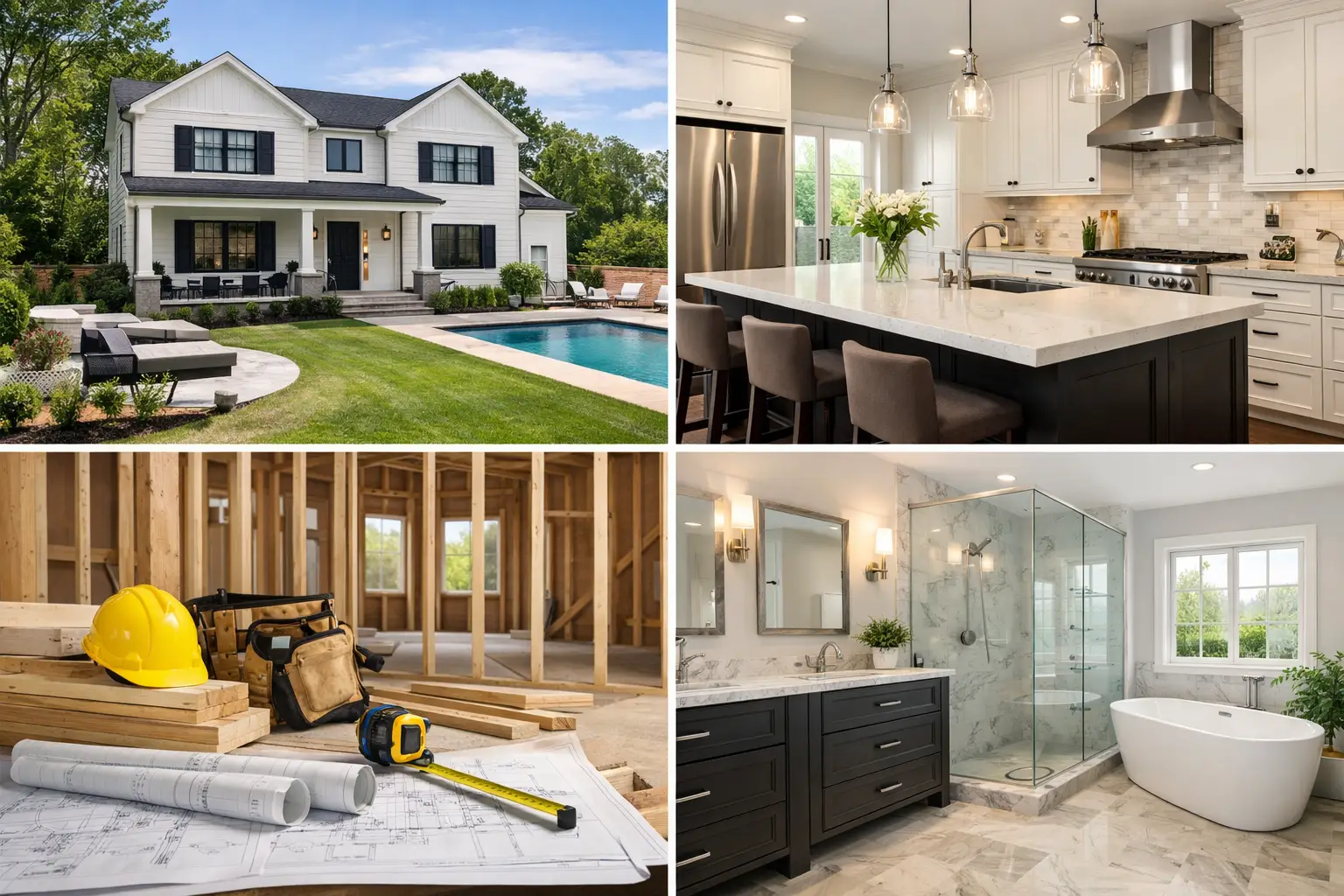
If you are planning a major renovation in New Jersey, the question is not which finish looks best on Pinterest. It is which work actually moves resale, appraisal support, and buyer confidence. The best upgrades for home value are usually the ones that solve functional problems first, then improve how the house looks and lives. In North Jersey, that often means kitchens, bathrooms, flooring continuity, layout fixes, and the unglamorous envelope work that keeps water where it belongs.
That answer gets less exciting than people expect. A wine wall may impress guests. It usually does not change value the way a better kitchen plan, a legal added bath, or dry finished lower level can. Buyers in towns like Summit, Short Hills, Chatham, and Ridgewood pay for clean scope, strong materials, and layouts that make daily life easier. They also notice when a renovation was cosmetic only.
What buyers and appraisers actually reward
Home value is rarely driven by one line item. It is driven by how the house presents as a package. Square footage matters. Bedroom and bathroom count matters. Kitchen and bath condition matter. So do mechanical confidence, flooring consistency, window condition, and whether the renovation looks coherent instead of pieced together over ten years.
Appraisers tend to support value through comparable sales, gross living area, room count, and overall condition. Buyers are more emotional, but their offers still follow logic. They discount houses with obvious deferred maintenance, awkward circulation, and finish mismatches. In pre-1978 homes across Essex and Union counties, they also worry about what is behind the walls – lead-safe handling, old plumbing, and undersized electrical service.
That is why the best return usually comes from upgrades that improve both perception and function.
The best upgrades for home value start with kitchens and baths
Kitchen remodels remain near the top because they affect everyday use and listing photos. But not every kitchen project pencils out equally. Full custom reconfiguration can make sense in a premium market if the existing layout is a clear problem – too narrow, poor work triangle, not enough storage, blocked sightlines to a family room or yard. If the layout is already sound, a measured renovation often performs better than tearing out everything for the sake of novelty.
What buyers usually respond to is a kitchen that feels resolved. That means enough drawers, sensible island spacing, durable counters, strong task lighting, and flooring that transitions properly into adjacent rooms. In many NJ colonials, opening a non-structural partition or widening a cased opening improves value more than adding decorative millwork. If a beam is required, the structural path matters. This is where engineering-led planning helps. You want the opening to feel intentional, not like a compromise hidden by trim.
Bathrooms are similar. Adding a legitimate powder room on the first floor or converting a shared hall bath plus a crowded primary bath into a stronger primary suite can materially change marketability. Buyers notice good tile layout, niche placement, ventilation, waterproofing details, and whether the shower glass and vanity scale fit the room. They also notice when a bathroom looks new but still has old galvanized lines feeding it.
Kitchen and bath scope that tends to hold value
The strongest scope is usually practical: layout correction, cabinetry with useful storage, quartz or natural stone counters, tile installed on a clean grid, and fixtures that are current but not trendy. Heavily personalized selections can narrow your buyer pool. That matters less in a custom forever-home and more in a five-to-seven-year hold.
Flooring continuity is underrated
One of the most cost-effective visual upgrades is consistent flooring through main living areas. Buyers read flooring continuity as a signal that the house was renovated as a system. They read three different woods, two tile styles, and random transitions as future work.
In NJ resale markets, wide-plank white oak remains safe because it works across colonial, split-level, and newer open-plan homes. Good LVP has a place in lower levels or certain investor scopes, especially where moisture tolerance matters more than hardwood prestige. Tile belongs where water and maintenance justify it. The point is not the product alone. It is matching the flooring strategy to the house.
In a 2,500 to 3,500 square foot home, replacing patchwork flooring with a coherent plan often changes the entire showing experience. The house feels larger, calmer, and more finished. Buyers may not say “the floor schedule was well coordinated,” but that is what they are responding to.
Layout changes can outperform decorative upgrades
A house with a bad floor plan will always fight the sale. In older NJ homes, common issues include undersized kitchens, no mudroom function, closed-off dining rooms that nobody uses, and second-floor bathroom counts that no longer fit buyer expectations.
The right layout change can create value far beyond the square footage added. Moving laundry from a basement to a second floor. Creating a real drop zone from a garage entry. Turning a pass-through office into a legal bedroom where code and egress allow. Expanding a primary suite so it competes with newer homes in the same school district. These are not flashy choices. They are market corrections.
The trade-off on structural rework
Structural layout changes are not automatic wins. If you are moving load-bearing walls, relocating plumbing stacks, or rebuilding stairs, the scope can expand quickly. In towns with strict permit review and older housing stock, hidden conditions are common. The upgrade is worth it when the current plan is clearly hurting livability or resale. It is less compelling when the change is mostly aesthetic.
Finished basements can add value, if moisture is handled first
In New Jersey, basement work is where optimism gets punished. A lower level can become meaningful usable space – rec room, gym, guest suite, office, storage – but only if water management comes first. If a basement has seasonal seepage, humidity issues, or old wall assemblies trapping moisture, new flooring and drywall are not an upgrade. They are a future demolition job.
This is especially relevant in parts of Essex, Morris, and Union counties with older foundations and variable drainage conditions. Before any finishes, the house needs a moisture strategy: exterior grading, gutters and downspouts, sump performance, vapor management, insulation approach, and product selection. Once that is solved, a finished basement becomes far more than bonus space. It helps buyers justify the house versus a competitor with less functional area.
Energy and envelope work supports value quietly
Not every upgrade needs to be visible in listing photos. Windows, exterior doors, insulation improvements, and roofing are value-supporting work because they reduce buyer objections. They do not always create the same excitement as a new kitchen, but they keep deals together after inspection.
Buyers in premium markets expect a house to look good and feel sound. Drafty rooms, fogged glass, old roofing at end of life, and poor attic insulation signal upcoming capital expense. If your renovation budget is finite, it is often smarter to split dollars between visible rooms and envelope work than to overspend on decorative finishes while leaving the house mechanically and thermally weak.
Curb appeal matters, but only when the house behind it matches
Exterior upgrades affect first impression immediately. Siding repairs, paint, entry door replacement, exterior lighting, garage door updates, and well-managed hardscape can improve perceived value fast. But curb appeal has a ceiling if buyers walk inside and see original baths, uneven floors, or a dated kitchen.
The best exterior work is usually clean and proportional to the architecture. In towns with strong neighborhood character, overdesigned facades can backfire. Buyers want a house that feels maintained and architecturally consistent, not one elevation trying too hard to be something the floor plan does not support.
Best upgrades for home value depend on your house type
A 1920s colonial in Maplewood, a mid-century split in Livingston, and a newer home in Franklin Lakes should not get the same renovation plan. Older colonials often benefit from kitchen reworking, first-floor powder improvements, and better basement use. Splits often need circulation fixes, mudroom logic, and bathroom modernization. Newer homes may need less structural work and more finish calibration – replacing builder-grade materials with better flooring, tile, and millwork in the rooms buyers inspect closely.
Investors know this already. Homeowners should think the same way. The highest-value upgrade is often the one that fixes the biggest mismatch between what the house is and what the market expects in that town.
Where owners overspend
The most common mistake is putting too much budget into highly personal finishes while ignoring layout, moisture, windows, or bathroom count. The second mistake is over-improving past neighborhood expectations. A house still has to appraise against local comps. In some areas, a full luxury build-out is justified. In others, a disciplined renovation with strong materials and a coherent scope is the smarter move.
Another mistake is doing work in the wrong order. Installing new floors before addressing level changes, plumbing upgrades, or wall reconfiguration usually means paying twice. Good value comes from sequencing, not just selection.
A smart renovation plan reads like this: solve structural and moisture issues, correct the plan, renovate kitchens and baths with restraint, unify flooring and finishes, then strengthen exterior presentation. That is the formula builders and serious investors keep coming back to because it works in the market and during construction.
If you are weighing options, stop asking which single upgrade adds the most value. Ask which scope removes the most buyer objections while improving how the house lives now. That is usually where the real value shows up.