
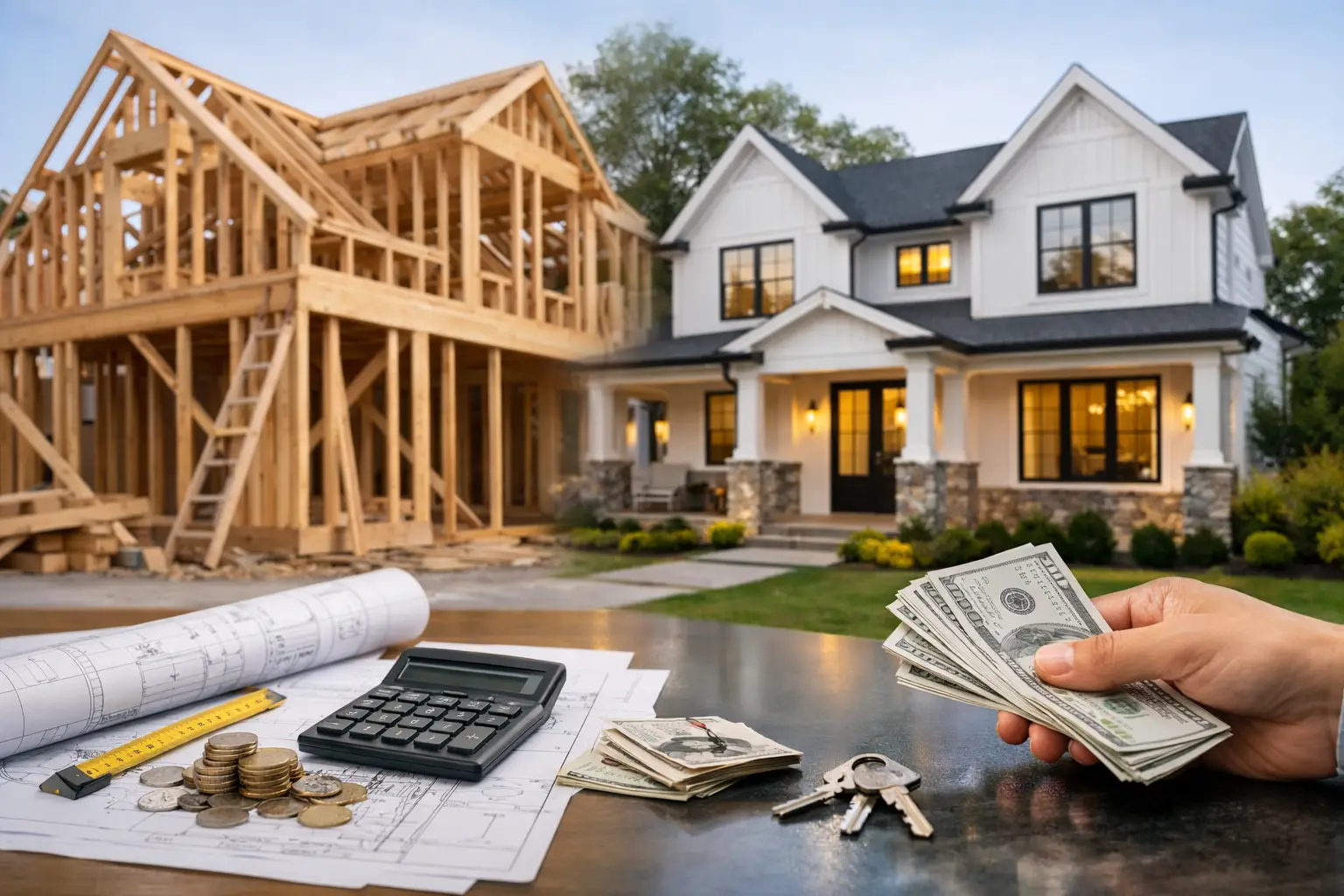
A homeowner in Short Hills might compare two paths on the same block: buy a production-style plan with limited choices, or start from scratch and build around the lot, the setbacks, the drainage, and the way their family actually lives. That is usually where the question starts – is custom home building more expensive? The short answer is yes, in most cases, at least on the front end. The more useful answer is why, where the extra cost comes from, and when it is justified.
Custom building costs more because you are not repeating a standardized product. You are solving a one-off construction problem. In New Jersey, that problem often includes irregular lots, older utility connections, steep grade changes, stormwater requirements, tree removal limits, and township-specific permitting. A custom home in Summit or Bernardsville is not just a house plan. It is a site plan, a structural package, a code compliance exercise, and a sequencing challenge.
Why custom home building is more expensive upfront
The main cost driver is inefficiency by design. That is not a flaw. It is the point of a custom home.
A production builder spreads design, purchasing, and labor patterns across multiple similar homes. The framing crew knows the plan. The HVAC subcontractor knows the duct layout. The cabinet package is already priced. When you build custom, those economies shrink fast. Every window size, roofline change, beam callout, and finish selection creates a new coordination task.
There is also more pre-construction work. A serious custom build usually needs survey review, zoning analysis, architectural design, structural engineering, and often revisions after township comments. In NJ, that can get very real very quickly. One town may focus heavily on impervious coverage and drainage calculations. Another may scrutinize retaining walls, tree protection, or basement egress. If you are building in Bergen County versus Essex County, even the review culture can feel different.
Then there is the lot itself. Custom homes are often built on infill lots or teardown sites, not clean greenfield tracts. That means demolition, utility verification, excavation risk, and surprises below grade. In older neighborhoods, you may run into abandoned oil tanks, poor soil bearing, hidden foundation remnants, groundwater issues, or lead-safe handling requirements if there are existing structures from the pre-1978 era.
Where the money actually goes
When homeowners ask if custom home building is more expensive, they often picture upgraded finishes. Finishes matter, but they are only one part of it.
A large share of the premium sits in design and coordination. Custom plans take longer to resolve because the house is being shaped around your lot and your priorities. A two-story family room, oversized steel for open spans, larger window walls, a finished lower level, radiant heat in select zones, or slab-format tile all create downstream cost effects. Not because anyone is padding numbers, but because each decision changes structure, labor sequence, or material handling.
Site work is another major variable. A flat lot with clean access is one number. A sloped lot with tight staging, rock excavation, drainage retention, and mature trees near the build envelope is another. In parts of Morris and Somerset counties, grade and runoff management can move the budget more than homeowners expect.
Municipal compliance also adds cost, even when it saves trouble later. Permit sets, inspections, energy code requirements, and revised submissions all take time. And time in construction is never free. Interest carry, temporary housing, material escalation, and labor scheduling pressure all grow when a project stretches.
Is custom home building more expensive than buying an existing house and renovating?
Sometimes yes. Sometimes not.
If you buy an older home in Maplewood, Montclair, or Westfield and take it down to studs, you may still be working around an old footprint, old foundation geometry, low ceiling heights, and inherited structural limits. Once you add major mechanical replacement, new insulation strategy, window replacement, layout changes, and exterior upgrades, the gap between major renovation and custom new build can narrow.
The key difference is predictability. Renovation carries hidden-condition risk. Open one wall and you may find knob-and-tube wiring, undersized joists, prior water damage, or unpermitted work. Custom new construction tends to have higher initial cost, but a clearer path once design and engineering are resolved. A gut renovation may look cheaper at purchase, then become expensive in change orders caused by what the house reveals after demolition.
That is one reason engineering-led planning matters. The earlier structural loads, spans, drainage, and utility paths are addressed, the less guesswork makes it into construction.
When the extra cost makes sense
Custom building makes financial sense when the standard alternative does not fit the household or the property.
If you need a first-floor guest suite, a three-car garage with a gym bay, wider stair geometry for aging in place, a dedicated home office with acoustic separation, or a kitchen layout built around serious daily use, custom may be the cleanest solution. Trying to force those needs into an existing house often leads to expensive compromises.
It also makes sense when the lot itself deserves a tailored answer. In premium NJ neighborhoods, land value is high enough that optimizing the home for the site matters. Window placement, rear-yard grade transitions, privacy from adjacent homes, and orientation for natural light can all affect long-term value and daily function.
The right question is not just whether custom costs more. It is whether the added cost is buying something real: better land use, better structural planning, better flow, and fewer compromises that would bother you for the next 15 years.
When custom home building may not be the right move
If your priority is the lowest possible initial cost, custom is usually not the answer.
It may also be the wrong fit if you want every decision made for you or you are not prepared for the planning phase. Custom projects require more decisions on windows, HVAC approach, exterior assemblies, floor transitions, lighting locations, plumbing fixtures, and finish coordination. A good design-build team reduces that burden, but it does not erase it.
Schedule tolerance matters too. In NJ, township review timelines vary. Weather affects excavation and concrete. Utility coordination can lag. Long-lead items like windows, specialty tile, custom millwork, and switchgear can all shape the construction sequence. A custom home is a controlled process, but it is still a process with dependencies.
How to compare costs the right way
Homeowners get in trouble when they compare a custom home to a non-custom number that excludes half the scope.
A fair comparison needs to separate land cost from build cost, and hard construction from soft costs. It also needs to account for site development, demolition if applicable, utility service upgrades, drainage work, architectural and engineering scope, permit costs, and finish level. Comparing a bare per-square-foot estimate to a fully developed custom build number is how budgets get distorted.
You also need to compare specification level honestly. White oak flooring, large-format porcelain, custom shower assemblies, better window packages, higher insulation performance, and more complex trim details all cost more than baseline builder-grade selections. That does not mean one estimate is wrong. It means the scopes are different.
This is where line-itemized quoting helps. If framing, roofing, insulation, flooring, tile, plumbing fixtures, and allowances are broken out clearly, homeowners can make decisions with control instead of guessing where the money went.
The NJ factor that changes the answer
In New Jersey, custom building often carries a premium because the environment is less forgiving than people assume.
Lots are tighter. Setback compliance can be strict. Drainage and stormwater requirements have become more technical. Many desirable neighborhoods are filled with older homes, mature trees, narrow driveways, and limited staging space. Some towns move permits efficiently. Others do not. Inspector preferences vary. Basement waterproofing strategy matters more here than it would on easier sites in drier regions.
So yes, custom homes in NJ often cost more than homeowners expect at first glance. But much of that cost is not luxury for luxury’s sake. It is the cost of building correctly on complicated sites, under real municipal review, with materials and details that match the value of the property.
Gus Skyy Construction approaches that process the same way an engineer would: define the scope, expose the variables early, and price the real work instead of the optimistic version.
If you are weighing custom against renovation or against buying something already built, the smartest move is not chasing the lowest number. It is understanding which path gives you the fewest structural compromises, the clearest budget logic, and a house that still makes sense five years after move-in.