
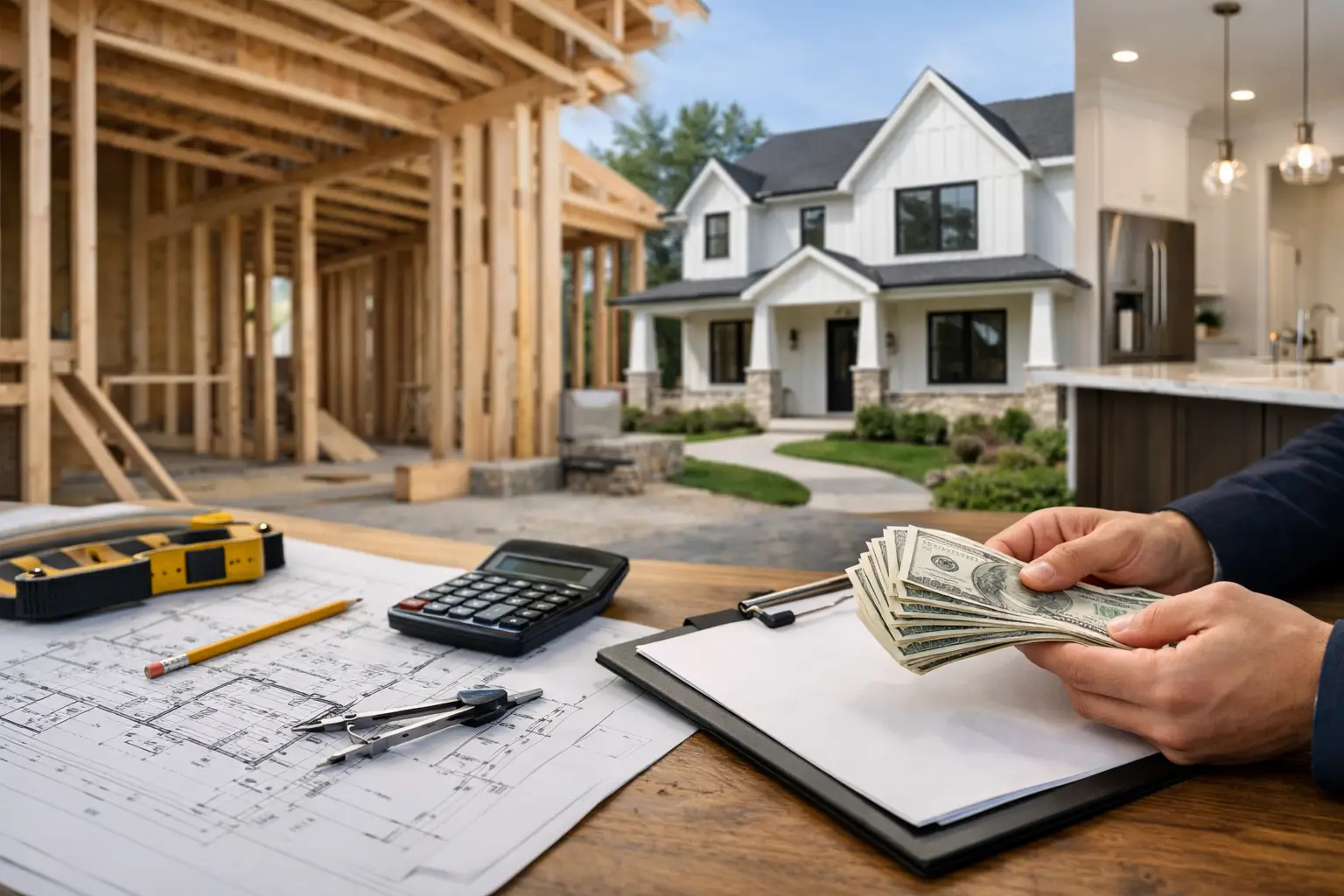
If you are planning a custom home in New Jersey, one of the first serious questions is how do custom home builders charge. Not the polished brochure version. The real version. The answer is that builders do not all price the same way, and the structure of the proposal matters almost as much as the number at the bottom.
A builder can present one total contract sum, a cost-based agreement with line items, or a hybrid approach where some scopes are fixed and others are allowances. For a homeowner in Short Hills, Summit, Chatham, or Franklin Lakes, that difference affects decision-making, financing, and change-order risk from day one.
How do custom home builders charge in practice?
Most custom home builders charge using one of three methods: fixed price, cost plus, or fixed price with allowances. None is automatically right or wrong. Each works better under certain conditions.
A fixed-price contract means the builder gives a defined amount for the agreed scope. On paper, this is the easiest model to understand. If the drawings are complete, engineering is coordinated, and finish selections are clear, a fixed-price contract can reduce uncertainty. The problem is that many custom homes start before every finish, fixture, and detail is fully nailed down. If the scope is still moving, a fixed price can look clean at signing and get messy later through change orders.
A cost-plus contract is different. The project is billed based on actual construction costs tied to labor, materials, trade scopes, and project management, usually with a clearly defined fee structure in the agreement. For a true custom home where the client wants flexibility during design development, this can be a more accurate way to build. It also requires stronger documentation and more trust in the builder’s reporting systems. If the paperwork is vague, cost-plus can feel open-ended. If it is tightly managed with line-item tracking, it can be the most transparent option on a complex build.
Then there is the hybrid model, which is common in residential work. The builder may fix the core construction scope but carry allowances for items such as tile, appliances, lighting, plumbing fixtures, cabinetry hardware, or specialty millwork. This approach recognizes a simple fact: many owners have not selected every finish when the contract is signed. The allowance keeps the job moving, but the quality of the allowance matters. A realistic appliance allowance in Alpine or Saddle River will not look like a generic builder-grade number.
What is usually included in the builder’s price?
This is where homeowners need to slow down and read carefully. Two proposals can show the same project value and still cover very different things.
A serious custom home proposal usually addresses demolition if needed, site work, foundation, framing, roofing, siding, windows, insulation, drywall, interior trim, flooring, cabinetry, plumbing, electrical, HVAC, painting, and project supervision. It may also include permit coordination, dumpster service, temporary protections, and final cleanup. But “included” does not always mean fully specified.
For example, a quote may include hardwood flooring but not identify species, width, finish system, or installation pattern. That matters. A 3 1/4-inch oak strip floor and a 9-inch white oak engineered plank are both hardwood categories, but they are not interchangeable in price or installation method. The same issue shows up with tile. A standard porcelain field tile installation is one scope. Large-format panels or XL porcelain slabs are another. Substrate prep, lippage control, cutting equipment, and handling all change.
In older NJ housing stock, there are also local cost drivers that may sit outside the clean architectural rendering. Pre-1978 homes in Maplewood, South Orange, Montclair, and parts of Westfield may trigger lead-safe procedures during demolition or prep. Basements in Essex and Union County often need moisture management decisions before finish work can be priced responsibly. In some towns, permit review is straightforward. In others, zoning, engineering comments, or inspector sequencing can add time and coordination effort.
The number you see is only as good as the drawings behind it
The biggest reason custom home pricing varies is not greed, and it is not magic. It is information.
When builders bid from a concept sketch, they are filling in blanks. When they bid from coordinated architectural plans, structural engineering, finish schedules, and a defined scope sheet, the proposal gets tighter. That is why engineering-led preconstruction matters. A beam schedule, foundation detail, window count, and reflected ceiling plan all reduce pricing noise.
If one builder has a fully developed set and another is pricing from partial plans, the lower number is not necessarily better. It may just be less complete.
This is especially true on additions and teardown-rebuild projects. Existing conditions in NJ are rarely clean. You may have an older foundation wall that is out of plane, undersized framing that needs correction, or utility service upgrades that were not obvious during the first walkthrough. Good builders account for known conditions and clearly identify unknowns. Weak proposals blur the difference.
Allowances are normal, but they should be realistic
Allowances are not a red flag by themselves. They are a tool. The issue is whether they reflect the level of home you are actually building.
In premium markets, allowances often break budgets because they are written too low to make the initial proposal feel lighter. Then selections start. The homeowner chooses the windows, plumbing fixtures, tile, appliances, and decorative lighting they actually want, and the contract value rises fast.
A practical way to evaluate allowances is to ask whether they match your neighborhood, architectural style, and expectations. If you are building a custom home in Bernardsville or Tenafly with detailed trim packages, wide-plank floors, and higher-end plumbing trim, the allowance schedule should reflect that level from the start. Otherwise, you are not comparing real numbers.
How custom home builders charge for changes
Changes are part of custom construction. The question is how they are documented.
Some changes come from the owner. A kitchen layout is revised. A standard patio door becomes a multi-panel system. Tile extends from the powder room into the mudroom. Other changes come from field conditions. Excavation exposes unsuitable soil. Existing utility routing conflicts with the new structural layout. Township comments require a revision.
A well-run builder prices changes in writing before the work proceeds when possible, ties them to scope and schedule impact, and keeps backup documentation. That process matters. Without it, homeowners lose budget control and builders lose production clarity.
This is one reason line-itemized quoting is valuable. When the base contract is broken into meaningful scopes, it is easier to understand what changed and why. It also reduces the vague category problem where everything falls under “miscellaneous” and no one can track responsibility.
What homeowners should ask before signing
The right question is not just, “What is your price?” It is, “How was this number built?”
Ask whether the contract is fixed price, cost plus, or hybrid. Ask which items are allowances and what quality level those allowances assume. Ask whether permit fees, engineering revisions, site surveys, utility upgrades, and specialty inspections are included or excluded. Ask how change orders are approved. Ask what level of plan completion the proposal is based on.
Also ask who is actually managing the project. In New Jersey residential work, one of the biggest pricing variables is not material cost. It is management discipline. A direct, accountable team with real supervision and clear communication usually produces fewer budget surprises than a project run through multiple handoff layers.
For homeowners who value clean documentation, this is where a design-build structure can help. When estimating, engineering coordination, scope writing, and field management are aligned early, the pricing tends to reflect the actual build more accurately.
Why two builders can price the same house very differently
The short answer is scope interpretation.
One builder may include deeper site coordination, stronger waterproofing assumptions, better insulation assemblies, more complete finish prep, and tighter supervision. Another may exclude those items, carry lighter allowances, or rely on future clarifications. Both can say they priced the same plans. They did not price the same execution standard.
This comes up often in NJ additions and custom homes where the visible design gets the attention, but the hidden assemblies carry the risk. Foundation drainage, subfloor flatness, shower waterproofing method, HVAC zoning strategy, and window installation detailing all affect labor, sequencing, and durability. Those decisions show up in pricing long before they show up in photos.
That is the real answer to how do custom home builders charge. They charge based on scope, information quality, pricing model, and how honestly they account for uncertainty. The homeowners who have the best experience are usually not the ones who chase the lowest first number. They are the ones who understand what is included, what is still open, and how the builder handles the parts of construction that do not fit neatly into a showroom sample.
A custom home budget should feel like a working plan, not a guess with nice formatting. If the estimate is clear enough that you can explain it back to someone else, you are probably looking at the right level of detail.